
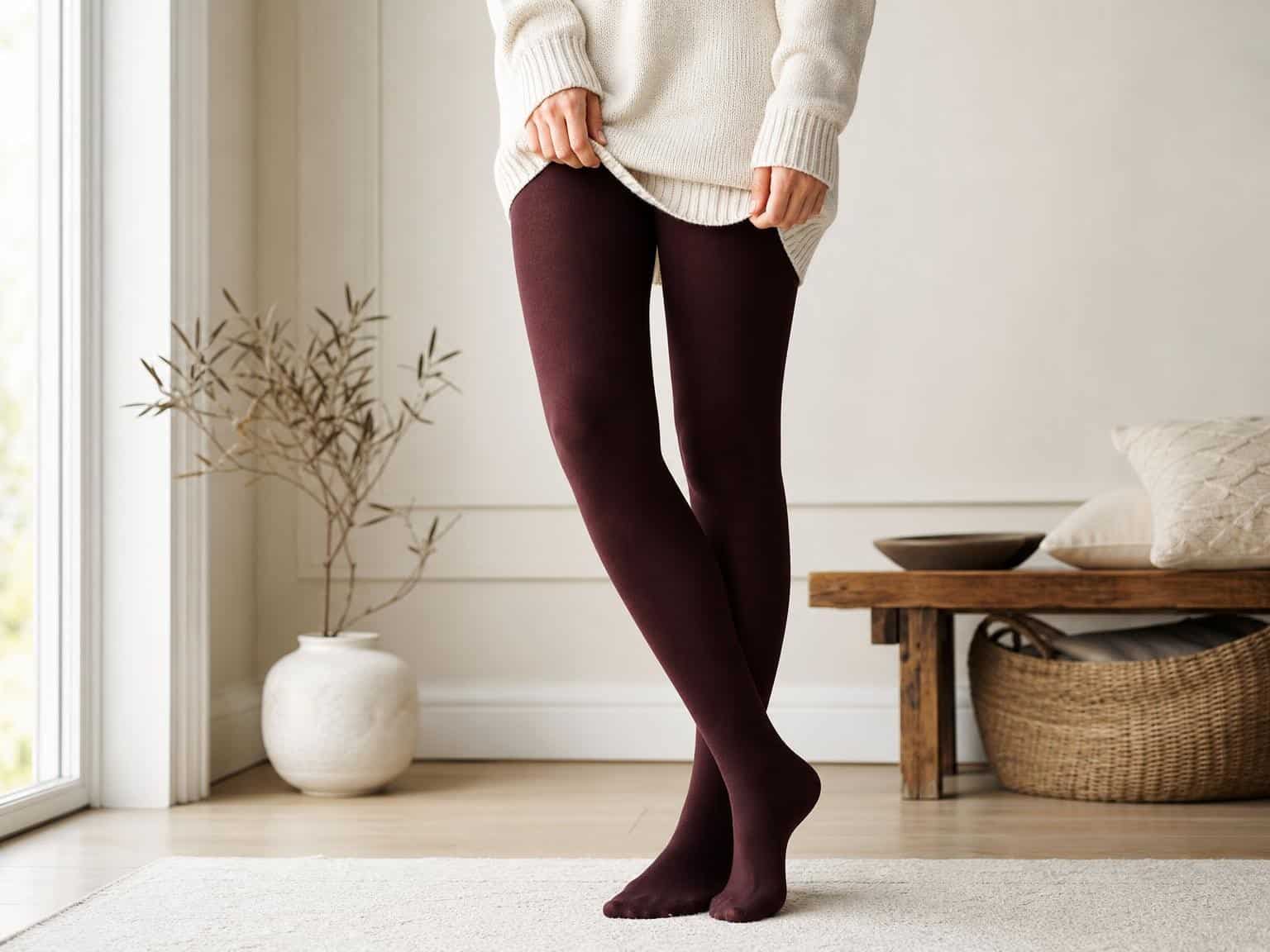
A pair of tights is never just a simple accessory you pull on under a skirt or dress. It plays a full role in the comfort you feel, shapes your silhouette, provides a sense of warmth, and contributes to the overall appearance of an outfit. Its durability, however, isn’t left to chance: it results from a delicate balance between yarn fineness, fabric composition, how well it fits your body, and the everyday care you give it. Mastering these few parameters helps you avoid many premature snags and, above all, to replace your pair only when it’s truly necessary.
Understanding Denier and the Level of Opacity
What Denier Means
Denier is a unit of measurement that expresses the weight, in grams, of 9,000 meters of yarn. The higher this number, the coarser the fiber tends to be, leading to a thicker, more opaque, and warmer fabric. However, don’t treat it as an absolute quality marker: the fiber composition, manufacturing process, and the intended use of the product weigh just as much when it comes to durability.
Matching the Filament Fineness to the Use
A fine and sheer model will suit dressier ensembles, while a semi-opaque or opaque version provides a more covered look, ideal for everyday wear or chilly days. The choice comes down to finding the right balance between transparency, warmth, comfort, and mechanical durability. There isn’t a universal thickness that fits all situations: it depends on the context and what you’re after.
Choosing the Right Material and Fit
The Main Fibers to Compare
Polyamide, better known as nylon, gives the yarn its finesse and elasticity. Elastane, often included in small amounts, improves the fit and helps the fabric to resume its shape after being stretched. Wool and cotton contribute warmth and comfort, but require more conscientious care. It’s worth taking the time to read the fiber composition label: it lists the fibers present with their percentages, arranged in descending order of importance.
Check the Size and Comfort Zones
A size that’s too small puts excessive tension on the fibers, promoting snags and shortening the life of the product. It’s best to rely on the size chart based on height, weight, and body shape, and don’t forget to check the waistband width, whether there’s a gusset, and the overall comfort of the seams. A well‑fitted pair is often more durable than one that’s too tight, even if both show the same composition on paper.
Habits That Limit Snags in Daily Wear
A few simple habits are enough to noticeably reduce snag risk: put on the tights gradually, pulling up from the ankle rather than tugging at the waistband; remove rings and bracelets that could snag the knit; and inspect the state of your nails and the inside of your shoes or boots, especially around seams and closures. Choosing tights suited to your body type and intended use makes daily comfort much easier and helps avoid unnecessary stress on the fabric.
Washing and Drying Tights Without Damaging the Fibers
The care label instructions should always have the final say. The symbols used are standardized by EN ISO 3758 and indicate washing, bleaching, drying, and ironing. When the label permits it, a delicate wash at a low temperature, preferably in a laundry bag, limits friction with other garments. It’s also wise to avoid harsh products and opt for air drying, never twisting the fabric: simply press gently to remove excess water.
Storing, Repairing, and Replacing at the Right Moment
Tights benefit from being stored clean and fully dry, protected from anything that could snag them. When you encounter a small snag, resist the urge to tug at the knit—this will only widen the tear. As for replacement, it becomes sensible when the knit is noticeably stretched or the waistband struggles to hold the garment in place.
Practical Benchmarks to Remember
- Fineness : choose the denier based on the desired opacity, the season, and the intended use.
- Composition : check the fibers listed on the label and their proportions.
- Size : opt for a comfortable fit, without excessive tension on the fabric.
- Care : follow the washing symbols and minimize friction.
- Durability : handle the textile with care and store it properly after use.
Ultimately, the lifespan of a pair of tights depends as much on the initial choice as on how you treat them daily. Before you buy, three factors deserve careful consideration: composition, thickness, and size. With care in line with the manufacturer’s recommendations, you’ll preserve the fabric’s qualities and avoid replacing them too often.