
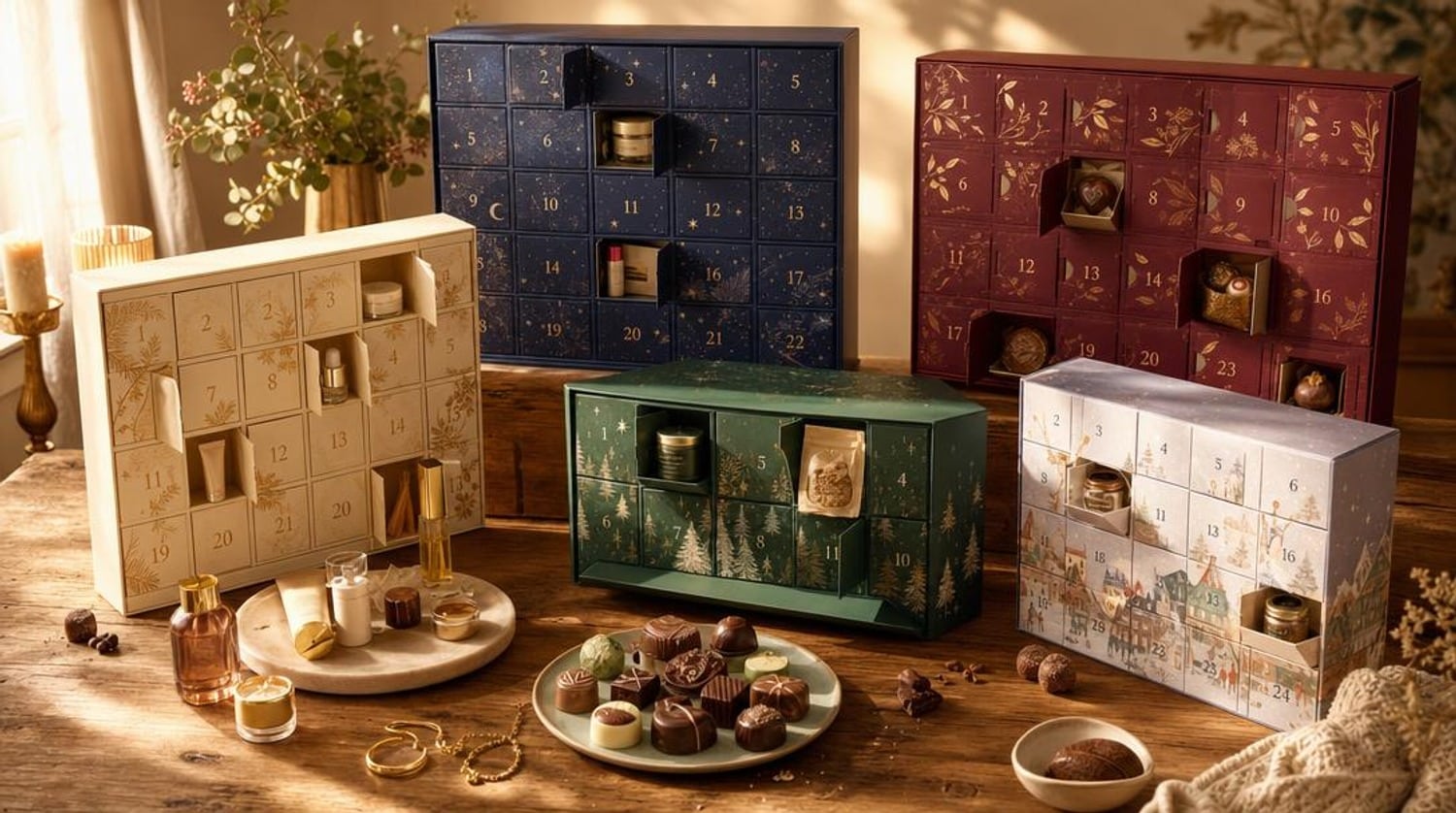
The Advent calendar has evolved into a gift in its own right, far beyond chocolate. Discover the season’s major trends to find the one that truly fits the person you want to spoil.
For years, Advent calendars were synonymous with little chocolate squares and cardboard doors. That image now belongs to a bygone era. In December, Advent calendars hold a special place on gift lists, for both adults and children. Beauty, well-being, games, nature, zero waste — formats have proliferated and the themes span nearly every interest. The ritual of opening a new window each morning remains, but what’s inside has radically changed.
This shift partly reflects a coming expectation around Christmas gifts: offering a lasting experience rather than a single item. An Advent calendar is twenty-four small moments of anticipation, spread from December 1st to 24th. It’s also a gift you can tailor to the recipient’s profile, making it a thoughtful and considerate option. To explore the season’s original Advent calendars, Nature & Discovery offers a selection focused on well-being, nature, and curiosity, designed for all ages.
The Season’s Big Trends
Beauty and Wellness: The Daily Ritual
Beauty and wellness calendars have established themselves as one of the most sought-after categories in recent years, and the trend remains strong in 2026. The concept is simple: each door hides a sample or full-size product—a skincare item, an essential oil, a wellness accessory, or a beauty tool. This format lets the recipient explore natural product lines without committing to a full-sized bottle or product, which aligns with today’s expectations for clean cosmetics and a gentle approach to self-care.
For someone who pays close attention to what they apply to their skin, a calendar oriented toward aromatherapy, plant-based care, or relaxing rituals can be both original and practical. The sensory dimension—fragrance, textures, little rituals—gives this type of calendar an immersive quality that few other gifts can match over an entire month.
Teas and Infusions: For Flavor Aficionados
The tea and herbal infusion culture has expanded widely in recent years. A calendar of infusions or teas lets the recipient wake up to a different aroma each morning: fresh herbs, spiced blends, dried blossoms, rooibos, or premium green tea harvests. It’s a particularly good choice for people looking to cut back on caffeine or who savor the ritual of a hot beverage as a daily pause.
This type of calendar suits both seasoned tea lovers and curious tasters eager to explore new flavors without a hefty upfront investment. Individual formats (tea bags or loose-leaf portions) also help minimize packaging and fit a more sustainable approach.
Games, Puzzles, and Riddles: For Curious Minds
The “game” Advent calendar has found its audience among adults who prefer stimulating content to consumer goods. Each door might hide a riddle to solve, a puzzle piece to assemble over the month, a mini-logic challenge, or a daily brain teaser. This format creates a special anticipation: you don’t just open a door, you engage with it.
For a family, a calendar of this kind can become a shared morning ritual at breakfast. For an adult who loves puzzle games or escape rooms, it’s a way to keep the mind active throughout December.
Science and Nature for Kids
For younger children, calendars focused on science or nature discovery are especially popular. Each door might contain a seed to plant, a tiny experiment to perform, a mineral to observe, a preserved insect, or an illustrated card presenting an animal or a natural phenomenon. This type of calendar feeds a child’s curiosity and invites them to observe the world around them, aligning well with brands focused on nature and discovery and their mission to connect humans with the natural world.
Beyond immediate delight, these calendars often leave a lasting impression: a child who plants their first seeds in December or performs their first natural chemistry experiment remembers the experience long after the holidays have passed.
Reusable and Zero-Waste Calendars
Given the amount of packaging produced by disposable Advent calendars each year, reusable versions have gained a significant foothold. Wooden models with tiny drawers or numbered compartments, and fabric versions with fillable pockets, let you build your own calendar, fully customize it, and reuse it year after year.
Self-filled calendars also invite creativity. You can slip in little notes, chosen treats, costume jewelry, seeds, mini-books, or any other suitable object tailored to the person you’re surprising. This approach not only reduces waste but also makes the calendar even more personal.
A Quick Guide to Picking the Right One
Choosing an Advent calendar comes down to three main factors: the recipient’s age, their interests, and your budget. For a child under six, nature, animals, and simple sensory experiences are the best fit. For a teenager or an adult, beauty, games, gastronomy, or personal development offer greater depth.
Budget-wise, 2026 calendars span a wide range—from affordable options around $25–$35 to more elaborate editions over $110 for premium content. Reusable calendars often require a higher upfront investment, but the cost is spread over several years of use.
A practical point not to overlook: for an Advent calendar to truly fulfill its role, it should be in the recipient’s hands by December 1st. That means planning ahead with orders and deliveries, especially for online purchases. Ordering in mid-November helps avoid stock shortages, which are common for popular items, and gives shipping plenty of time without rushing.
In Summary
The Advent calendar has transformed into a standalone gift designed to last through December and to fit a wide range of personalities. This season’s trends—well-being, tea, games, nature, and reusable formats—show that the offering now goes far beyond the morning chocolate, delivering genuine themed experiences.
Whether it’s a science-loving kid, an adult who favors natural self-care, or a whole family seeking a shared ritual, a well-chosen Advent calendar can be one of the season’s most memorable gifts. The key remains choosing it based on the recipient’s personality and ordering it well in advance so it’s ready for opening on December 1st.