
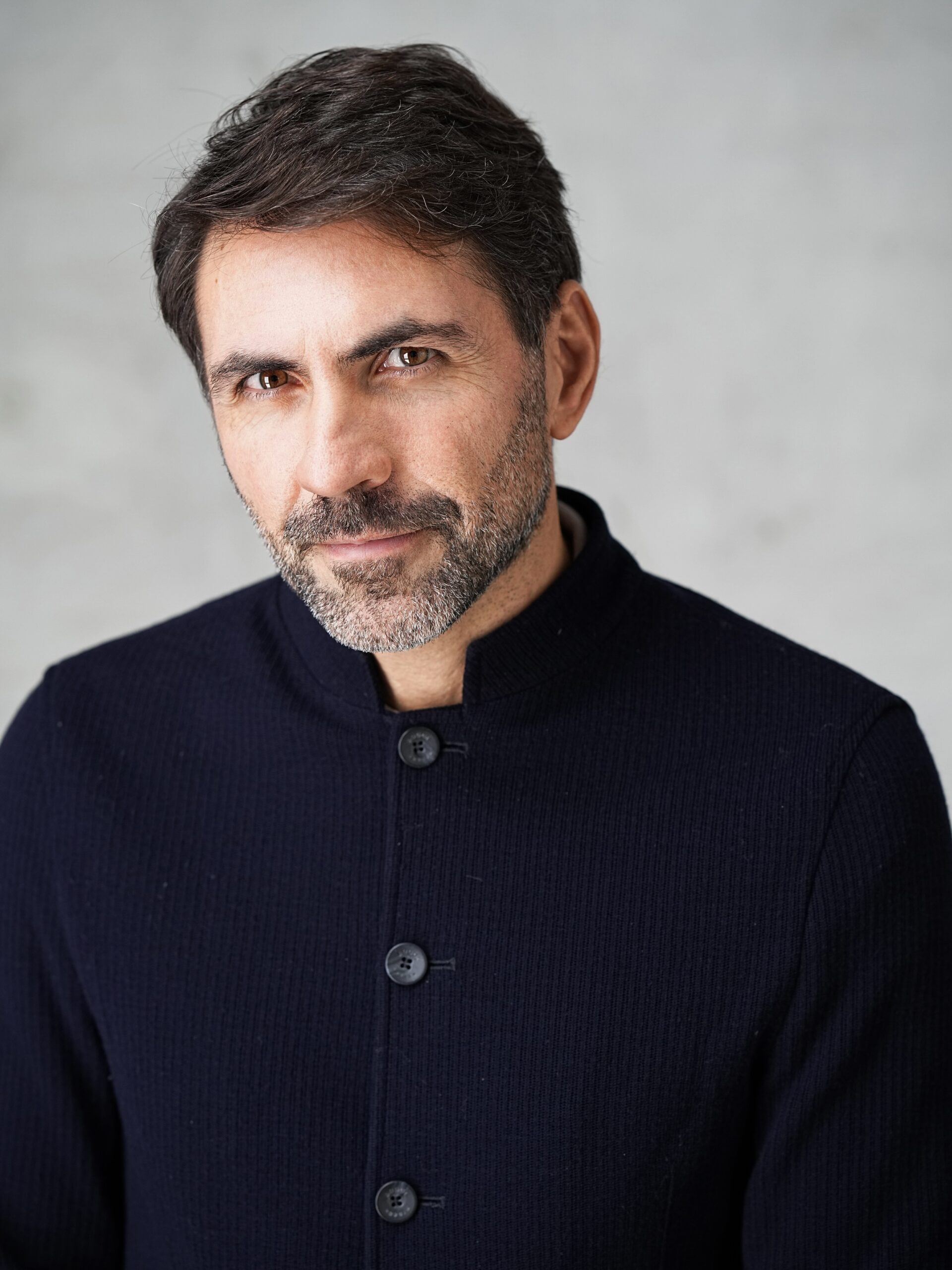
In contemporary discussions of longevity, alongside diet, physical activity, and strategies aimed at the biological mechanisms of aging, the role of the mind, spirituality, and healthy lifestyle choices is gaining increasing attention. Meditation, stress regulation, the quality of breathing, and the cultivation of awareness are today increasingly relevant areas of research, capable of offering new perspectives on the very concept of healthy aging.
It is in this intersection between biology, neuroscience, and ancient contemplative practices that Daniel Lumera’s path fits—biologist-naturalist, author, and international reference in wellbeing and meditation. A journey that brings scientific research into dialogue with millennia-old traditions, asking how mental processes and contemplative practices can dialogue with the body’s biology and contribute to the quality of aging.
With Lumera we explored the possible contribution of meditation to the modern culture of longevity, starting from a necessary distinction between meditation and mindfulness, and traversing some of the topics today at the center of research, from neuroplasticity to telomeres, up to the role of breathing in stress regulation. A dialogue that invites us to consider longevity not merely as an extension of life, but as the ability to preserve clarity, balance, and presence throughout the course of existence.
His path unites biology, meditative practices, and personal transformation. How has this integrated vision of the human being and well-being evolved over time?
«I have always been fascinated by that part of science that studies a natural approach to well-being and lifestyle. The World Health Organization has long identified three pillars of well-being: proper physical movement, proper nutrition, and the practice of meditation. I have always been fascinated by the connections between states of the mind and the biology of the body. The activity of our mind affects, for example, the balance of the main neuromodulators—from dopamine to noradrenaline, oxytocin, and serotonin. It is possible to establish a clear link between mental states and the functioning of the biological system. Similarly, I have long been drawn to contemplative arts. In my personal journey, on one hand I delved into the paths of awareness, therefore the contemplative arts in general; on the other, I am a biologist, naturalist, and researcher in the sociology of communication and cultural processes, a factor that has always shaped my rigorous approach to research and the scientific view of life. Naturally, beyond my mentor’s mandate, I spontaneously pursued the vocation of uniting science with the world of spirituality and awareness. This is how my passion was born, because I began first-hand to touch, by experiencing it myself, what happened through these kinds of practices in terms of well-being, quality of life, and health. Then I began to study the early scientific research, which exploded starting precisely in 2009, when Elizabeth Blackburn, Nobel Prize in Medicine, began to demonstrate that in two and a half months of meditation practice our bodies produce 30% more telomerase, the enzyme that repairs telomeres. I understood then that there was a genetic shift in the approach to studying these arts, a realization that pushed me to collaborate with great scientists and, at the same time, to bridge the ancient wisdom traditions that, millennia ago, without neuroscience, had understood how life worked and how to realign ourselves with natural bio-rhythms that give us health and well-being».
In common language, meditation and mindfulness are often treated as synonyms. You have long emphasized their differences. How can we distinguish them, and what aspects characterize each most?
«First of all, mindfulness refers to a state defined by classic spiritual literature as Sati: a state of presence, awareness, and full mental presence, which cannot in any case be defined as meditation. It is described (both in Buddhist literature and in the Indo-Vedic literature from which the Buddhist strand originates) as “a state that precedes meditation.” Meditation, instead, is defined in Sanskrit by the word Dhyana. There is a lot of confusion today about what meditation is and what it is not. Let’s start with what it is not: it is not mindfulness, not a New Age practice, not an esoteric practice, and in no way does it involve religion, prayer, or visualization. Meditation is often confused with mindful breathing, but paying attention to the breath is not necessarily a meditative state. Meditation is an ocean of awareness without limits, without form, without any defining features, and above all, without a subject that perceives something. It coincides with the cessation of the narrative of a separate identity—the ego or the “I”—and manifests a state of original purity, very much like that of newborn babies: pure life, pure existence, with no longer an ego as a separate observer. The meditative state, this ocean of pure awareness of being, is profoundly regenerating. Neuroscience has shown that it has a significant positive impact on health, well-being, and quality of life. This is the true meditative state. One of my roles is precisely to bring clarity back and, above all, to restore meditation to its original context. Meditation is, first and foremost, a laboratory of values, a lifestyle that presupposes consistency, perseverance, patience, dedication, devotion, and love. All of this has partially been lost today, impoverishing the meditative practice and reducing it to a simple logic of health and well-being. Meditation is much more than that: it is a state of consciousness».
What are today, in light of available scientific evidence, the main mechanisms through which meditation can influence the biological processes associated with aging and longevity?
«There are, first of all, four major aspects through which meditative practice can impact longevity and overall health. The first two aspects are genetic: the meditator’s mind regulates about 1,500 genes involved in the production of free radicals, oxidative stress, cell death, and cortisol. Meditative practice thus helps to reduce inflammation, the cornerstone of chronic diseases, Alzheimer’s, and cancer—the major illnesses of our time. The second aspect, as mentioned earlier, concerns telomeres, which science treats as biomarkers of longevity. So, on one hand we increase the production of telomerase, the enzyme that repairs telomeres, and on the other we are able to regulate the gene expression that weakens, accelerates aging, and chronically inflames the body. The third aspect concerns mental health and therefore the balance of our mind. At the Meditation Forum 2026 in Bologna last June, we involved participants in a public experiment, using a simple Visual Analog Scale (VAS) to demonstrate the striking impact on reducing perceived anxiety before and after the proposed mindful breathing practice. Studies also show how meditation reduces depressive states and panic attacks, conditions that influence stress in general, quality of life, and longevity. Finally, the last, extremely fascinating research thread is the enhancement of cognitive abilities, memory, focus, creativity, attention, and clarity—factors that greatly influence the quality of our lives. And today we know that the deeper and more meaningful a life is, the more likely it is to be long-lasting, because longevity also means quality of life».
Ennio Tasciotti, director of the Human Longevity Program at IRCCS San Raffaele, presented data from the study on the DL-SAC Fast Reduction meditational protocols you developed. In which direction are these experiments moving, and what results are emerging?
«As we highlighted with Tasciotti, the beauty and power of these protocols is that you may have never practiced meditation or you may have been meditating for twenty years, and this type of practice still has an impact. There is no need for a 28-week training or two and a half months: results are observed immediately, even in people who have never practiced meditation. And this is extraordinary because it means that, clinically, these protocols could be used in the future as a kind of “on-call” intervention in cases of extreme dysregulation. Naturally, we need to understand how, and that is precisely the line of research we are pursuing. Our research is moving toward contextualizing these protocols in educational settings, in universities, in schools, and even in correctional facilities: we think, for example, about managing violence, but also depressive states. We know there is an overwhelming use of psychotropic drugs in the prison population, as well as among young people. Imagine then the potential impact of this natural approach, in combination with pharmacology, within the transformative lifestyle changes that characterize contemporary society».
Among the simplest and simultaneously most studied tools in recent years is mindful breathing. Breathing represents, in fact, one of the few automatic physiological processes that we can voluntarily modulate, influencing emotional regulation, the autonomic nervous system, and the stress response. What role can it play today in promoting health and longevity?
«Breath is fundamental. I like to call it the first natural medicine, because it represents one of the few functions of our body that is both automatic and voluntarily controllable. From an evolutionary perspective, this is essential: if we must respond quickly to danger, we cannot be thinking about how to breathe—the breath self-regulates. Yet emotional states profoundly influence how we breathe. Anxiety, fear, and stress tend to make breathing shallower and more clavicular, reducing oxygenation and negatively impacting brain function and the whole body. The good news is that this relationship works in the opposite direction as well. If emotions alter breathing, we can use the breath to alter emotional states, gradually transforming anxiety and agitation into calm, balance, and mental quiet. This intuition existed already in Vedic tradition, which described the breath as “the densest part of the mind”: by changing the breath, you also change mental activity. Today neuroscience is providing a biological explanation for what was perceived thousands of years ago. In our protocols we use different breathing sequences. The observations suggest that some sequences may promote an increase in noradrenaline, supporting attention, motivation, and vital energy, while others have been associated with lower cortisol levels and a state of relaxation. It is remarkable to see how such a simple function can profoundly influence our biology and affect important neuromodulators. For this reason, I consider the art of breathing one of the most valuable tools we have to care for our health and quality of life».
We have discussed neuroscience, telomeres, breathing, and quality of life. If you had to condense all of this into a single idea, what message would you give about the contribution meditation can offer today to the modern longevity culture?
«Longevity is first and foremost a matter of awareness and listening: to one’s deepest biorhythms, to one’s authentic needs, and to one’s values. It is also a matter of being consistent with oneself and with one’s nature. In this sense, meditation is the most powerful art and natural medicine we have at our disposal, because it creates that inner environment of peace, quiet, observation, and listening that constitutes the humus of longevity. It is the substrate of a long life, the ground on which our health-oriented choices, decisions, and even the capacity to pause and regenerate mature. That is why the link between meditation and longevity is extremely strong: meditation provides the ground on which we can build all the other health- and well-being–oriented choices».
Article excerpt from the November 2026 issue of Karla Miller

Abbonati a Karla Miller