
Article produced with non-binding support from Viatris
Antimicrobial resistance (AMR) represents a global, continuously expanding phenomenon with ever-greater implications for public health. Caused by the acquired ability of bacteria, viruses, fungi, and parasites to survive drugs that would normally eliminate them, AMR in 2021 was responsible for more than 1 million deaths and, overall, nearly 5 million deaths worldwide, with a death toll up by about 80% compared to thirty years ago.
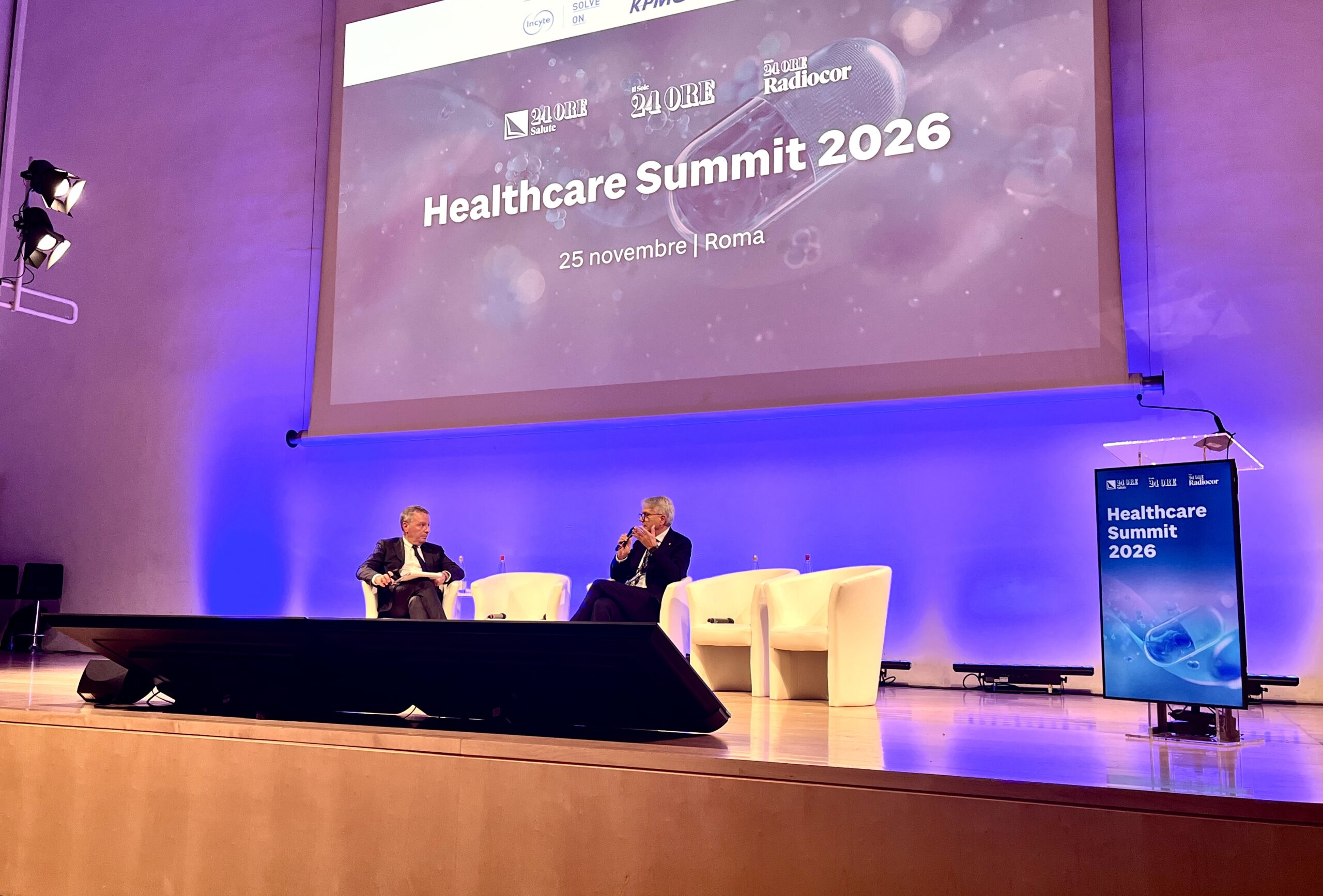
The World Antibiotic Awareness Week (November 18-24) and the Il Sole 24 Ore Healthcare Summit in Rome provided an opportunity to discuss the data and the emerging challenges of antimicrobial resistance. At the center of the discussion were synergies and integrated strategies following the “One Health” approach, which treats human health, animal health, and the health of the planet as interconnected and all affected by AMR.
Six bacterial pathogens, among the most antibiotic-resistant, are considered the main culprits of AMR: Escherichia coli, Staphylococcus aureus, Klebsiella pneumoniae, Streptococcus pneumoniae, Acinetobacter baumannii, and Pseudomonas aeruginosa. Alone they account for 75% of AMR-related deaths. In the absence of One Health strategies, it is estimated that by 2050 AMR-related deaths could exceed 8 million globally, with costs more than doubling for health systems worldwide. The spread of AMR, beyond the misuse of antibiotics and improper behaviors in management, intake, and administration, is further worsened by the growing unavailability of antibiotics, especially off-patent.
“Antibiotics, including off-patent ones,” stated Claudio Bellomo, Policy, Government Affairs & Advocacy Senior Director of Viatris, at the Healthcare Summit, “are essential for treating bacterial infections, for preventing complications during surgical procedures, and for managing chronic diseases. When first-line antibiotics aren’t available, patients may receive less effective alternatives. Ensuring their availability is therefore a critical factor in promptly treating infections appropriately, thereby combatting AMR.”
Opportunities and ways to intervene could be undermined by the current scenario, “governed” by rising costs across the entire drug manufacturing chain and by falling prices for packaging introduced to the market.
Unavailability: The Underlying Reasons
The independent study “Ensuring Access, Improving Lives. Strengthening Patients’ Access to Off-Patent Medicines in Europe,” conducted by New Angle and sponsored by Viatris in 16 European countries, investigated the root causes of the growing unavailability of medicines and the risks threatening the supply of essential drugs, with particular attention to antibiotics.
The data show between 2020 and 2024 a dramatic rise in production costs and record energy price surges (+92.5% for gas and +93.4% for electricity) and for chemical raw materials (+16.6%), creating a deeply unsustainable context.
Regarding the Italian landscape, in the same four-year period, a total of 31 products were withdrawn from the market, reducing supplier diversity and fueling the risk of shortages for essential molecules.
Priority Measures
To address this critical situation, urgent measures across the entire supply chain are needed: economic reforms, sourcing and supply-chain improvements, together with public education on the responsible use of antibiotics. Interventions must be defined and shared by all stakeholders, from the healthcare sector to institutions and logistics.
“The AMR problem,” emphasized Claudio Bellomo, “needs to be addressed and managed with the structuring of appropriate policies. These should make the production and distribution of antibiotics sustainable, with targeted interventions to define multi-level dynamic pricing that reflects the number of suppliers in the market to maintain healthy competition, to realign distribution shares in the retail channel with more balanced margins among manufacturers, wholesalers, and pharmacies, to reform hospital tenders to include more winners, predefined quotas, and criteria beyond price—such as reliability of supply, quality, and sustainability—in line with the principles of the Public Procurement Act, and finally, to gradually reduce payback in the hospital channel to ease the economic pressure on suppliers, starting with products bought through public bids, so as to guarantee continuous access to essential medicines.”
Integrated Stewardship for Community Management
General practitioners (GPs) and local pharmacies must play a proactive role in AMR management, leveraging and making the most of diagnostic tools, local epidemiological data, ongoing training, and citizen communication, each within their own competencies.
An integrated territorial stewardship should combine more widespread and effective point-of-care diagnostics with guidelines adapted to the local context. This approach would enable PCPs to identify AMR cases more accurately and guide therapeutic decisions.
Indeed, general practitioners are the first point of access to the health system, with direct responsibility for prescribing antibiotics. However, in daily practice they face recurring challenges: patient pressure for antibiotics even for viral infections, the scarcity of rapid on-site tests, empirical prescriptions without objective data, and limited or uneven integration between community care and hospitals. Added to this are prescribing directives from different specialist contexts that require greater coordination to ensure appropriateness and continuity of care, fragmented local epidemiological data that is hard to access, and a need for practical, up-to-date training for GPs.
It is also crucial to promote health education campaigns aimed at the public and patients about antibiotic resistance and the importance of vaccinations, including through involvement of associations, industry, and health professionals to make communication multi-directional and effective, as well as to promote the support and development of national training projects and informational tools.
“Often the public isn’t aware that preventing infections through vaccines also reduces the need for antibiotics and, consequently, lowers the risk of resistance development,” Bellomo added. “It is therefore important to raise general health literacy and awareness of prevention. To facilitate this process, AMR health literacy should be promoted from school age to prevent behaviors that could become ingrained in adulthood. Only a systemic approach, integrating science, policy, communication, and civic participation, can turn AMR from a ‘silent pandemic’ into a shared and manageable challenge. The rise of public awareness is essential so that every individual becomes an active participant in preventing and controlling antimicrobial resistance, thereby safeguarding the health of future generations.”
Three-Pillar Commitment
Viatris’ commitment to combating AMR is oriented along three directions:
- Promote a collaborative approach as a tool to develop comprehensive, shared, and integrated strategies among all system actors to prevent the emergence and spread of antimicrobial-resistant pathogens.
- Ensure access to effective antibiotics, including off-patent medicines, and make them available to avoid suboptimal treatments that fuel resistance.
- Support stewardship, educating on appropriate antibiotic use only when necessary, on correct dosing and duration of therapy, and on proper disposal of unused medicines to reduce their dispersion into the environment and help combat antimicrobial resistance.
“AMR – Bellomo concluded – cannot be solved by a single measure: it requires an integrated package of price and procurement policies, stable access to medicines, proper antibiotic use, and infection prevention. Without structural interventions, shortages can accelerate resistance and turn it into a true health emergency.