
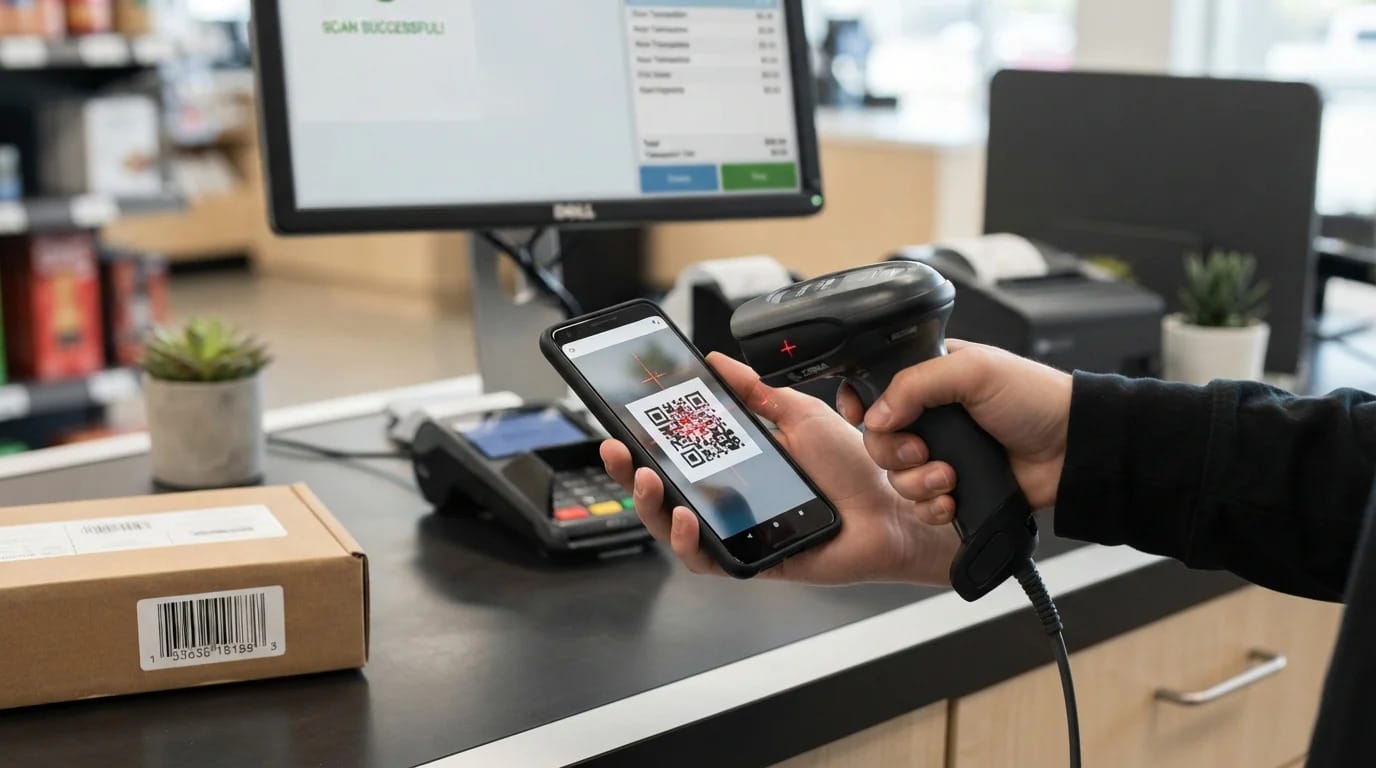
2D codes can ease this task when they carry batch data that equipment and software know how to use. But their presence on packaging does not guarantee this capability.
In its article about preparing French rural small and midsize businesses for Sunrise 2027, QR NOW emphasizes the importance of reliable product data and compatible equipment. An update to the recall reporting on RappelConso gives this issue very tangible relevance.
Since March 11, 2026, professionals filing a recall on Pro.Rappel: Conso must indicate the quantity of sold products affected by the record and the corresponding unit. The update published by the Ministry of Economy on March 25, 2026 specifies the new information to report. This requirement does not mandate tracking every single product sold nor adopting a 2D code. It does require, however, the ability to retrieve the data needed for the recall filing.
Locating a Lot Across Multiple Sales Channels
Consider a producer who sells the same SKU directly from the farm, at markets, in several grocery stores, and through a regional distributor. If a lot has an issue, they must identify its recipients and pull the units that are still out there. When information is missing, the recall may need to extend to all units of the product line, beyond the affected lot alone.
The common EAN/UPC barcode identifies the commercial reference by its GTIN. It does not encode the lot number and cannot, by itself, distinguish two successive lots. That number may appear elsewhere on the packaging and be tracked in the company’s records.
Some GS1-standard 2D codes can combine the GTIN with variable data, such as the lot number or expiration date, on a single symbol that can be read automatically. The catch is that these details must be retrievable at the right stages: in production, in inventories, with distributors, or at the point of sale.
If the follow-up breaks between two players, the printed code does not fill the gap.
Credit Pexels
What Sunrise 2027 Envisions
Sunrise 2027 aims to enable checkout systems to read the GTIN embedded in GS1-compliant 2D codes by the end of 2027, in addition to linear barcodes. GS1 envisions a coexistence period for the formats. The deadline therefore does not constitute a blanket requirement to replace every barcode on packaging.
Reading the GTIN is only the first step. Using the lot number to block a sale requires several additional components. The lot must be encoded, transmitted by the scanner, and interpreted by the cash-register software. The system must then be able to compare it against recalled lots and enforce a blocking rule.
A register that only captures the GTIN will not be able to distinguish the recalled lot from other lots of the same product.
The same limitation applies to sales already completed. To trace which lots were sold from cash-register transactions, you must have kept a link between those transactions and the lots. A number printed on the packaging cannot retroactively reconstruct data that was never captured.
A QR Code Readable on a Phone Is Not Enough
In everyday language, “QR code” often refers to any square code found on a product. At the register, how it looks matters less than how the data are formatted and encoded.
GS1 standards include the QR Code with a GS1 Digital Link URI syntax, the GS1 DataMatrix, and the Data Matrix with GS1 Digital Link URI syntax for checkout.
A QR code that opens a product information page is not automatically usable for checkout. Just because a phone can open it does not prove that a cash register can retrieve a GTIN, a lot number, or an expiration date from it.
Before changing its labels, a small business must specify what it expects from the code. Informing consumers, identifying a lot in its inventory, and preventing the sale of a recalled product require different functions. A single code can serve multiple uses, provided that the data and the systems align.
Verifying Traceability Before Changing Packaging
The first check concerns the lot number itself. The production lot must be linkable to the lot recorded in stock and transmitted to customers. If it is embedded in a 2D code, the company must also verify that it appears on the correct units.
Next, determine who will be able to read it. A producer can generate a code containing all the intended information without the distributor or retailer having the tools to exploit it.
Then comes the software’s operation. Receiving a lot number, displaying an alert, and preventing a sale are three distinct actions. They must be configured and tested. For a small operation, the system must remain usable day-to-day, even when several people are involved or a partner takes over.
Testing a Recall on a SKU
In 2026, a company can start with a pilot limited to a single SKU, one lot, and one sales channel. Where is the lot recorded at manufacturing? What information accompanies the shipment? Can it be found in the recipient’s stock? How would retailers be warned about a recall?
This exercise helps identify missing information before deciding to change labels or equipment. The coexistence of linear codes and 2D codes allows for a staged rollout, but the company must also check its trading partners’ timelines.
The POS provider can be included in the test. Does the reader decode the intended format? Does the software retrieve the lot or only the GTIN? If the lot appears on a recall list, does the POS display an alert or block the sale?
A real-world trial helps reveal where traceability works and where it stops.
Two Developments to Distinguish
The change to RappelConso in March 2026 concerns the information required to report during a recall. Sunrise 2027 concerns the reading capabilities of POS systems. These two developments are not a single measure, and neither by itself guarantees traceability for every unit of a lot.
For a rural SME selling across multiple channels, work can begin with the data already on hand. Before adding a 2D code, it must be possible to answer a simple question: if this lot had to be recalled today, would it be able to locate its recipients, the units still in inventory, and the quantities sold? The gaps identified will provide the starting point for trials.