
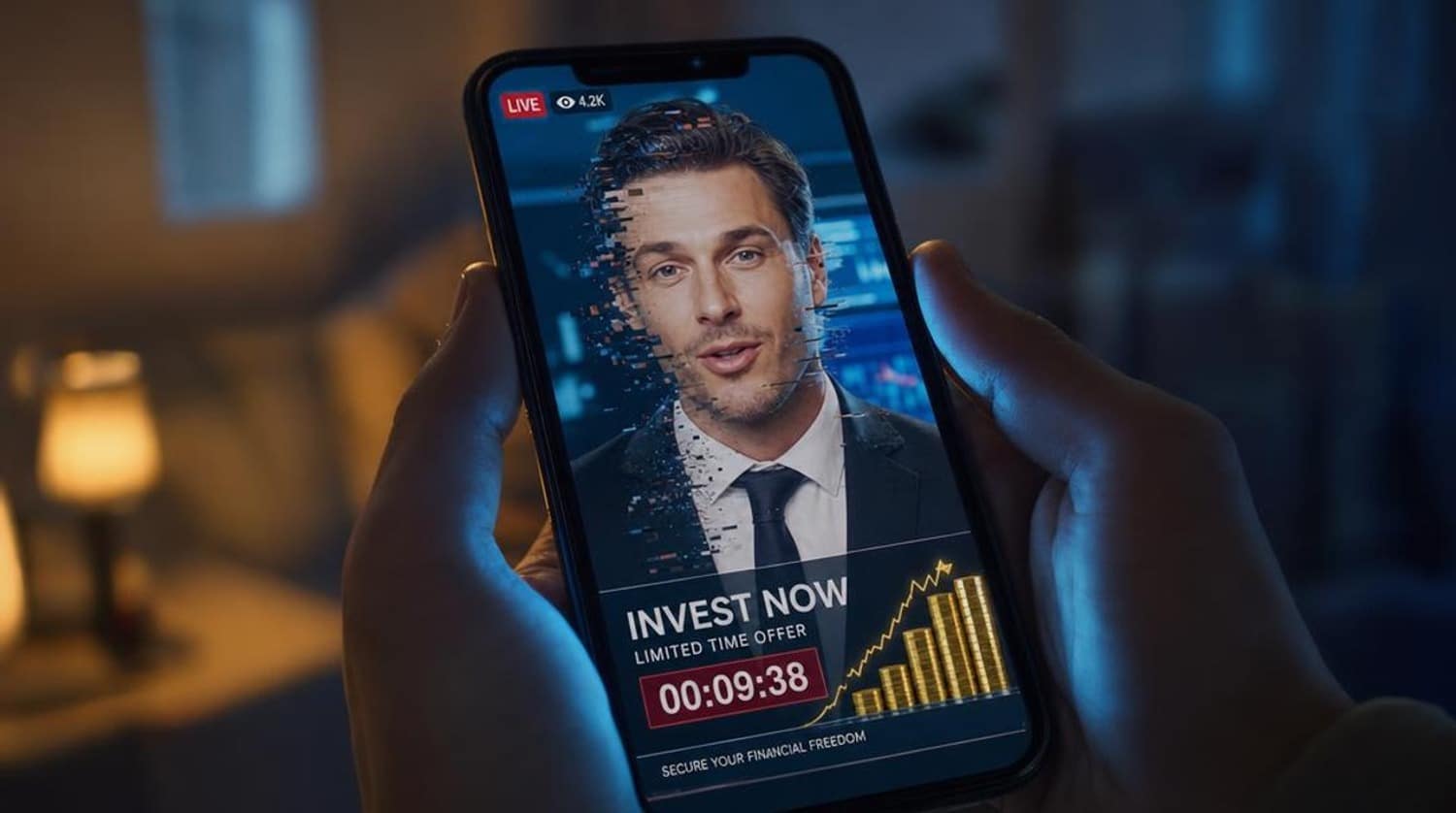
Its voice sounds natural, its face is instantly recognizable, and you’re urged to hit subscribe within seconds. Everything appears authentic. Yet, all of it is a lie.
What is a deepfake?
A deepfake is a video or audio recording that has been created or manipulated to resemble a real person. Sophisticated software uses public imagery to generate a person’s facial expressions, voice, and intonation. The scammers weave these elements into fake news articles, bogus interviews, and counterfeit sign‑up forms, giving their scams an air of legitimacy.
Scammers prey on our familiarity with others and our desire to get ahead. They promise high returns, fast payouts, or guaranteed profits. Fake comments and screenshots showing potential gains add to the deception. For the crook, the ultimate goal is often to coax you into making a first deposit.
Warning signs to watch for
1. Odd details in the video or audio
Pay attention to the little things. Are the lips syncing with the words? Does the voice sound flat, monotone, or robotic? Do the eye movements or facial expressions look off?
Other clues include blurry facial features or hair, strange lighting, unusual moments, and backgrounds that look “added in.”
Not every video with a flaw is necessarily fake, and even the most convincing deepfakes can seem credible at first glance. Never rely on visuals alone.
2. Promises that sound too good to be true
Be skeptical when a celebrity you follow is touting the merits of an investment they’ve never discussed before. Be wary of guaranteed returns, inflated talk about “the banks’ closely guarded secrets,” and countdown clocks.
3. Suspicious websites and social media accounts
An advertisement redirects you to a page that imitates a news site or a TV channel. The web address is slightly off. Are comments disabled, repetitive, or oddly similar? Is the account sharing the video brand-new or nearly dormant?
There is little verifiable information about the company, terms of service are missing, or details cannot be checked. In general, you should expect the ad to appear on the official, verified accounts of the person. Just because you see a familiar face in an ad doesn’t guarantee they’re actually involved.
How to verify an ad before you act
What you should do before you click, sign up, or pay.
- Take a pause before you respond. Resist the pressure to “act now” due to supposed long waits or shortages.
- Where is this coming from? Look up the person’s name and what they’re offering on a search engine, check their verified accounts, and see if reputable outlets have validated the information.
- Verify the company. Refer to the appropriate registries for its activity, such as the US equivalents like the SEC’s EDGAR database, FINRA’s BrokerCheck, and state regulators’ warning lists. Note that not appearing on a watchlist does not guarantee trust.
- Examine the website address. Carefully inspect every letter and open the authentic page directly. Do not click into the advertisement itself.
- Personal safety. Don’t rush to send money, your identification documents, card details, or one‑time security codes to an unexpected caller.
Be wary of anyone who then promises to help you recover your money if you pay a fee up front.
Already clicked, signed up, or paid? What to do next
Don’t panic. These are scams designed to fool you.
If you have already paid, report the fraud to your bank or card issuer and learn what steps to take. If possible, stop any further payments, update the passwords for your other accounts, and save screenshots of messages and screens, along with the transaction details.
Please tell us where the ad was originally posted and report it to the platform where you saw it. In the United States, visit the Federal Trade Commission at reportfraud.ftc.gov and the Internet Crime Complaint Center (IC3) at ic3.gov for guidance on how to report and what actions to take. Your state attorney general’s office can also provide resources.
Be alert to suspicious calls and text messages. Scammers sometimes try to reel in former victims by offering to help them recover their money.
Protect your email address and your personal accounts
Fake signup pages can also subscribe you to unwanted emails and calls by using your email address and phone number. Use a separate email address and phone number for signups—e.g., a private email and a non-primary phone line. Keep your primary email for government communications, banks, and family; use different passwords and enable two‑factor authentication whenever possible.
Having a separate address won’t completely shield you from scams. The verification steps above remain your best defense.
Five questions to ask before believing an advertisement
Here are the questions you should ask before backing an ad featuring this familiar face:
This article is designed to help everyone spot fraud and does not constitute investment advice or a recommendation to invest.
Return to the beginning of the video. You now know what to look for: the original source, its content, and a brief pause to think before you start watching again. A familiar face may grab your attention, but always prioritize fact‑checking over familiarity.