
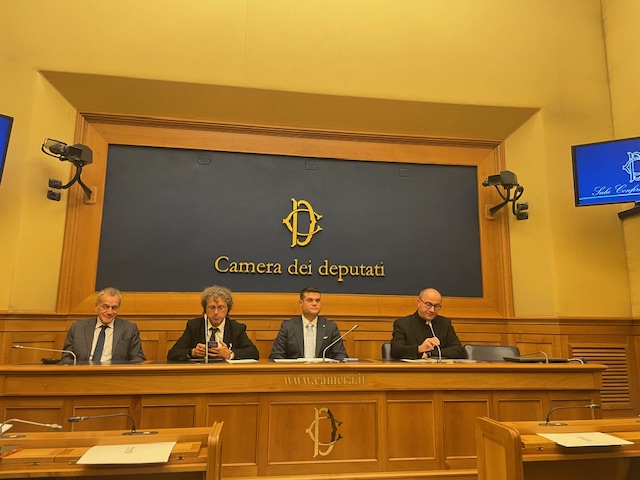
Longevity stands as one of the most powerful transformations of contemporary society and, at the same time, a strategic challenge for Italy’s future. With this spirit, the Parliamentary Intergroup on Longevity was born, unveiled on October 28 at the Press Room of the Chamber of Deputies. The primary objective is to bring the topic to the center of the political agenda, fostering stable, cross-cutting dialogue beyond party lines among institutions, the scientific community, professionals, associations, and productive sectors.
As highlighted by the president of the Intergroup, the Representative Erik Pretto (XII Commission on Social Affairs), longevity is an extraordinary achievement that nonetheless calls for concrete solutions. For the first time in recent history, life expectancy has shown signs of slowdown due to factors such as obesity, diabetes, and unhealthy lifestyles, reminding us that living longer is not a milestone secured forever.
It becomes essential, therefore, to make the Intergroup a normative framework and a forum for dialogue to craft proposals useful at the legislative level, overcoming territorial gaps, such as the profound disparity in life expectancy and health between different regions of the country, and ensuring equitable access to innovation.
From Treating Disease to Putting the Person at the Center
The concept of active longevity demands a paradigm shift in the organization of the socio-health system. Claudio Zanon, a surgeon and expert in health governance, underscored that the real question to ask is how to transform the years gained into years of health, autonomy and participation. “Prevention cannot be reduced to a late intervention, but must be configured as a strategic investment across the entire life course, capable of early recognizing fragility, strengthening the network of proximity and the territory, and concretely supporting families and caregivers.” In the same vein, Deputy Gian Antonio Girelli, president of the Intergroup for Prevention and Risk Reduction, reiterated that health care of the future “must shift the focus from merely managing disease to the holistic care of the person,” reminding us that aging is not a diagnosis but a life stage rich in value and experience.
The Ethical and Evolutionary Perspective: Padre Alberto Carrara’s Intervention
To offer a deep and radically transformative reading of the phenomenon, Padre Alberto Carrara, a neuroethicist and leader of the Vatican Longevity Summit, provided a profound interpretation. In his remarks, Padre Carrara emphasized that the emergence of the Intergroup represents a crucial step in addressing something that is not merely a demographic, health, or economic issue, but «a profoundly human, cultural and ethical challenge.»
Carrara drew attention to a crucial paradox: Italy is one of the longest-living countries in the world (with an average of 83.4 years), yet this remarkable achievement in medicine and research obliges us to guarantee health, participation, and quality of relationships in an equitable way. To do this, a fundamental cultural leap is needed: to abandon a purely geriatric view of longevity in favor of a systemic and evolutionary perspective.
The key question posed by Carrara directly interrogates our present: «Whom should we care for today if we want to promote tomorrow’s longevity?» The answer touches the very roots of society: we must start with children, adolescents, the young, and their families. The future of longevity is decided today in schools, workplaces, and urban and social policies.
Supporting this vision, the neuroethicist cited alarming data on youth health: from mental distress—where suicide ranks as the second leading cause of death among 10–19-year-olds in Italy—to rampant loneliness (with high percentages among girls reported by WHO Europe), to poor dietary habits and sedentary lifestyles (80% of adolescents worldwide do not meet the recommended levels of physical activity, and more than half of 15-year-olds do not regularly eat fruit and vegetables). Because the developing brain in children and adolescents is highly plastic and vulnerable, today’s sufferings and neglects jeopardize the health of adults and the elderly.
Hence the crucial importance of focusing on the first 1,000 days of life and promoting a cultural shift that starts with education and the awareness of mothers and young people (the central theme of the upcoming Vatican Longevity Summit). As Carrara underscored while introducing the principles of a Code of Ethics for Healthy Aging, presented at the Vatican Longevity Summit last spring, what we choose today, from lifestyles to environments, matters for tomorrow. “Overcoming the prejudice that sees the elderly solely as a cost, and instead valuing their wisdom, memory and social cohesion, means reweaving the essential intergenerational pact needed to build a truly inclusive country.”
Abbonati a Karla Miller