
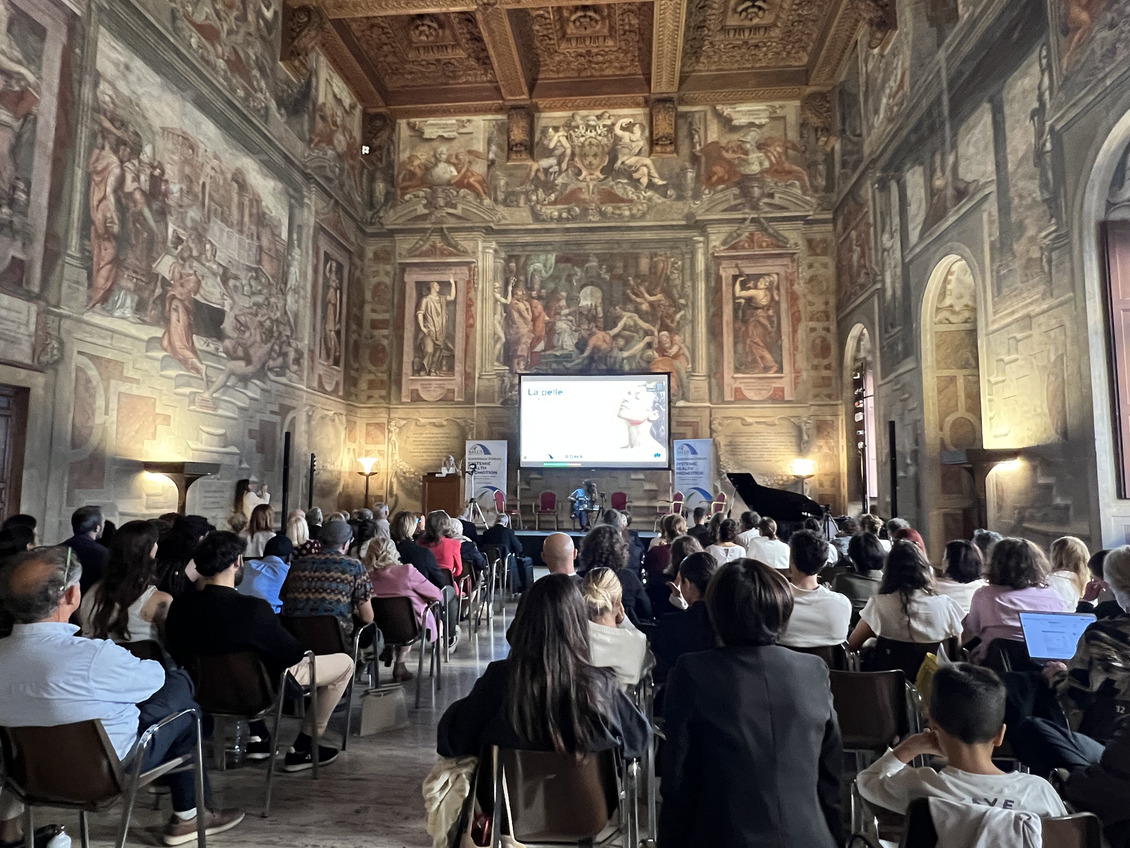
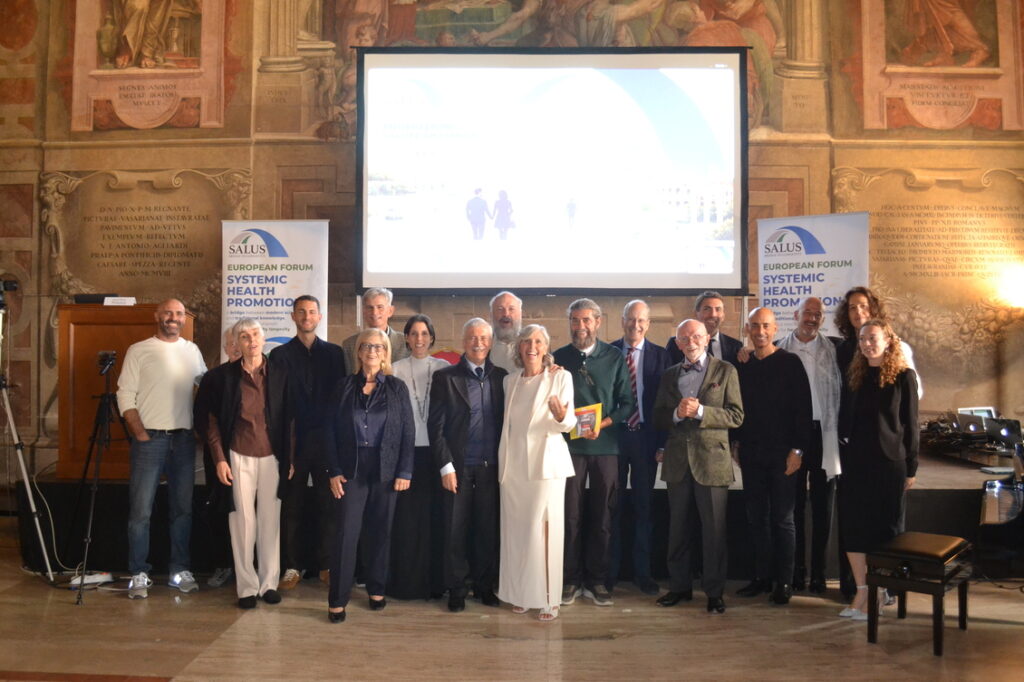
Living longer isn’t enough: the real challenge is to extend the years lived in good health, preserving autonomy and quality of life. This was the central theme of the first European Forum for the Promotion of Systemic Health, held on October 19–20 at the Palazzo della Cancelleria in Rome and continued online on October 22–23. The event was promoted by the International Foundation LUMEN ETS as part of the European SALUS Initiative, with the sponsorship of the Parliamentary Intergroup “Promotion of Systemic Health.”
More than thirty speakers—researchers, doctors, Italian and Swiss naturopaths, academics, and institutional representatives—took part over the four days. The discussions covered nutrition, physical activity, meditation, mental health, the environment, and social conditions, with the aim of identifying possible integrations across skills and domains that are often treated as separate.
Promoting Health Beyond Disease Care
Milena Simeoni, founder of the European SALUS Initiative and instructional director of the LUMEN School of Naturopathy, described the proposal as a supportive companion to the health system, not a replacement: a pathway that helps citizens pursue a longer, healthier life.
Alberto Donzelli, public health physician and president of the Foundation Aligning Health and Wellbeing, underscored the need to steer economic incentives in health toward health itself, valuing longevity in good health and without disability. Institutionally, Senator Elena Murelli emphasized the need to weave systemic health promotion into public policy; Deputy Gianantonio Girelli highlighted primary prevention and accessibility for people in greater economic and social vulnerability.
From Knowledge to Everyday Behaviors
A portion of the Forum focused on turning awareness into action. Davide Maria Pirovano and Daniel Lumera discussed meditation’s role in recognizing automatic patterns, changing ingrained behaviors, and supporting psychological well-being and mindfulness. Karl-Heinz Steinmetz introduced a practice rooted in movement and breathing tied to European monastic tradition, while Emiliano Toso explored the way music can contribute to wellbeing pathways.
Human Health, the Microbiome, and the Environment
The relationship between individual health and ecosystems threaded through numerous presentations. Franco Berrino urged expanding the view from organism-centered medicine to ecosystem-centered health, highlighting links among person, microbiome, biodiversity, and the environment.
Roberto Volpe and Licia Iacoviello addressed the Mediterranean diet and the evidence for its health effects; Umberto Trecroci focused on the connection between diet, microbiota, and cardiovascular health. Katharina C. Wirnitzer discussed sedentary behavior, movement, and social inequalities.
Robert Barouki and Cezmi A. Akdis examined environmental exposures and their impacts on the body. Akdis outlined the epithelial barrier theory and the potential impact of certain substances on the skin, respiratory tract, and intestinal barriers, the microbiota, and immune responses. Rosario Schicchi highlighted the link between nature and psychophysical wellbeing, while Cesare Fera explored the connections among energy, climate change, and health.
These contributions fed into the One Health and planetary health perspective. Holger Jens Schünemann addressed integrating planetary health into health guidelines and translating knowledge into public health decisions. Umberto Agrimi, from the National Institute of Health, emphasized the importance of linking initiatives that adopt a systemic view of human, animal, and environmental health.
Integrated Medicine, Mental Health, and Outcome Evaluation
The Forum fostered dialogue among healthcare professionals and individuals active in health and wellbeing promotion, while respecting respective areas of expertise. Rosaria Ferreri presented the experience of the Integrated Medicine of Pitigliano, developed within public health and accompanied by outcome evaluation.
In the mental health arena, Marco Bertali proposed a holistic and systemic view of psychiatry. Giuseppe Tibaldi addressed deprescribing and patient involvement in therapeutic decisions, always under clinical supervision. Lorenzo Del Moro outlined studies on systemic health promotion interventions for depressive disorders, highlighting the role of nutrition and physical activity in prevention and treatment.
Clinical Cases and Research: Results to Be Interpreted with Caution
Some naturopaths presented case-based follow-ups on lifestyle, relationships, and personal resources conducted in collaboration with healthcare professionals or support services. The experiences included individuals with Crohn’s disease, reflux, depressive episodes, and prior psychiatric hospitalizations. The results were described by speakers as observations developed over time, not as generalizable evidence.
On the research front, Eugenia Rota discussed migraine prevention, noting that one in seven people worldwide are affected and emphasizing the importance of personalized interventions involving diet, movement, and sleep alongside medications. Enrico Lambri presented a randomized controlled trial still in progress on an integrated naturopathic pathway for migraine prevention. The protocol combines lifestyle changes, meditation, physical activity, and naturopathic treatments; results remain preliminary.
Participants stressed the ongoing need to invest in research and in evaluating the safety, efficacy, and outcomes of interventions. In this framework, the socio-educational and non-healthcare role of Promoters of Systemic Health, aimed at disseminating knowledge and supporting healthy living without encroaching on health professions, was highlighted.
Toward a European Health Alliance
The European SALUS Initiative seeks to forge an alliance among researchers, professionals, institutions, businesses, and citizens. Simeoni proposed research capable of observing how different health-influencing factors interact, citing the skin and its relationships with nervous, immune, endocrine, and vascular systems, nutrition, stress, sleep, and relationships as an example.
In this framework, DataSALUS—an upcoming digital research platform—was introduced. It is designed to connect professionals from diverse disciplines and gather data on health determinants from a systemic standpoint.
The path continues on December 5, 2026 with an online extra session of the Forum, dedicated to delving deeper into the themes that emerged and broadening the exchange. Registration details will be announced through the official channels of the initiative.
Abbonati a Karla Miller