
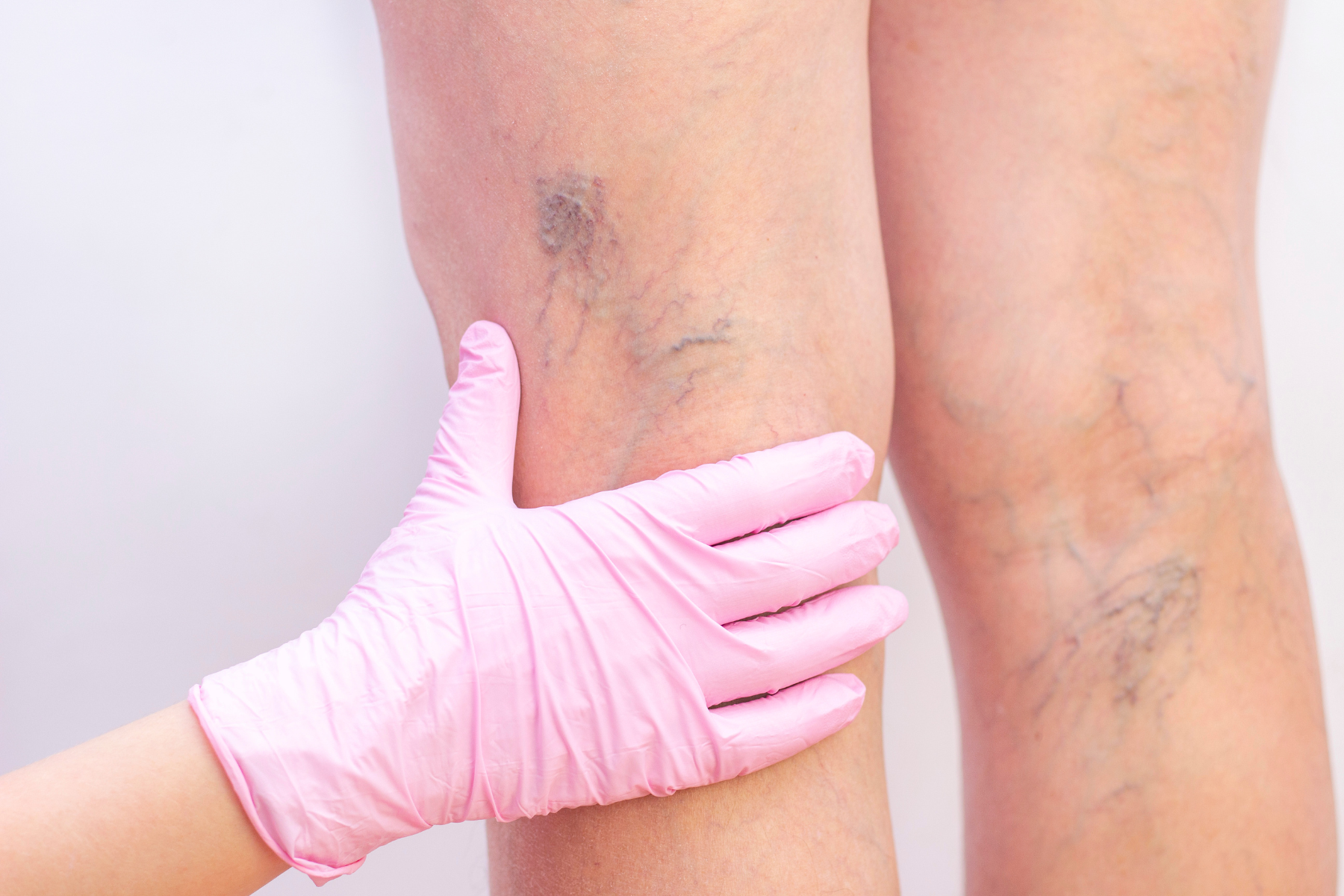
Swollen legs, a sense of heaviness, varicose veins, and telangiectasias are commonly viewed in the public eye as a mainly cosmetic issue.
Research, however, has shown that these signs can be indicators of a more significant problem: Chronic Venous Disease (CVD). A real medical condition, if left untreated, can have meaningful health consequences for the vascular and cardiovascular systems, for example.
With the aim of informing about CVD—often underestimated and underdiagnosed—April will see the nationwide launch of “The Leg Season,” a awareness campaign promoted by the AFI (Italian Vein Association).
The Issue
Never underestimate the manifestations, even those that may seem minor, such as visible capillaries or varicose veins, which can be associated with clot formation, the appearance of hard-to-heal skin lesions, or bleeding episodes.
Before dismissing any signal appearing in the lower limbs as merely cosmetic, it is recommended to perform proper evaluations and, when necessary, initiate appropriate, timely, and early treatment.
In the early stages, leg manifestations can indeed be treated with conservative approaches—lifestyle modifications, from a flavonoid-rich diet to movement, walking as the quintessential form of exercise, and physical activity tailored to age and clinical condition, where swimming is the optimal sport for the legs, along with the use of nutraceuticals. These latter may be sufficient on their own at the onset of the disease.
In more advanced stages, the various conditions, depending on the case, may require a multidisciplinary approach, with interventional therapies that act directly on the diseased vein, such as sclerotherapy, laser treatment, or, in some selected cases, surgery; elastocompressive therapy, based on wearing compression stockings or wraps to promote venous return; and pharmacological therapy, which can help improve venous wall tone and reduce symptoms associated with the condition.
The message is therefore clear: Chronic Venous Disease—a systemic chronic condition often due to a genetic component that tends to develop over the years—cannot be completely eliminated, but can be controlled and managed effectively through early diagnosis, prevention, regular monitoring, and appropriate treatments. Together, these efforts help slow its progression and prevent complications.
«The disease is fairly widespread; it is estimated that 8 out of 10 adults in Italy show some sign, not necessarily serious — says Alessandro Frullini, vascular surgeon and phlebologist, honorary president of AFI — and it differs from chronic venous insufficiency (CVI). The former includes all conditions, from telangiectasias to venous ulcers, one of the most serious expressions of the disease; the latter identifies the more advanced stages C3 (edema) and C6 (chronic venous ulcer) according to the CEAP classification
At the core of venous disorders lies an inflammatory component: «CVIs and hemorrhoids are conditions with inflammatory pathogenesis, linked to endothelial alterations and a significant reduction in quality of life. Prevention»—adds Luca Gallelli, clinical pharmacologist and professor of Pharmacology at the University of Catanzaro—“is mainly based on removing risk factors by reducing body weight and improving life habits: more inflammatory factors together increase the risk of CVD. Therefore managing and keeping the level of inflammation under control is crucial, since inflammation draws in cells that release inflammatory mediators that eventually start producing substances responsible for damage: cytokines, interleukins, and especially metalloproteinases. The first-line treatment involves the use of nutraceuticals with anti-inflammatory and antioxidant activity; in refractory cases or in the presence of unfavorable clinical conditions, surgical treatment is employed».
The Nutraceutical Approach
Guidelines for early-stage CVD suggest treatment with nutraceutical products that, according to the literature, have proven efficacy.
«Among nutraceuticals, the use of diosmin is becoming more common—continues Gallelli—with anti-inflammatory, antioxidant, and anti-neoplastic effects, capable of blocking proliferative factors, often in combination with hesperidin which reduces edema. Melilot, a derivative of coumarins, is anti-inflammatory, antioxidant, with activity on macrophages promoting an anti-inflammatory state that degrades issues related to lymphatic or venous stasis; quercetin, escin which has a glucocorticoid-like mechanism and anti-edematous effect; ginkgo which, however, presents some pharmacological interactions and can increase bleeding. Among nutraceuticals’ most recognized potentials is their ability to reduce metalloproteinases, thereby lowering the damage activity they cause. It should be noted that nutraceuticals have a dose-dependent effect and proper use must be tailored to the patient. Recent studies also attribute a crucial role to the gut: maintaining eubiosis is essential; the intestine actually regulates the activity of diosmin, activated by the intestine itself to produce diosmetin. Hespe ridin also acts at the intestinal level, bypassing the microbiota, performing a synergistic action with diosmin, favoring innovations with micronized formulas that can be easily absorbed in the intestinal tract, thus acting more rapidly».
Possible gastrointestinal effects of nutraceuticals are known, given their anti-inflammatory nature, with guidance to take them with meals, and there are potential drug interactions, although the risk is low, with some concerns about quercetin and ginkgo, already documented.
In conclusion: the approach and the choice of nutraceuticals should be tailored to the patient, in an individualized manner; combination therapy is the optimal option, always bearing in mind that this is a chronic-usage therapy. Finally, lifestyle modifications—such as dietary changes—have drawn growing attention in recent years, with a particular focus on flavonoids, natural substances in the polyphenol family, which can support venous function by reducing inflammatory processes associated with venous insufficiency.
These compounds are also found in a variety of foods, including citrus fruits (oranges, grapefruits, and lemons), rich in naringin and hesperidin; apples, especially rich in quercetin and epicatechin, particularly in the peel; berries (blueberries, strawberries, and raspberries), sources of anthocyanins and ellagitannins. Finally, a multimodal, multispecialty treatment plan should always be anticipated, embodying a broad management approach to CVD.
Interdisciplinary Collaboration
In managing CVD, several professionals are essential: the family doctor, the first figure who engages most with the patient and knows their history; the surgical or vascular specialist, the therapeutic expert who must determine whether a given treatment is feasible for a patient; an integrated pharmaceutical network to support the patient in managing the treatment in a practical way. In addition, a nutritionist and a physical activity expert are helpful, tasked with personalizing the activity for the individual and re-evaluating it over time and within the broader context.
«The territorial network is essential – concludes Gallelli – and it must be made objectively operational, a goal not always or not yet achieved».
Abbonati a Karla Miller