
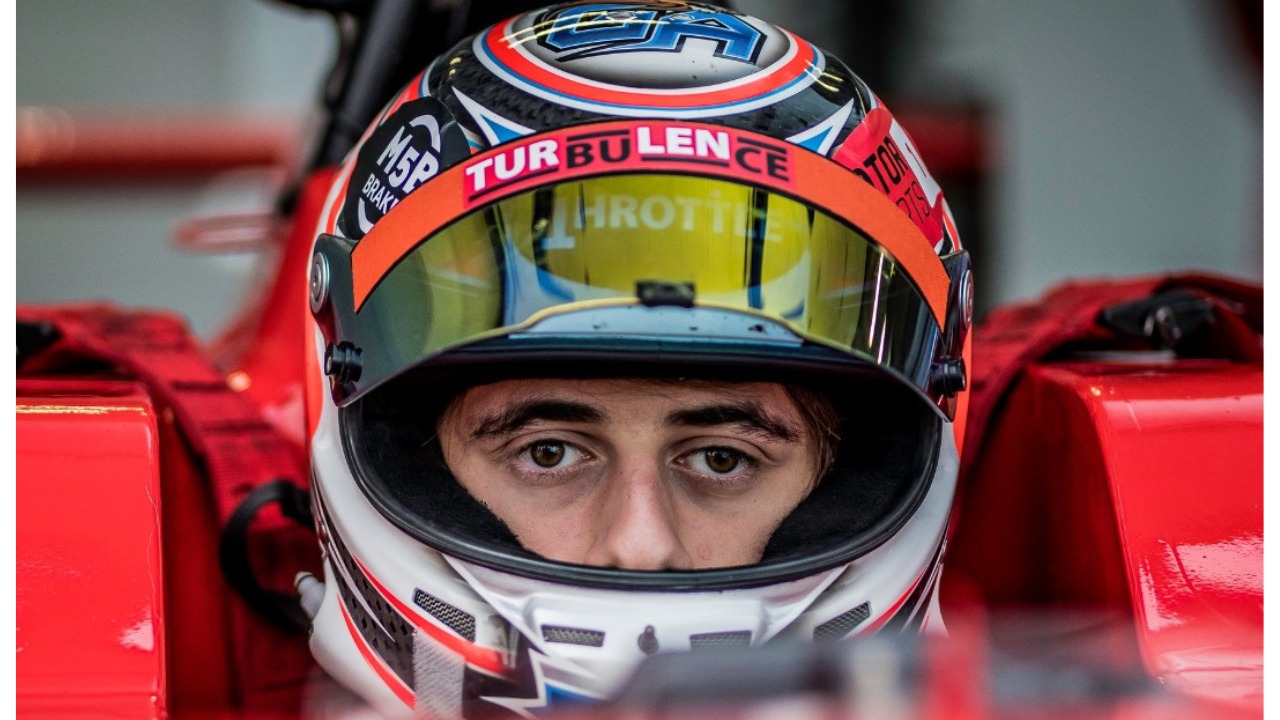
Formula 1 drivers develop highly specific physiological adaptations, closely tied to the needs of driving at extreme intensity. Accelerations of up to 3–4 g, mechanical loads on the neck, mandatory postures, thermal stress, and shortened recoveries shape the driver’s body in a uniquely tailored way. This is the finding of an international review conducted by the University of Trieste, in collaboration with London’s University of Roehampton, published in the British Journal of Sports Medicine. Among the participants in the study are also three Formula 1 performance coaches, including the coaches of Charles Leclerc and Max Verstappen.
The Study
The research fills the lack of specific scientific data on drivers’ physiology, highlighting that these athletes do not differ significantly from other professionals in stature, body mass, or aerobic capacity. The main adaptations concern:
However, highly specific adaptations emerge, foremost the development of neck strength, essential to counteract the high multidirectional forces acting on the head and helmet during cornering, braking, and acceleration and to preserve gaze quality, driving precision, and reaction times, factors decisive for performance and safety.
In addition to neck strength, the researchers identified other specific adaptations: the capacity to sustain repeated and asymmetric loads, even in the lower limbs, particularly at braking, the adaptation of core muscles, the scapular girdle, deep stabilizers, and the heart’s ability to manage spikes in heart rate.
As explained Alex Buoite Stella, co-author and physiology lecturer at the University of Trieste: «Formula 1 is one of the most fascinating and widely followed sports in the world, but it’s also among those that impose some of the most complex stresses on an athlete’s body. Accelerations, braking, thermal stress, required postures, and reduced recoveries accumulate throughout the season. With this work we aimed to systematically understand how the driver’s body responds and adapts to these demands, integrating scientific research with the hands-on experience of the coaches operating in Formula 1».
Impact of Environmental and Logistical Factors
The modern championship features twenty-four races in twenty-one countries, with intercontinental travel and extreme climatic conditions. Thermal stress and recovery management thus become central factors. The authors, along with students from the UniTS Racing Team, estimated the thermal impact of all races in the latest season, underscoring that many strategies, such as heat acclimation, pre-race cooling, and targeted hydration, remain more based on team experience than on data collected directly during races.
The coaches’ interviews highlighted how the physiological demands translate into personalized training programs, tailored to the circuit type, the driver’s characteristics, and the anticipated environmental conditions.
«By combining clinical and research expertise with the daily experience in the paddock, we managed to build the most up-to-date picture available today of the physiological profile of an F1 driver. The work not only identifies areas where new studies are needed, but also proposes practical strategies to optimize performance and safeguard athletes’ health», notes Buoite Stella.
Future Perspectives
The authors emphasize the need for more specific studies, capable of measuring parameters such as heart rate, core temperature, oxygen consumption, and lactate, as well as the long-term effects on the lower back and exposure to the vibrations of the single-seaters.
As highlighted by Kim Keedle, a driver trainer: «Because the regulations ban devices inside the car, we rely on data collected outside the vehicle, and this imposes some limitations. For example, it would be interesting to compare heart rate responses during driving on different circuits and under varying conditions. Compared with other sports, heart-rate measurement might seem minor, but it would represent a major step forward and would allow us to quantify stresses precisely and prepare drivers accordingly.»
Study
Tyler CJ, Felton L, Ferrari A, et al. Physiological and health demands of Formula 1 motor racing: a comprehensive review with driver performance coach insight British Journal of Sports Medicine. Online First: 18 February 2026. doi: 10.1136/bjsports-2025-110977
Abbonati a Karla Miller