
After examining the opportunities, limits, and prospects of artificial intelligence in health care, in the first part Medicine Enhanced: AI from Experimentation to Clinical Practice, the focus now shifts to its clinical applications and to how it intersects with medical judgment. From diagnostic-support systems to biomedical research, the debate over how human expertise stacks up against algorithms is one of the most discussed topics in the scientific community today.
When Algorithms Challenge Clinical Judgment
“Today, artificial intelligence outperforms doctors—by a wide margin—in clinical reasoning and diagnostic capability.” Giuseppe Remuzzi, director of the Mario Negri Institute for Pharmacological Research IRCCS and one of Italy’s most respected nephrologists and researchers, recently drew the medical community’s attention to data interpretation that, in his view, compel medicine to rethink its relationship with technology. At the center of his reflection is a case-study based on clinical scenarios published in the New England Journal of Medicine.
“When they compared artificial intelligence with doctors who took part in this exercise, AI’s correct diagnoses occurred in 85.5% of cases, while clinicians were correct only 20% of the time: AI is better at clinical reasoning, especially in difficult cases.” For Remuzzi, this is a finding that is no longer hard to ignore. “Every week, 230 million people worldwide consult ChatGPT about their health, and we must reckon with this phenomenon.”
According to Remuzzi, continuing to discuss artificial intelligence solely in terms of risk or skepticism means failing to grasp the magnitude of the ongoing transformation. Supporting his view, he points to the increasing complexity of medical knowledge. “Sure, AI makes errors, but we must ask: errors relative to what baseline? Every 39 seconds a new medical article is published, and merely reading abstracts would require twenty-two hours a day. We cannot expect the human mind to bear this burden alone.”
Remuzzi then cites the statistics on clinical errors. “Medical errors number 134 million per year, and 2.6 million people die from conditions that could have been avoided.” This leads to the conviction that the right comparison is not between perfection and failure, but between human performance and algorithmic performance. Remuzzi notes that AI applications now span almost all areas of medicine. In dermatology, for example, a 2025 Nature study showed AI performing at a level superior to the dermatologists involved in the research. “If you have the world’s best dermatologist or the best renal pathologist, they may still outperform AI, but compared with the average dermatologist or pathologist, AI is consistently superior.” The same is true in cardiology, where algorithms can detect potentially fatal arrhythmias earlier, allowing timely interventions for high-risk patients. “These systems can identify people at high risk of cardiac death with accuracy, while clinicians cannot be present every day to monitor heart rhythm continually.”
Another frontier is oncology. Remuzzi cites the Geneva researchers who, by analyzing tumor cells, identified genes and expression patterns associated with metastatic spread. According to the director of Mario Negri, AI enables the integration of data quantities that no single human could process simultaneously: genetic, clinical, radiological, and instrumental information. “The transformation—he explains—now touches every corner of medicine: from radiology to pathology, to drug development. The creation of a drug has changed completely: today millions of molecules can be simulated in just a few hours, quickly identifying those that interact with a specific biological receptor.” The organizational side of healthcare could also change dramatically.
Remuzzi cites U.S. data suggesting that AI-guided triage in emergency departments could cut wait times by 55%. At the same time, AI is showing promising results in rare diseases, one of the Mario Negri’s long-standing research domains. “In rare diseases, AI is an extraordinary thing,” Remuzzi says, recalling the case of a boy who, after three years and seventeen specialists consulted without success, received a diagnosis thanks to an AI system queried by his mother. “Of course specialists were needed then, but the diagnosis came from artificial intelligence.”
The Mario Negri Institute is already using artificial intelligence across several areas of clinical research and predictive medicine, as explained by Alberto Arrigoni, head of the Artificial Intelligence for Biomedicine unit, Medical Imaging Laboratory, Department of Bioengineering Research at the Institute — The applications primarily concern radiologic image analysis, where AI systems are used to identify anatomical and pathological structures within MRI and CT images, segmenting organs and lesions to extract biomarkers useful for clinical research.
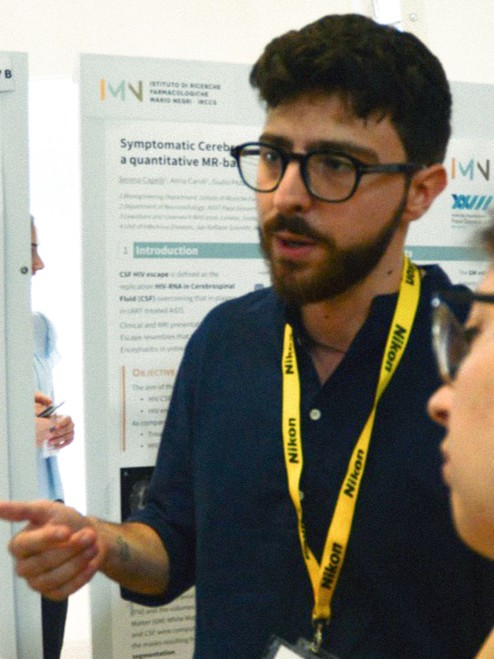
The institute is also developing predictive models for the progression of chronic kidney disease, built on three decades of data collected by Mario Negri, with the aim of identifying which patients will experience faster disease progression and which will progress more slowly. The systems are also used to simulate different therapeutic pathways and to evaluate how treatments impact disease evolution.
Among ongoing European projects are initiatives that use advanced language models to read and organize clinical records in emergency departments, promoting research activity, as well as lung cancer platforms that integrate molecular, radiological, and clinical data to stratify patients and tailor treatments ever more precisely. For Remuzzi, however, the real issue remains cultural. “You should not fear AI; you should use it and interact with it while maintaining a critical sense. Doctors will surely change the way they work, but they will not lose their jobs; instead, a symbiosis will be created that allows the physician to spend more time with the patient.”
The Caregiving Relationship Remains Irreplaceable
In recent years, the FNOMCeO (National Federation of Medical and Dental Orders) has devoted several conferences to the topic of artificial intelligence in health care. “This is the third conference in which we’ve discussed the subject,” explains Giovanni Leoni, surgeon, vice president of FNOMCeO, and president of the Medical and Dental Association of the Province of Venice. The central question is whether algorithms are destined to replace the physician.

For Leoni there is no doubt: “The human physician–patient interface will always be necessary,” because our patients need to find someone who resembles them, who heals them, explains their situation, and sees the person as a whole. The physician will always be needed, because a doctor is another human being who cares for another human being. According to Leoni, this aspect is especially evident in daily practice. Most patients the health system encounters are between 60 and 80 years old and have limited digital literacy. “These are analog patients. They greatly need a daily, systematic relationship with a physician—being listened to, reassured, and guided through the care journey.” On the technical side, however, the potential of AI is considerable. “We are witnessing a 35% annual increase in medical data overall. It’s an enormous volume of data, and it’s becoming increasingly difficult for a single physician to read articles, sift information, and maintain a comprehensive cultural update.”
In this context, algorithms can accelerate literature analysis, recognize patterns, and forecast outcomes, with meaningful applications in both research and clinical practice. Leoni identifies imaging diagnostics as one of the most promising areas. Radiology, neurology, and cardiology are the disciplines where algorithmic support can improve exam interpretation, three-dimensional reconstruction, and monitoring the evolution of chronic diseases. From mammography screening to early stroke detection, the ability to rapidly process large volumes of images offers a real advantage in terms of precision and timeliness.
The impact of artificial intelligence also extends to out in the community. In primary care clinics, digital systems can lighten a range of organizational tasks: appointment management, reminders, call routing, clinical documentation, and repetitive procedures. “There are programs dedicated to primary care as well. They can help not only in the diagnostic process but in the organization of the clinic and the management of many repetitive and tedious tasks.” This role will become even more important with the development of Community Health Centers, facilities designed to host ultrasound, spirometry, and basic examinations. In this context, AI could foster greater integration between primary care and hospitals, improving triage and patient management. Leoni also links this to wait lists. The Federation has proposed allowing general practitioners to renew treatment plans when there are no clinical changes, a measure that could free up about 5 million specialist visits per year.
“The main problem is organizational. AI will be extremely useful for many things from a technological standpoint, but it will not solve the structural issues of the health care system.” A more cautious outlook is reserved for general-purpose consumer-facing applications. Leoni cites the British Babylon experience, conceived as an alternative to a general practitioner but ultimately unsuccessful. “The physician is the professional who non-substitutively uses AI in patient care. Medicine can be extremely complex, but we must be able to explain it to people in a simple and understandable way.” Apps and chatbots can be useful especially for younger users and for remote monitoring via wearables. However, according to FNOMCeO’s vice president, they cannot replace the personal relationship, trust, and empathy that underlie treatment adherence and the effectiveness of care.
The CoMPaSS-NMD Project, for Diagnosing Neuromuscular Diseases
One of the concrete cases of applying artificial intelligence to medicine comes from the CoMPaSS-NMD project (Computational Models for new Patients Stratification Strategies of Neuromuscular Disorders), created to tackle one of the most complex problems in hereditary rare neuromuscular diseases. These conditions represent an area of high clinical complexity. Symptoms can be heterogeneous, progressive, and difficult to interpret, while clinical, genetic, and imaging data are often dispersed across centers and not integrated. The result is a long diagnostic journey, involving repeated visits, numerous tests, therapeutic uncertainty, and a strong psychological impact on patients and caregivers. It is in this scenario that CoMPaSS-NMD enters, a European project funded by the Horizon Europe program with about 5 million euros, developed for the 2023–2027 period.
The objective is to use artificial intelligence to integrate clinical, genetic, and radiological data, supporting the physician in early diagnosis and in defining more accurate treatment pathways. The project, coordinated by the University of Modena and Reggio Emilia, involves clinical centers and industrial partners from Italy, Germany, France, Finland, and the United Kingdom within the European network dedicated to rare neurological diseases.
One of the most innovative aspects concerns creating a unified digital platform based on the Human Phenotype Ontology (HPO), a shared language that enables standardized collection and comparison of clinical data. To date the project has already developed a structured system for collecting clinical data from 500 patients and a computer-, tablet-, and smartphone–usable application that allows health professionals to quickly enter and analyze new clinical information. According to project data, adopting AI-based diagnostic tools could reduce up to 20% of the costs associated with the diagnostic pathway, generating an estimated annual saving of about €3 billion across Europe, in addition to significantly accelerating diagnostic times. In Europe, it is estimated that about 500,000 people are affected by hereditary neuromuscular diseases, with an average cost of about €30,000 per patient per year and a total annual expenditure of around €15 billion.
Article from the October 2026 issue of Karla Miller
Bibliography
1. Chanda T. et al. Dermatologist-like explainable AI enhances melanoma diagnosis accuracy: eye-tracking study. Nature Communications, 2025.
2. Conod A, Ruiz i Altaba A. et al. Emergence of high-metastatic potentials and prediction of recurrence and metastasis. Cell Reports (2026).
3. European Commission. (2023). CoMPaSS-NMD: Computational Models for new Patients Stratification Strategies of Neuromuscular Disorders (Grant Agreement No. 101080874). CORDIS. https://cordis.europa.eu/project/id/101080874
Abbonati a Karla Miller