
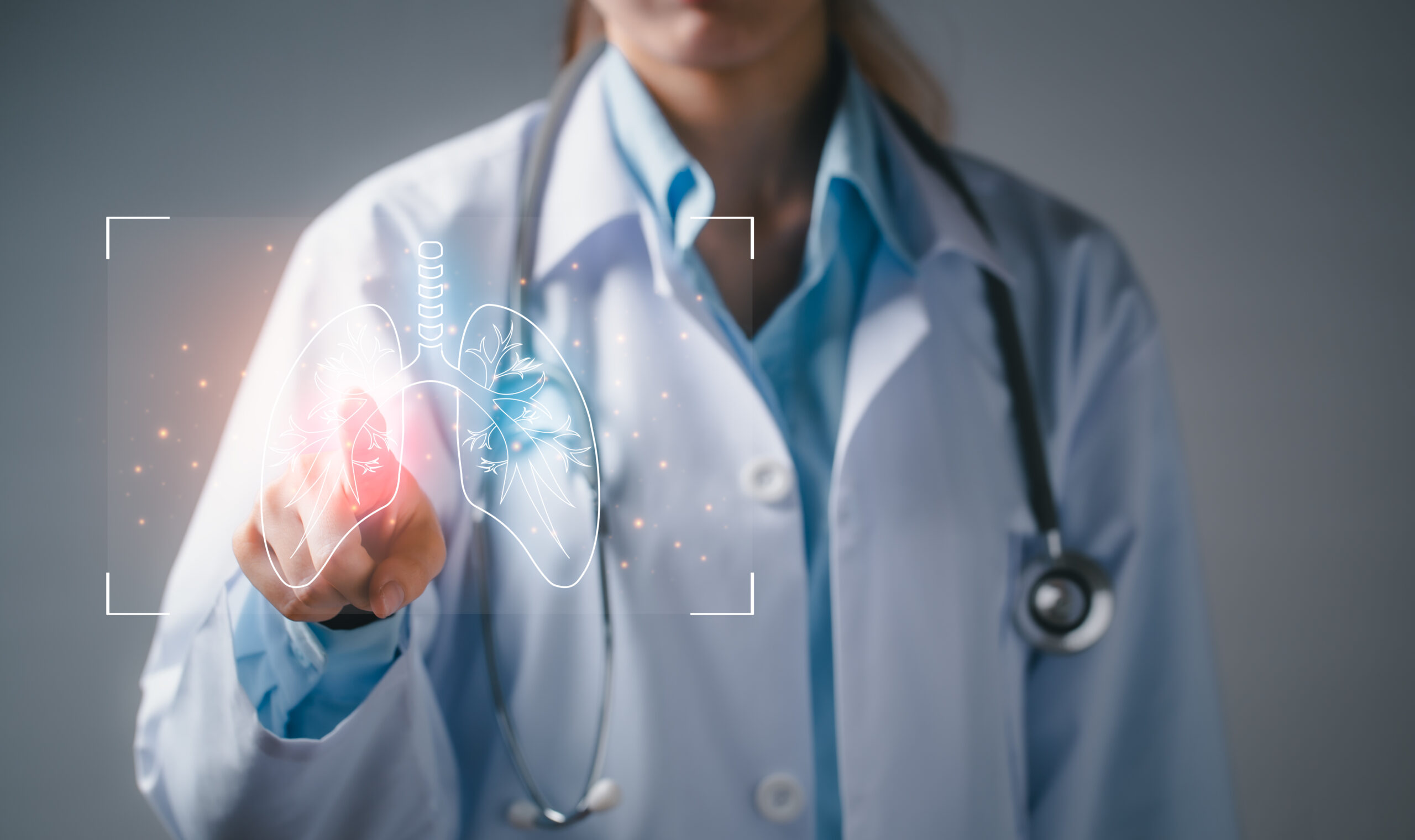
New therapies, precision medicine, artificial intelligence, prevention, and the organization of care were the central themes of the 27th National Congress of Pneumology of the Italian Society of Pneumology (SIP/IRS), recently concluded at the Ennio Morricone Auditorium at the Parco della Musica in Rome. The discussions spanned the entire journey of the respiratory patient, from environmental factor assessment to treatment and community-based follow-up.
The theme “The Modern Pneumology: The Value of the Integration between Science, Clinical Practice, and Interdisciplinary Collaboration” translated into concrete guidelines for daily clinical practice: taking environmental and occupational history into account, leveraging new therapeutic opportunities for severe asthma and COPD, exploring AI applications, and rethinking care for patients undergoing lung transplantation.
Paola Rogliani, president of SIP/IRS and of the Congress, highlighted the need to go beyond treatment by integrating prevention, environment, research, and clinical practice: “Respiratory health demands a broader view that starts with prevention even before treatment, and regards the person, the living environment, and all factors that can affect the health of their lungs.”
Environment and Health: The Environmental History in Patient Evaluation
Living and working conditions, traffic, pollution, mold, secondhand smoke, and occupational substances can enter the clinical assessment. This is stated in a position paper by experts from nine Italian scientific societies, including SIP/IRS, presented at the Congress and published on September 22 in Exploration of Asthma & Allergy. In Italy, between 2013 and 2015, 8,917 hospitalizations were attributed to exposure to PM2.5; moreover, 16% of adult asthma cases and 14% of adult COPD cases are estimated to be linked to occupational exposures.
Asthma and COPD: From Disease Management to Remission
Asthma and COPD affect more than 10% of the Italian population. In severe asthma, the goal is no longer merely controlling individual parameters, but achieving clinical remission, defined as a substantial absence of symptoms and stable disease control.
An international study to be published soon in CHEST, based on real-world data from registries across 26 countries, indicates that delaying the start of biologic therapy is associated with progressively lower odds of remission. The timing of treatment initiation thus becomes part of the therapeutic strategy.
For COPD, a new era begins: a long-standing disease once devoid of monoclonal antibody treatments now has therapeutic innovations capable of reducing exacerbations by at least 30% and improving the clinical picture. In asthma, prospects also include dose de-escalation and drugs capable of acting on other components of the inflammatory process.
Artificial Intelligence and the Appropriateness of Biologic Therapies
About 50% of patients enrolled in biologics clinical trials showed only limited improvements. Artificial intelligence models could help distinguish who can be managed with inhaled therapy from those who can obtain clinically meaningful benefits from biologics, promoting therapeutic appropriateness and sustainability.
AI can support monitoring, forecasting drug response, early diagnosis, imaging, and clinical decision-making. It does not replace physician assessment, though, especially in light of ethical, regulatory, and transparency considerations.
Lung Transplant: A Hub-and-Spoke Network for the Region
In Italy, there are nine transplant centers for lungs, and only one is located in the South, in Palermo. The Congress proposed a Hub-and-Spoke network that links high-specialty centers with regional and local pneumology services. The most complex activities would remain at the Hubs, while some checks and follow-up could be carried out closer to patients’ homes.
The model would strengthen the pulmonologist’s role both before and after transplant and ensure continuity between the specialized center and nearby care.
Respiratory Prevention: The Congress Takes It Outside the Halls
The Congress brought together 1,200 participants and speakers, with 56 hours of scientific program, 34 symposia, 10 plenary lectures, 5 ECM courses, 233 abstracts, and 41 patient associations and scientific societies.
With REMaRe Insieme, a roadshow dedicated to surfacing respiratory diseases, prevention reached the squares of Rome through a mobile multi-clinic, specialist consultations, and free examinations. More than 500 spirometry tests and functional assessments were conducted.
Abbonati a Karla Miller