
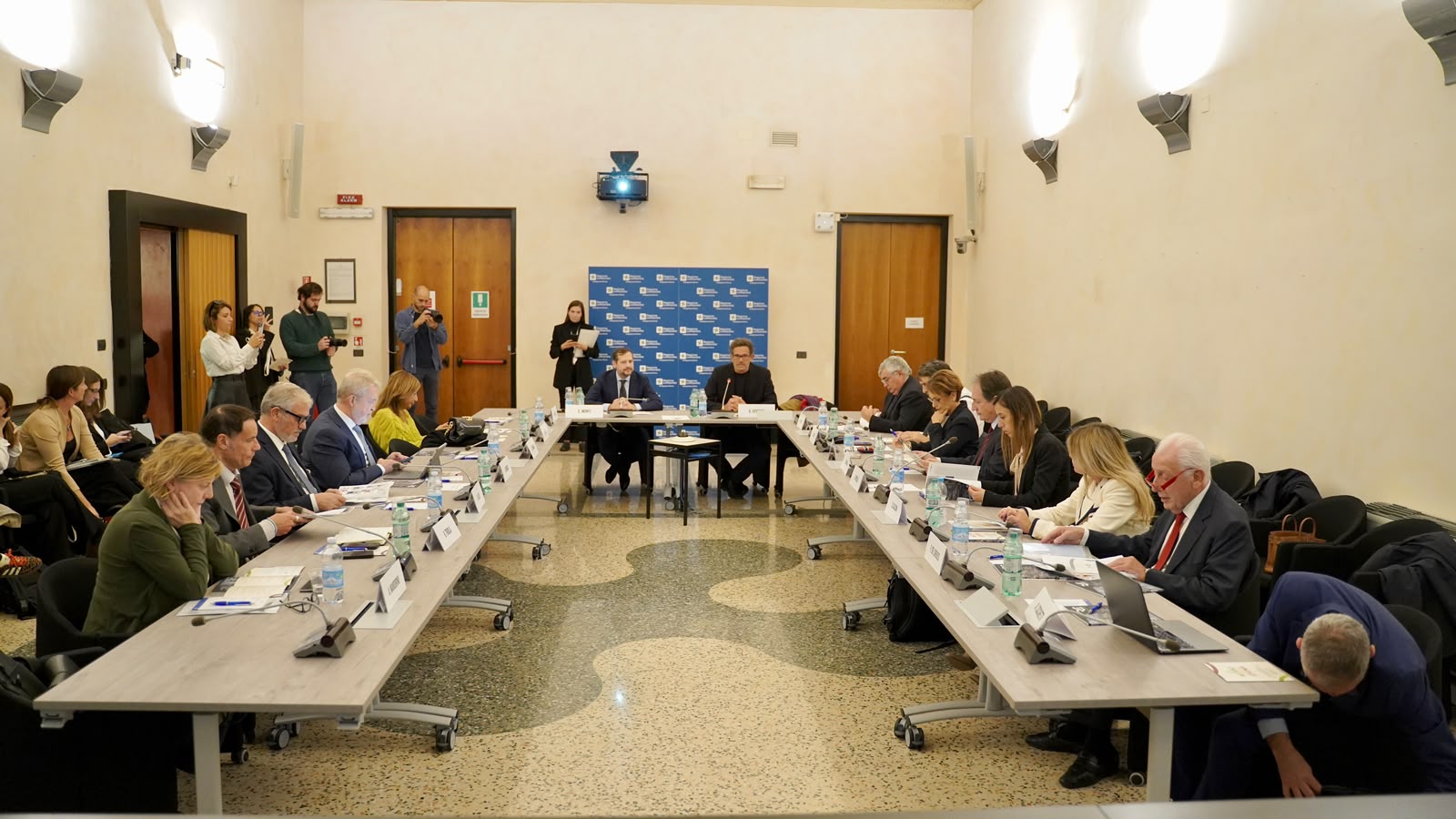
Integrating health data, ensuring quality from the outset, and adopting clear, uniform rules for their use: these are the priorities that emerged from the third installment of “Milano chiama Roma,” dedicated to “The value of health data for research in IRCCS. From evidence to planning for a more sustainable National Health Service.” The meeting, hosted at Regione Lombardia’s Rome Delegation, brought together institutions, IRCCS, regulatory authorities, universities, patient associations, and industry.
The aim is to transform the information produced by hospitals, IRCCS, and the territory into evidence useful for research, for prevention and for public health decision-making, ensuring safety, transparency, and protection of people’s rights.
The Milano chiama Roma Project
“Milano chiama Roma” is promoted by the Lombardy Region’s Welfare Assessor Guido Bertolaso together with Emanuele Monti, president of the IX Commission on Social Sustainability, Housing and Family of Lombardy and a member of AIFA. The initiative aims to create a stable bridge between Lombardy and national institutions on strategic public health topics.
Shared rules to overcome fragmentation
Article 110-bis, paragraph 4, of the Privacy Code allows public and private IRCCS, under the conditions set forth, to use personal data collected for care for additional research purposes. The Authority clarified that this provision concerns medical, biomedical and epidemiological research, prospective and retrospective, including multicenter studies promoted by IRCCS. Among the requirements are impact assessment and its publication.
In addition to this framework, there is the European Health Data Space (EHDS), which came into force on March 26, 2025, introducing European rules for the safe reuse of health data for research purposes. The challenge is to translate these tools into a shared national model.
«IRCCS produce every day a highly valuable patrimony of information that stems from the intersection of research and clinical practice. The leap in quality is to transform it into reliable evidence, linking different data and making them usable for research, assessment of innovation, and health planning — says Alessandro Venturi, president of the Fondazione IRCCS Policlinico San Matteo. – The challenge isn’t simply to accumulate more data, but to create the regulatory, technological, and organizational conditions that allow knowledge to emerge and, through it, to concretely improve patient care within the National Health Service, contributing to the sustainability of our health system».
Real World Evidence: the contribution of clinical practice
Real World Evidence is the scientific evidence generated by analyzing data collected in daily clinical practice, Real-World Data. It helps us understand how a therapy works in the “real world,” complementing information from traditional clinical trials.
The EHDS includes, among sources potentially usable for secondary purposes, electronic health records, administrative data, clinical trials, observational studies, and information from wearables and apps. The European Commission highlights benefits of this use, including improved care, support for research, and health policies that are more evidence-based.
Integrating data for prevention and sustainability
To move from evidence to planning, it is essential to link the information collected by health facilities, regulatory authorities, and social security and insurance bodies.
«We are at a crucial moment, and we must accelerate the integration of health data. Health care has a specificity that must be recognized: it concerns the health and lives of people, and information must circulate more quickly, always with respect for data protection», states Francesco Saverio Mennini, Head of the Department of Planning, Medical Devices and Drugs, Ministry of Health. – The predictive model developed by the Ministry of Health shows what it means to use data well: understanding the real needs of the population, defining priorities, designing care pathways, and identifying the most effective technologies. If we could connect the information from the Ministry, AIFA, INAIL, and INPS, we would have an extraordinary tool for prevention, starting with oncology, and for rationalizing resources. It means taking on patients in the timeliest possible manner and making our National Health Service more sustainable».
From experiences to a stable working table
The EHDS implementation deadlines make a transition to a shared model urgent. In the discussion, the risk of losing competitiveness in research and in attracting investments relative to the United States, China, and other European countries was underscored. The experiences of IRCCS networks and hospital data lakes with anonymized data from the outset show that leveraging information while protecting privacy is already possible: now they must be systematized.
«With “Milano chiama Roma” we wanted to create a space where institutions engage with those who do daily research, and today’s table yielded a wealth of concrete ideas. The message that emerged is clear: the informational heritage produced by IRCCS and the National Health Service is an extraordinary resource that can realize its full value only if it is put into a system. The tools to do this securely exist and the experiences presented today prove that they work. We need a national model capable of surfacing and valuing the best regional experiences and centers of excellence, turning them into a common national asset: a national governance framework built with strong regional input, with clear rules and full respect for people’s protection – says Emanuele Monti, president of the IX Commission on Social Sustainability, Housing and Family of Lombardy and a member of AIFA. – Even in evaluating pharmaceutical innovation, reliable data on real-world outcomes of therapies are a decisive tool to guarantee patients rapid and appropriate access and, at the same time, the sustainability of the system. For this reason, we do not want this debate to remain a one-off: together with Professor Venturi we propose turning it into a standing working table, with dedicated in-depth studies, starting from ethical-legal frameworks, to arrive in the coming months at a document validated by all today’s participants. We will present it in Milan and carry it to institutional, regional, and national venues, so that the proposals raised become concrete choices».
Five priorities: quality, territory, and participation
From the discussion emerged five areas of convergence to be ready for the European Health Data Space:
1. From rules to practice. Apply the regulatory tools clearly and uniformly, through concrete cases discussed by researchers, data protection officers, ethics committees, and institutions, strengthening competencies within the structures.
2. Quality data from the outset. Share definitions and codifications, starting with risk factors, and make systems interoperable, avoiding duplicate entries.
3. Real World Evidence across the board. Integrate hospital data, primary care, and population surveillance to support prevention, outcome measurement, appropriateness, and planning.
4. Citizens as protagonists. Promote data altruism, engage patient associations on a stable basis, and return results to those who contribute and generate the information. Cittadinanzattiva underscored the importance of a shared data culture.
5. A shared document. Continue with thematic deep dives, starting from ethical-legal frameworks, to arrive in the coming months at a document validated for presentation in Milan.
Subscribe to Integrated Medicine