
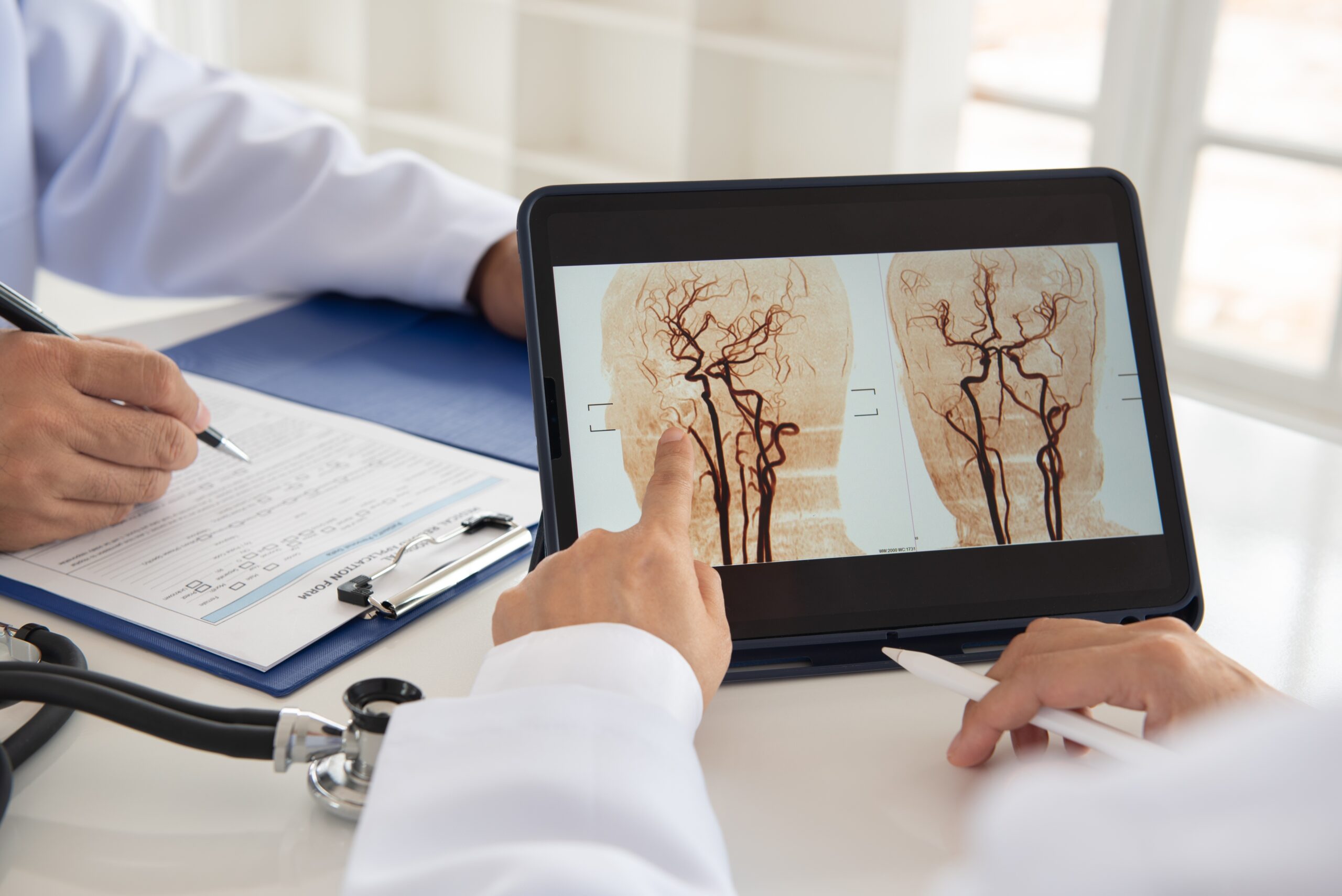
The numbers are staggering. In Italy, every year, 100,000 people suffer a stroke; however, access to Stroke Units—the specialized units dedicated to treating this condition—is only 50-70%, with consequences for survival, treatment times, and functional impairment. This situation calls for urgent action: the system is ready. The ISA-AII (Italian Stroke Association – Associazione Italiana Ictus), for example, since 2024 has been working on the Stroke Action Plan for Italy (SAP-I), the Italian version of the European reference, the Stroke Action Plan for Europe (SAP-E).
The action plan aims to reduce strokes by 10% by 2030, through targeted prevention activities and by enabling admission to dedicated units for at least 90% of people affected by stroke. It is not enough to draw attention to the issue on World Stroke Day, October 29, this year, centered on the claim “Every M1nute Counts” and supported by the hashtags #ActFAST, #TheTimeIsNow, #StrokeActionNow; what is needed are integrated, continuous, and united efforts.
From Early Diagnosis to the Stroke Care Pathway
There have been therapeutic evolutions. In recent years the management of acute ischemic stroke has shifted from a treatment-centered logic to an integrated vision involving the citizen, the local emergency system, the emergency department, the Stroke Unit, and interventional neuroradiology. In this scenario, early diagnosis remains the essential precondition, but the real challenge lies in shortening every step from the onset of symptoms to reperfusion, where the role of the “time-dependent network”—the organization and optimization of regional stroke networks—is fundamental.
Evidence shows that the timely identification of suspected stroke by the emergency service (118 in Italy), the pre-notification of the receiving hospital, and the proper routing to centers with advanced expertise are decisive factors for access to reperfusion therapies. The quality of the network is often more determinant than the mere availability of technology, though new opportunities are emerging in this context.
Door-to-Needle and Door-to-Groin
They constitute new performance indicators and translate an important concept: the reduction of time door-to-needle, the interval from the patient’s arrival at the emergency department (door) to the start of intravenous therapy for thrombolysis (needle), is a primary objective of Stroke Units.
While the door-to-groin puncture time—the window from ED arrival to obtaining arterial access at the groin (usually the femoral artery) to begin mechanical thrombectomy in eligible patients—is of vital importance. Every organizational delay translates into the loss of potentially recoverable brain tissue. In this context, new technologies—from advanced imaging to artificial intelligence—provide added value; among them are software for automated analysis of CT and MRI images to identify the ischemic core and penumbra, AI systems that assist in recognizing large-vessel occlusions, image-sharing platforms between spoke and hub centers, telemedicine and telestroke for remote specialist neurological evaluation, and algorithms to accelerate triage and the selection of thrombectomy candidates.
The Paradigm Shift, from “Raising Awareness of Symptoms Early” to “Building Faster, More Integrated Pathways”
In this journey, organization, performance indicators, and digital technologies work in synergy to improve clinical outcomes. Prevention remains fundamental—the most effective frontier against stroke, yet it is also the most challenging; most cerebrovascular events are associated with known and largely modifiable risk factors that require timely and preventive action. This is especially true given today’s demographic landscape, which trends toward an aging population, meaning a higher likelihood of more strokes, increased costs, and a greater caregiving burden.
For clinicians, the challenge is not only to diagnose early but to maintain ongoing monitoring and to reach therapeutic targets through personalized care pathways and greater patient education, particularly regarding conditions that most predispose individuals to stroke. These include hypertension, the main enemy for both ischemic and hemorrhagic stroke; atrial fibrillation, among the leading causes of cardioembolic stroke; diabetes; obesity; and sedentary lifestyle, where rising prevalence corresponds to higher cardiovascular and cerebrovascular risk. Not least, it is essential to educate and raise awareness among individuals—especially those with risk factors—about adherence to preventive treatments, such as antihypertensives, anticoagulants, antiplatelets, and other therapies to control cardiovascular risk factors. Today, therapeutic adherence remains the weakest link in prevention.
If the stroke paradigm in recent years was defined by the phrase “time is brain,” the next decade could be guided by a new concept: “prevention is brain.” Conceptualized as the ability to identify at-risk individuals early, control predisposing factors, and improve therapeutic adherence, these goals could have a public health impact even greater than that of the most advanced emergency therapies.
Abbonati a Karla Miller