
Aging populations and health needs that are set to grow are making it increasingly difficult to view the sustainability of Italy’s National Health Service (SSN) as merely a question of resources to devote to services. The challenge, more fundamentally, is to generate more health and less disease by addressing risk factors, promoting healthy living, and strengthening prevention throughout the life span.
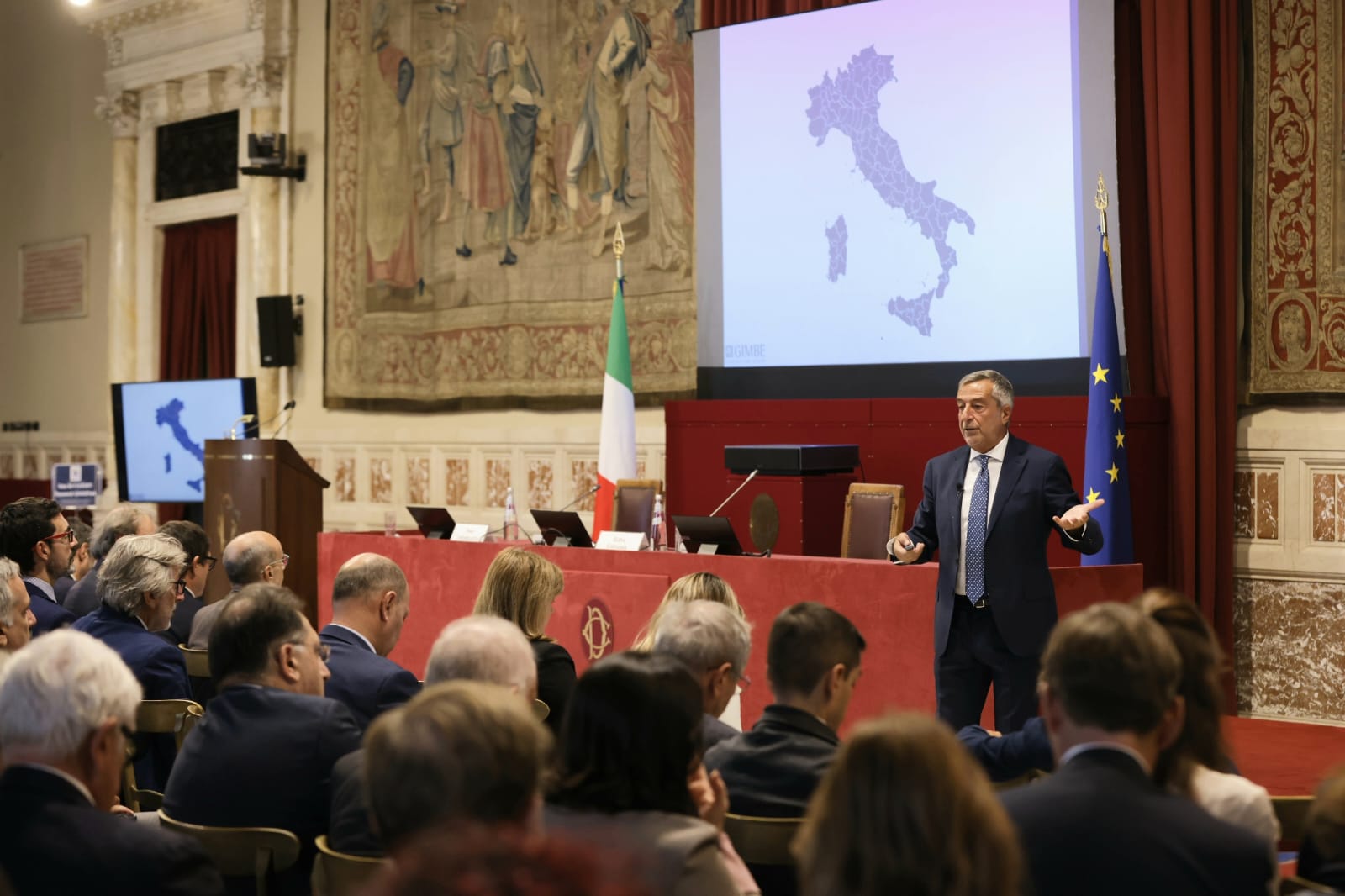
This is a perspective that gains even greater relevance in light of demographic change: the 9th Report of the GIMBE Foundation, presented in Rome on October 7 in the Sala della Regina at Montecitorio by President Nino Cartabellotta, shows that while real‑terms health financing essentially returned in 2026 to 2010 levels, the health needs of an aging population have increased, along with the costs of pharmacological and technological innovations.
Health, moreover, cannot be viewed in isolation from the environment, from lifestyle choices, from social conditions, and from the context in which people live. This is why President Cartabellotta stressed that health should not be the concern of a single ministry alone, but must be considered across all policies: from industrial policy to labor policy. The aim is to adopt a One Health perspective and to invest in prevention to reduce “upstream” the burden of illness and the resultant demand for care that could potentially be avoided.
When Resources Do Not Keep Up with Needs
The core problem is that this transformation must contend with an SSN that has been under mounting financial pressure for years. Between 2023 and 2026 the National Health Fund rose nominally by €17.5 billion, yet the share of national wealth allocated to health remained just above 6% of GDP. If the FSN/GDP ratio had stayed at the 2022 level, the health service would have had as much as €18.8 billion more at its disposal. International comparisons paint a similarly stark picture. In 2025, Italy’s public health expenditure stood at 6.2% of GDP, versus an OECD average of 7.1%; per‑capita public health spending reached $3,952 in purchasing power parity terms, $1,013 below the European average, with the gap widening over the past fifteen years.
The problem, however, concerns not only the amount of resources but also their ability to keep pace with health needs. In the 2027‑2029 period, GIMBE estimates the cumulative gap between projected health spending and the size of the FSN at €32.3 billion. Without further appropriations, the bill risks shifting onto regional budgets and, ultimately, onto citizens.
The Geography of Health
The resource shortage is intertwined with a second critical challenge: not all citizens start from the same position. Health protection continues to depend heavily on where people live. Data from the New Guarantee System reveal significant regional disparities and, more importantly, very different performance across prevention, community (district) care, and hospital care. For example, in 2024 Calabria was lagging in the district area with a score of 52, while Sicily lagged in prevention with a score of 49.
Interregional health mobility is one of the clearest indicators of this divide: in 2023 it reached €5.15 billion, the highest value since 2010.
But inequality also shows up in access. In 2024 nearly 5.8 million people, or 9.9% of the population, reported having forgone at least one visit or exam; about four million due to waiting times and 3.1 million for financial reasons, with many indicating both causes.
Prevention as an Investment, Not as a Footnote
Against this backdrop, prevention should take on a structural role in health policy. Not only because it can reduce the incidence of many diseases, but also because it is a key tool for addressing population aging by preserving independence and quality of life for as long as possible.
The point is to move beyond a health system that intervenes mainly when illness is already present and build a system capable of acting earlier: primary prevention, early diagnosis, promotion of healthy behaviors, management of chronic conditions, and integration across health, social, and community services.
It is no accident that among the 16 intervention lines in the SSN’s Recovery Plan updated by GIMBE there are explicit investments in prevention, alongside adequate funding, reduction of territorial disparities, strengthening primary care, research, and digitization.
LEA: Choosing to Guarantee Better Care
The same logic should guide the evolution of the Essential Levels of Care – LEA. Beginning October 30, 2026, updated LEA will come into effect after nearly a decade of waiting. But updating the list of services is not enough: any service included in the LEA must be delivered promptly and uniformly across the national territory.
In a system with finite resources, updating the LEA should also be an exercise in assessing the value of services: including those that yield meaningful health benefits and high-value innovation, gradually phasing out obsolete or low-benefit services. You cannot guarantee everything to everyone if resources are insufficient; however, decisions must be explicit, transparent, and evidence-based, not driven by the mere residual availability of funding.
A Planning Horizon That Extends Beyond a Single Term
That, in essence, is the political core of the GIMBE Report. The reboot of the SSN cannot rely on piecemeal interventions or year‑to‑year budgeting. What is needed are system‑level choices and a planning horizon of at least a decade, capable of aligning demography, prevention, innovation, workforce, service organization, and economic sustainability.
Otherwise the risk is that health care will continue to receive what remains of available resources rather than what is necessary to meet the population’s health needs. And in a country that is aging, this is no longer merely a medical issue: it is a choice about the social and economic model the country intends to build for future generations. GIMBE sums it up by calling for a comprehensive strategy to strengthen the universality and equity of the SSN and to define what sort of health system the country intends to leave to its descendants.
Subscribe to Karla Miller