
Low back pain is the leading cause of disability worldwide and can compromise mobility, independence and quality of life. The available evidence suggests that chronic and disabling forms are also associated with a higher mortality risk, especially through sedentary behavior, loss of function and comorbidity. In this framework, prevention, treatment and the quality of nighttime recovery assume prominence in promoting healthy aging.
According to the World Health Organization, nonspecific low back pain affects 619 million people. Beyond its high prevalence, low back pain represents the main global cause of disability and one of the most complex chronic conditions to manage.
Low Back Pain and Longevity: What the Studies Show
A systematic review with meta-analysis published in the Journal of General Internal Medicine detected an association between back pain and all-cause mortality, stronger in women and in chronic, frequent or disabling forms. The authors do not identify pain as a direct cause: the potential relationship mainly operates through lower physical activity, sedentary behavior and a higher risk of obesity, chronic diseases and depression.
One study published in Pain Medicine also linked more severe forms of low back pain to an increased mortality risk in older men. The common denominator is functional loss: pain and stiffness can reduce independence, mobility and participation in daily activities.
For clinicians, these data reinforce the importance of early detection of persistent pain, activity limitations and reduced autonomy, especially in older individuals and those with comorbidities.
«For this reason, it is important not to delay consulting an orthopedic specialist, a physiatrist or a physical therapist when we experience pain, stiffness and movement difficulties that tend not to pass or recur regularly» explains Daniele Mazza, an orthopedic and trauma surgeon, physician for Italy’s Under-21 national soccer team and co-author of two clinical studies on the topic.
Sleep and the Biomechanical Recovery of the Spine
The quality of sleep is another element to consider both in prevention and as support for the therapeutic pathway of spine disorders.
«Today we know that sleep isn’t just a moment of rest, but an active phase of biomechanical, neuromuscular and inflammatory recovery», Mazza continues.
Two clinical studies co-authored by Mazza and published in the Journal of Surgery evaluated adults with chronic nonspecific low back pain or neck pain over a twelve-month period. Participants used each night a biomechanical mattress and a pillow with MagniStretch technology; periodic assessments focused on pain intensity, physical function and sleep quality.
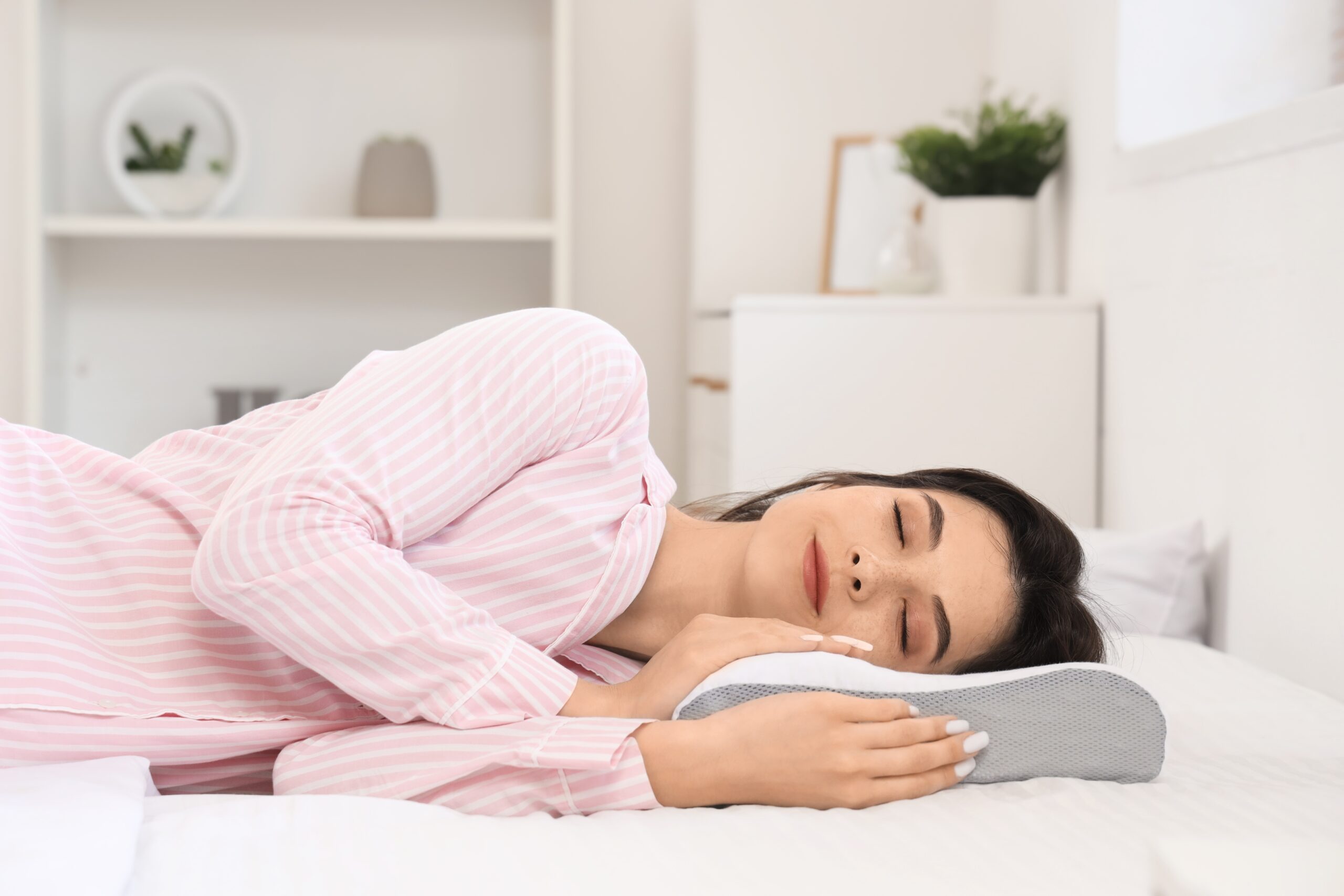
The nighttime support can contribute to the biomechanical recovery of the spine when integrated into a broader therapeutic and preventive pathway. The MagniStretch mattresses and pillows are internally composed of high-resilience foams and inclined channels that harness body weight to apply a light, progressive traction along the spine during sleep. Unlike traction applied in physical therapy, the force is distributed and continuous and acts without requiring active intervention from the person. The goal is to reduce intervertebral disc compression and muscle tension, particularly in the lumbar and cervical regions.
Pain Reduction and Functional Improvement
At the end of follow-up, there was a significant reduction in low back and neck pain, along with improvements in daily activities and sleep quality. The evaluated technology is designed to generate a mild passive traction: along the entire spine in the mattress and at the cervical level in the pillow, aiming to promote alignment and vertebral decompression.
According to Mazza, the quality of nighttime support is particularly relevant in patients with chronic low back or neck pain, degenerative spine diseases and nocturnal stiffness. Even after a trauma or surgery, it can help limit contractions, morning stiffness and compensatory muscular overload.
The most pronounced results were observed in participants over 50 years of age. According to the authors, greater vertebral stiffness and reduced hydration of the discs associated with aging may make passive decompression more effective.
«The benefit tends to be more evident in patients with mechanical pain and functional stiffness rather than in highly inflammatory or neurologic acute phases», continues the orthopedic surgeon.
Implications for Clinical Practice and Prevention
Matrices and pillows do not replace exercise, weight management, postural education or indicated treatments. They can, however, be considered a complementary element when nighttime posture and sleep quality contribute to symptom burden.
«Prevention is probably the area where nighttime support is still undervalued. We spend about a third of life in bed: maintaining for many hours a non-physiologic posture means exposing the spine to repeated micro-stresses over time. Naturally the mattress does not replace exercise, weight control or postural education, but it represents an important piece of a broader preventive strategy» adds Mazza.
Pain management can also support sleep continuity, mobility, and adherence to protective behaviors. These are clinically relevant dimensions in aging, even without attributing a direct effect on longevity to a single device.
An Integrated Approach to Spine Disorders
«More and more specialists are recognizing that sleep quality, nocturnal posture and proper support influence pain, inflammation, muscle recovery and quality of life. This is especially true today, with growing attention to the role of daily choices in promoting longevity and healthy life years. I believe the future will be a more integrated approach, in which nighttime support is considered not a simple home accessory but a complementary element of the therapeutic and preventive pathway for patients with spine disorders» Mazza concludes.
Sources
1. World Health Organization, Low back pain (fact sheet). https://www.who.int/news-room/fact-sheets/detail/low-back-pain
2. GBD 2021 Low Back Pain Collaborators, The Lancet Rheumatology, 2023. DOI 10.1016/S2665-9913(23)00098-X.
3. Association of Back Pain with Mortality: a Systematic Review and Meta-analysis of Cohort Studies. Journal of General Internal Medicine, 2021. DOI 10.1007/s11606-021-06732-6
4. Association of Back Pain with All-Cause and Cause-Specific Mortality Among Older Men: A Cohort Study. Pain Medicine, 2024. DOI 10.1093/pm/pnae040
5. Mazza D, Carli FD, Gagliardo S, Febbi M, Santoriello V (2025) From Bed to Back Relief: Evaluating a Biomechanical Mattress for Long-Term Pain and Functional Recovery. J Surg 10: 11377. DOI 10.29011/2575-9760.011377
6. Mazza D, Gagliardo S, Suraci F, Bolle G, Barbarino M, et al. (2025) Twelve-Month Outcomes of An Ergonomic Cervical Pillow In Chronic Neck Pain Management: Pain, Disability, And Sleep Quality Across Age Groups. J Surg 10: 11390. DOI 10.29011/2575-9760.011390
Abbonati a Karla Miller