
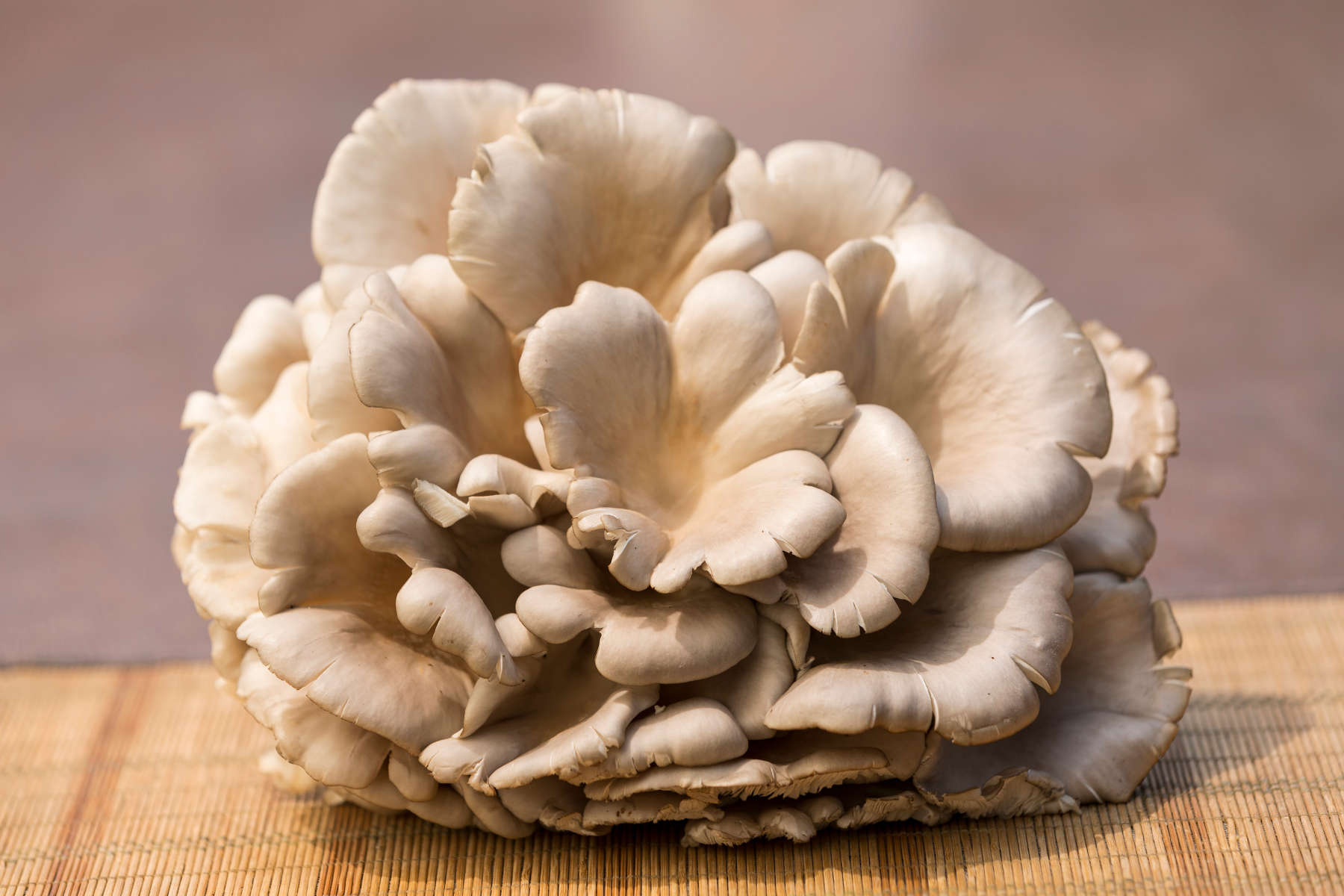
Interest in nutritional interventions capable of supporting brain aging is growing, especially in light of the recognized role of chronic low-level inflammation and oxidative stress in age-related functional decline. In this context lies the OYSACO clinical trial, which evaluated the acute effects of the oyster mushroom (Pleurotus ostreatus) on cognition, mood, and metabolic and inflammatory biomarkers in healthy older adults.
The Study
The study, randomized and controlled, with a crossover design, involved 33 adults aged 60 to 80 years. In four sessions separated by a one-week washout, each participant consumed a noodle soup without mushrooms or enriched with freeze-dried Pleurotus ostreatus powder.
The tested doses were 4.70 g, 9.39 g, and 18.78 g of powder, equivalent to roughly 40 g, 80 g, and 160 g of fresh mushrooms. Cognitive and mood assessments were conducted at baseline and 2, 4, and 6 hours after ingestion; at 6 hours a blood draw was taken to analyze metabolic, neurotrophic, and inflammatory biomarkers.
The most notable finding concerned subjective mood and mental fatigue. In the control group, positive affect declined over the day, accompanied by an increase in mental fatigue. By contrast, after taking Pleurotus ostreatus, participants showed greater mood stability and better resistance to mental fatigue up to 6 hours after the meal.
The cognitive picture was more nuanced. Tests of episodic memory and executive function did not show a consistent improvement compared with the control, suggesting that any cognitive effects may require longer-term studies and designs specifically aimed at assessing cognitive decline.
Biologically, the study pointed to a possible postprandial anti-inflammatory action of the oyster mushroom, a food rich in bioactive compounds such as ergothioneine and polyphenols. In particular, reductions in nitrites, NOX2, and inducible nitric oxide synthase (iNOS) were observed, especially with the dose equivalent to one serving.
An unexpected finding concerned brain-derived neurotrophic factor (BDNF), whose levels were lower in the dose-dependent treated groups. The authors hypothesized that the result might reflect transient regulatory responses, but they emphasized the need for further investigation.
Overall, the results suggest that a single dose of Pleurotus ostreatus may contribute to the psychosocial and physical well-being of older adults, particularly regarding mood, mental fatigue, and the post-meal inflammatory response. For clinical practice, the data remain preliminary: before translating these findings into specific nutritional recommendations, larger, longer studies are needed, including fragile populations or those with early cognitive deficits.
Study
Cha S, Bell L, Fisher DR, Shukitt-Hale B, Zhang Z, Rodriguez-Mateos A, Williams CM. A randomized controlled study to investigate the cognitive, mood, metabolic and anti-inflammatory effects of acute oyster mushroom intervention in healthy older adults. Food Function. 2026 Jan 26;17(2):784-795. doi: 10.1039/d5fo03075g.
Abbonati a Karla Miller