
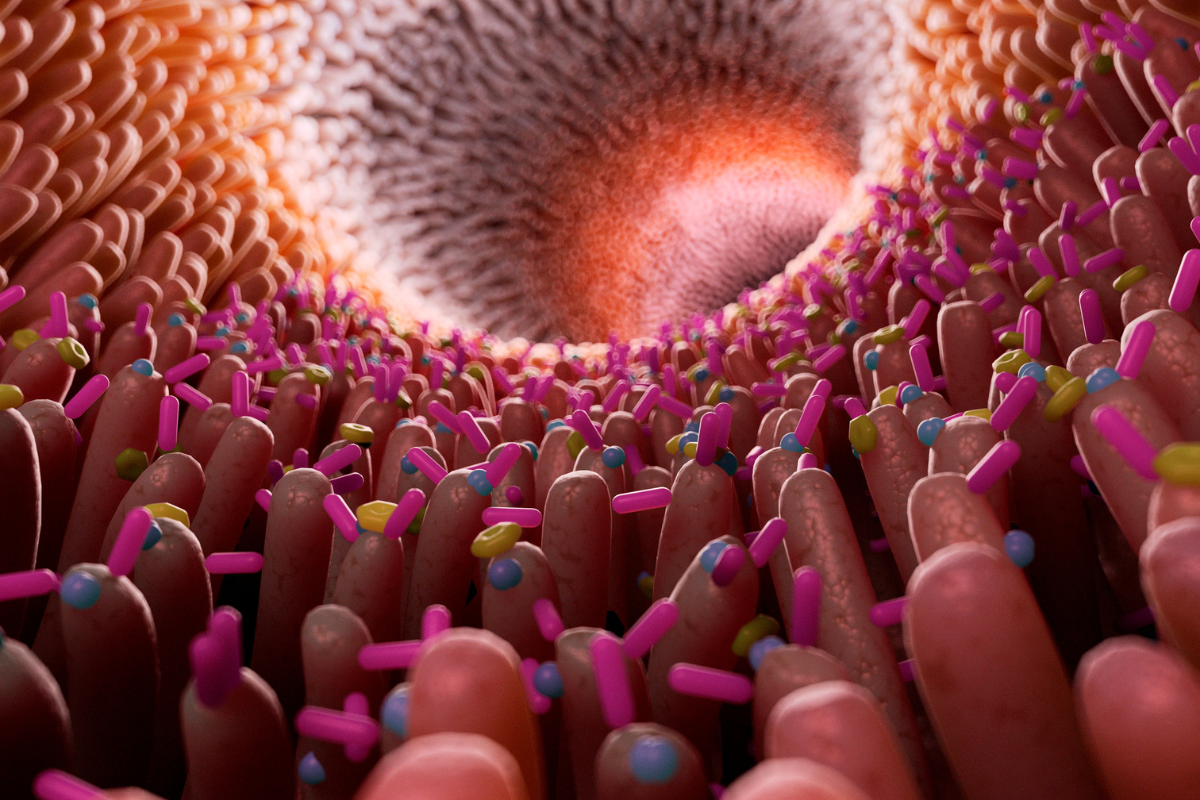
Evidence is growing for the involvement of the gut-brain axis in the pathogenesis of neurodegenerative diseases—the interaction between the intestinal microbiota and the host organism.
New information on the common thread that links this dyad, through mechanisms not yet fully clarified, comes from a recent study (a systematic review by Italian researchers) published in Nutrition Research, which could also help define effective microbiota-targeted therapies to slow cognitive decline in older adults.
The Study
A total of 15 studies, predominantly randomized controlled trials, and 4,275 participants aged over 45, either presenting initial cognitive decline, or moderate to early-stage Alzheimer’s disease, or carrying risk profiles for the condition, were reevaluated by Italian researchers to investigate the involvement of the gut microbiota in triggering or accelerating neurodegenerative diseases.
Establishing a consistent link could pave the way for targeted interventions, such as prebiotic dietary modifications, direct probiotic administration, or fecal microbiota transplantation to slow the degenerative process.
The methodological quality of the examined articles was overall moderately high, though burdened by recurring limitations: heterogeneity of interventions in terms of duration and endpoints; difficulties in maintaining blinding in dietary trials; follow-up durations often limited; and small sample sizes in some subgroups (particularly for fecal transplant studies).
Early evidence suggests that the greatest benefits occur when interventions are implemented in the early stages of the disease or as preventive measures in at-risk individuals, with scores declining less in the more advanced stages of Alzheimer’s disease. Breaking down the various intervention possibilities:
- Mediterranean diet, possibly enriched with extra-virgin olive oil or nuts: shows better cognitive outcomes than control (typically low-fat) diets, though more specific regimens—such as certain ketogenic-style diets—are also effective, albeit with results that are harder to generalize.
- Omega-3 and multi-nutrient formulas: have shown limited or modest effects, or selective benefits, with some positive signals in domains such as memory and executive function in particular contexts.
- Probiotics: several studies report improvements on cognitive tests or specific functions in particular contexts, such as post-surgical settings where they seem to protect against postoperative cognitive decline. It should be noted that effects appear to depend on strain, dose, duration of use, and patient population, making generalization difficult.
- Fecal transplantation: data are still very preliminary; small sample sizes and lack of standardized procedures limit the ability to draw conclusions about efficacy and safety in the medium to long term.
Biological Mechanisms: Inflammation, SCFAs, and Neurochemical Signals
The narrative synthesis indicates that microbiota modulation was associated with improvements in memory, executive functions, and overall cognition, particularly in individuals with prodromal or mild cognitive impairment. Benefits were linked to greater microbial diversity and increased production of short-chain fatty acids (SCFAs). These SCFAs are associated with improved intestinal barrier function, reduced inflammation, and lower levels of neuroinflammatory markers and oxidative stress.
In other words, fewer inflammatory signals that can reach the brain—directly or indirectly. There are also possible influences on neurotransmitters and neuromodulators, such as pathways related to GABA, and on trophic factors, including BDNF (Brain-Derived Neurotrophic Factor) in certain contexts, or interactions with lipid metabolism (cholesterol, bile acids, and other metabolic signals) that are crucial for the proper functioning of membranes, synapses, and neurons in the brain. It should be remembered that many of these mechanisms are plausible, but the existence of a causal link between microbiota changes, shifts in specific biomarkers, and stable clinical improvements has not yet been definitively proven. By contrast, effects were limited in advanced Alzheimer’s disease.
Clinical Implications and Research Prospects
Overall, modulating the gut microbiota represents a promising non-pharmacological strategy to support cognitive health, with early intervention appearing crucial for optimal benefit. However, heterogeneity in study design and intervention protocols underscores the need for large-scale longitudinal randomized controlled trials to confirm efficacy and to clarify the underlying biological mechanisms, as well as to distinguish microbiota-mediated effects from indirect metabolic and vascular influences.
Source
Libriani S, Facchinetti G, Marti F, et al. The association between gut microbiota and cognitive decline: a systematic review of the literature. Nutr Res. 2026,147:16-31. doi: 10.1016/j.nutres.2026.01.003
Abbonati a Karla Miller