
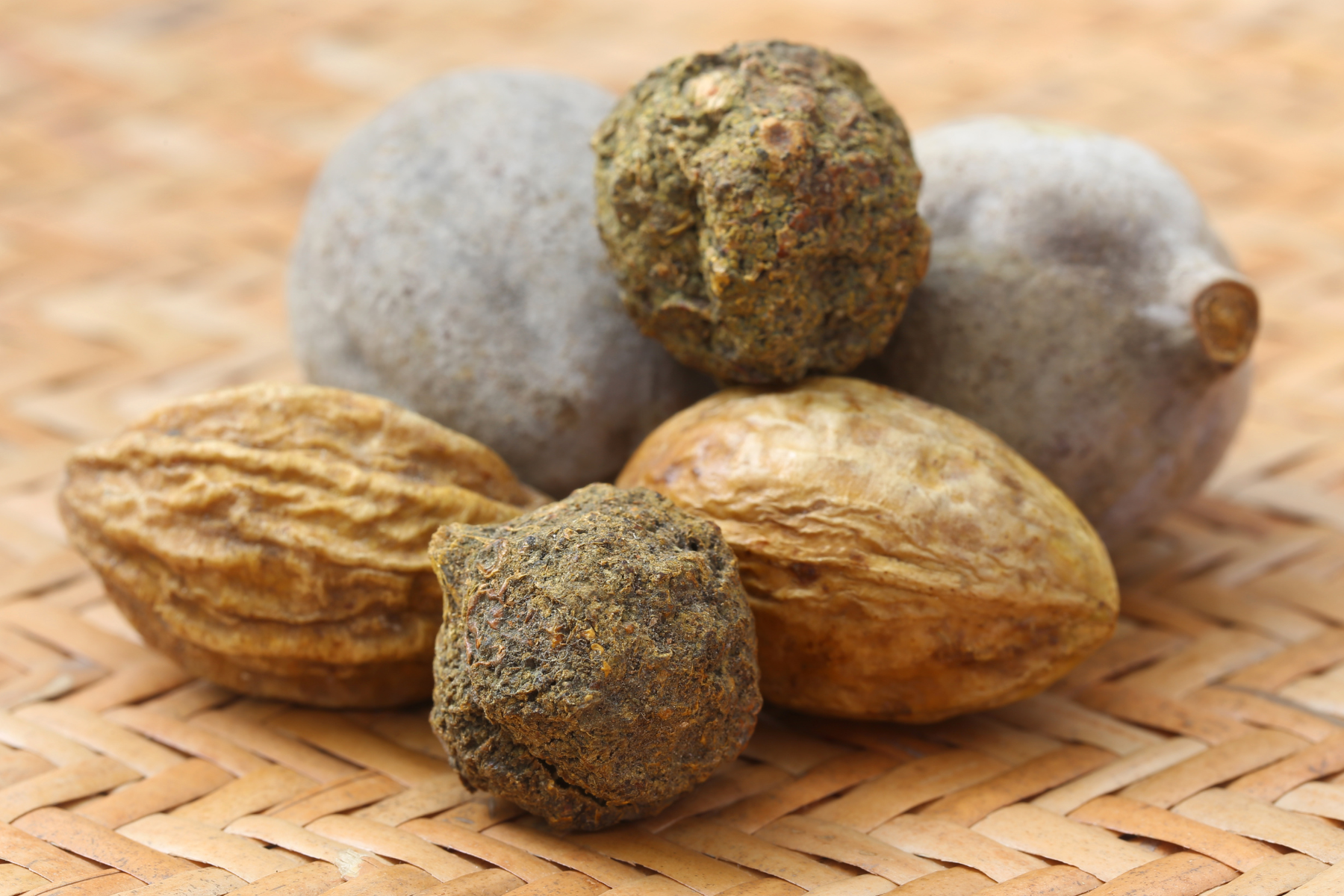
A staple in Ayurvedic medicine for centuries, Triphala is a botanical formulation built from the dried pericarp of three fruits: Haritaki (Terminalia chebula), Vibhitaki (Terminalia bellirica), and Amalaki (Emblica officinalis). The name is derived from Sanskrit and means “three fruits.” In recent years, this phytocomplex has attracted growing scientific interest for its potential antioxidant, anti-inflammatory, immunomodulatory, and metabolic activities.
The phytochemical makeup of Triphala is intricate: more than 150 bioactive compounds have been described, including polyphenols, tannins, and flavonoids. Among the most studied molecules are gallic acid, ellagic acid, and chebulinic acid, which are thought to participate in protection against oxidative stress—a process linked to many chronic conditions and to the mechanisms of cellular aging.
From a safety standpoint, the available data indicate good tolerability. In human studies, intake up to 2500 mg/day for 28 days has not been associated with meaningful toxicological signals; in animal models, aqueous and ethanolic extracts have been found safe up to 5000 mg/kg. These findings, however, require further confirmation in controlled clinical trials, especially to define dosages, duration of use, and the patient populations most appropriate for use.
Microbiota, metabolism and the gastrointestinal system
One of the most actively explored areas concerns the GI tract and metabolism. Triphala has been described as a potential natural prebiotic, capable of modulating the gut microbiota and promoting the growth of beneficial bacteria, including Bifidobacterium and Lactobacillus. In experimental models, hydroalcoholic extracts at a dose of 300 mg/kg demonstrated a protective effect against induced gastric ulcers; moreover, activity against Helicobacter pylori has been documented at concentrations ranging from 80 to 320 µg/mL.
On the metabolic front, some preclinical data suggest a possible role in controlling adipose accumulation and in regulating glucose metabolism, potentially through upregulation of the GLUT4 transporters. While these findings are promising, they remain to be confirmed in clinical trials designed to assess their impact on meaningful metabolic outcomes.
Neuroprotection, oncology and other areas of research
Even in oncology, the evidence to date is predominantly preclinical. In vitro studies showed that the aqueous extract of Triphala induced apoptosis in MCF-7 breast cancer cells, with an average inhibitory concentration (IC50) of 13 µg/mL, demonstrating selectivity for tumor cells over healthy cells. While these results do not justify therapeutic conclusions, they point to a potential area for translational research.
Other fields of investigation include oral health, viral infections, and ophthalmology. As a mouthwash based on aqueous extract, Triphala has demonstrated reductions in dental plaque and gingivitis, without the tooth discoloration commonly associated with chlorhexidine. In cellular models, a dose of 100 µg markedly reduced Dengue virus production.
In ophthalmology, administration at 25 mg/kg has shown effects on cataractogenesis by enhancing the antioxidant systems within the lens. Taken together, Triphala emerges as a phytocomplex of considerable interest, but its clinical use requires caution and careful evaluation based on controlled studies, the quality of extracts, standardization of preparations, and the individual patient’s profile.
Study
Thallada V, Monika N, Dinesh T, Kusuma G, Ghosh K, Chitra S. The Multifaceted Benefits of Triphala: Uncovering Phytochemical and Pharmacological Properties From Antiquity to Modern Times. Chem Biodivers. 2026 Jan;23(1):e01825. doi: 10.1002/cbdv.202501825.
Subscribe to Karla Miller