
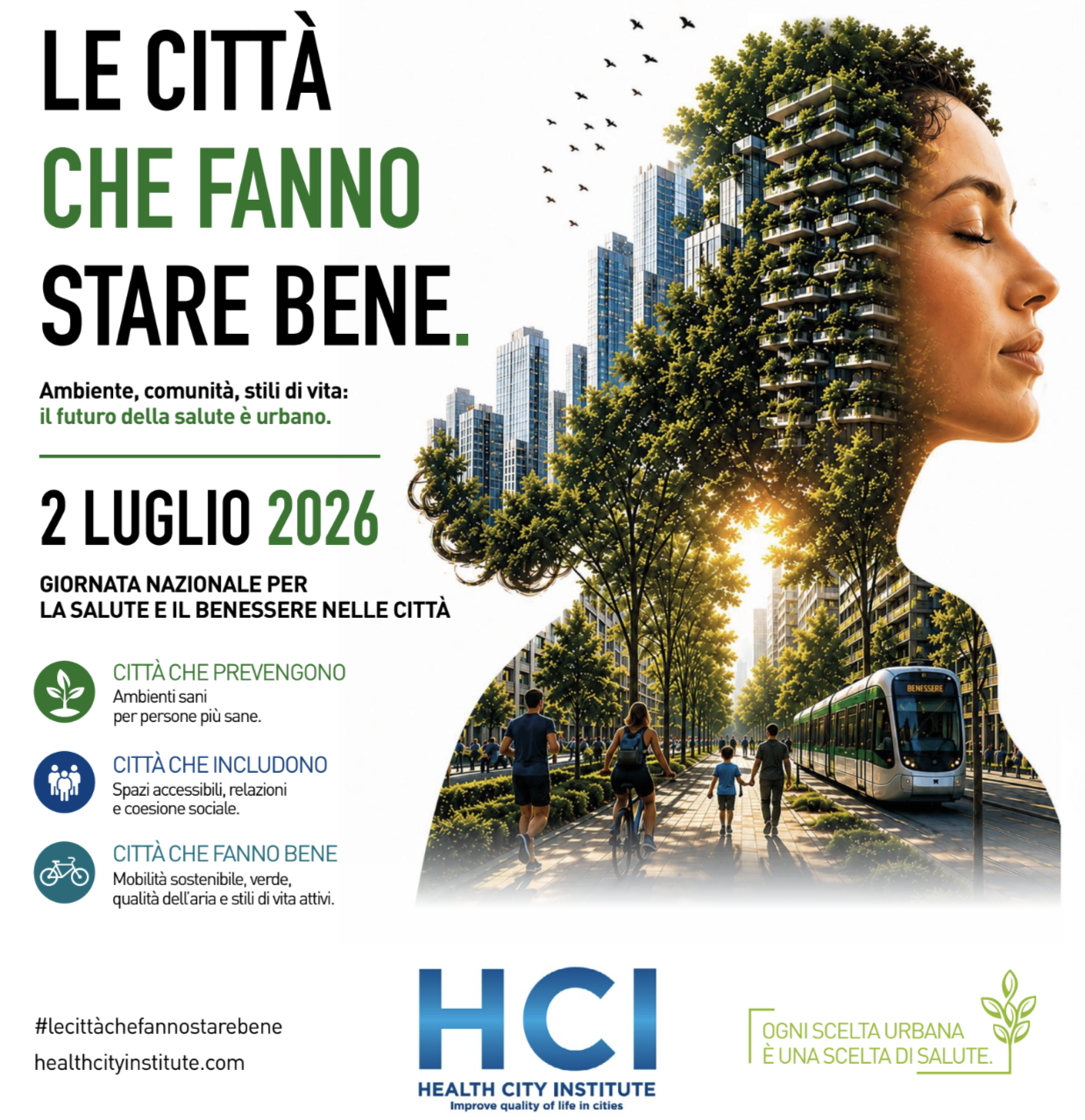
On the occasion of the 2026 National Day for Health and Well-Being in Cities, HCI – Health City Institute relaunched Urban Health as a strategic arena for prevention and health promotion. The appeal, presented on July 2 in Rome at the national headquarters of ANCI, during the event “The Cities That Promote Well-Being,” underscores the role of cities in the determinants of health and in reducing inequalities.
Urban Health and Prevention
At the heart of the initiative is an open letter addressed to mayors, the Government, Parliament, and regional presidents, signed by HCI with the patronage of the Parliamentary Intergroup “Quality of Life in Cities” and the Parliamentary Intergroup on Internal Areas, and endorsed by 20 organizations.
The document calls for integrating health into all public policies following the Health in All Policies approach, promoting healthy and sustainable urban environments, active mobility, healthy lifestyles, and tackling inequalities. For health professionals, the message is clear: prevention is not limited to clinics, but also depends on the quality of urban spaces and on the community’s ability to foster healthy behaviors.

The role of local administrations is read as an integral part of prevention policies, alongside the actions of the National Health Service and health professionals. Physical activity, reducing exposure to adverse environmental factors, accessible spaces, and good territorial practices are identified as priority areas.
The topic also encompasses urban regeneration and the need to develop environments capable of supporting health and well-being, reducing factors that drive poor health, socioeconomic fragility, and marginalization.
A particular emphasis is dedicated to sport and physical activity, identified as essential prevention tools and potentially integrable into care pathways, including through the involvement of pediatricians, primary care physicians, and specialists.
The environmental dimension remains central. Rising temperatures, heat waves, lack of urban green space, and soil sealing directly affect public health, especially in the most densely populated areas.
The City as a Health Infrastructure
The takeaway from the event is the vision of a city as a health infrastructure: a place where urban, environmental, and social policies can contribute to prevention and quality of life, complementing traditional healthcare interventions.
Subscribe to Integrative Medicine