
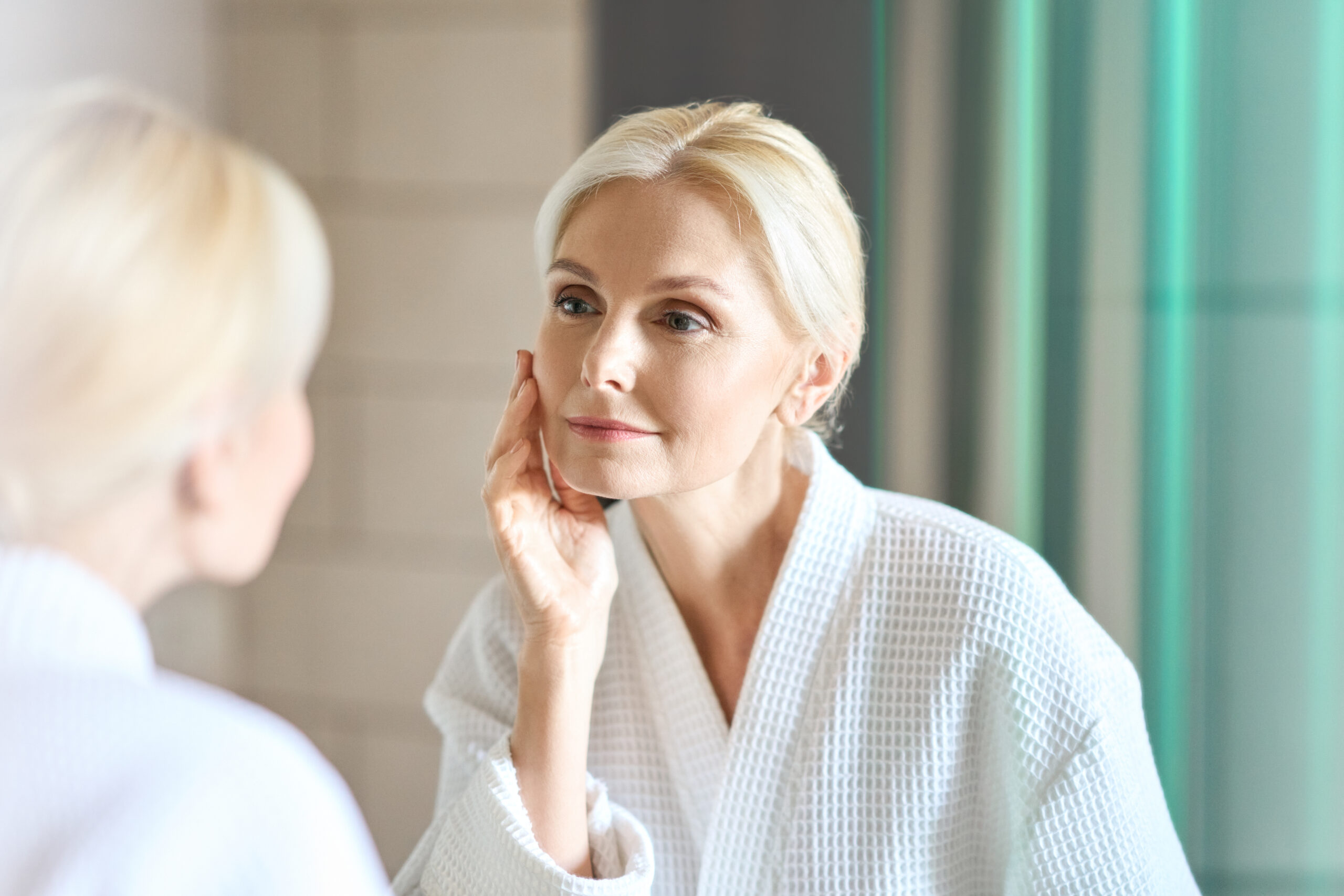
Skin aging is the result of a complex interplay between genetic predisposition and environmental factors such as sun exposure, pollution, and oxidative stress. Wrinkles, loss of elasticity, dryness, and discoloration are the most evident signs of this process.
In recent years, research attention has focused on trans-resveratrol, known for its antioxidant and anti-inflammatory properties.
A recent randomized, double-blind, placebo-controlled clinical trial evaluated for the first time the effectiveness of trans-resveratrol as the sole active ingredient, used both orally and topically, in mature women.
The Study
The trial, conducted in Australia, involved 134 healthy women aged 40 and older; 122 participants completed the full eight-week protocol. The volunteers were divided into four groups: oral supplementation alone, topical application alone, combined treatment, and total placebo.
The intervention involved taking a daily capsule containing 75 mg of trans-resveratrol and applying 1 gram of a 1.5% cream twice daily, morning and evening.
The results, after two months of treatment, indicate that the combined oral and topical approach was the most effective. The group that took the supplement and applied the cream recorded an 11.9% reduction in wrinkle severity from baseline, an improvement surpassing both placebo and the single treatments. The reduction affected wrinkle depth and overall appearance, suggesting a structural effect on the skin tissue.
An especially interesting aspect concerns sebum regulation in the so-called “U-zone” of the face, which includes the cheeks and chin. As aging progresses, sebum production tends to decline, contributing to dryness and skin fragility.
The topical application of the 1.5% cream produced a significant increase in sebum levels in this area, aiding the restoration of the hydrolipidic barrier and improving hydration and protection against external stressors. The topical treatment also showed a meaningful improvement in pigmentation, with reduced irregularities and a more even skin tone.
Biologically, trans-resveratrol exerts its effects through multiple mechanisms: activation of sirtuin 1, modulation of the AMPK and Nrf2/ARE pathways, and reduction of reactive oxygen species. Matrix metalloproteinases, enzymes involved in collagen degradation, were also suppressed, and inflammatory mediators such as NF-κB were inhibited.
Regarding safety, the products used were well tolerated. Adverse events were rare, mild in severity, and distributed similarly between active and placebo groups. Overall, the study demonstrates that combining 75 mg of oral trans-resveratrol with a 1.5% topical cream represents an effective and safe strategy to improve key parameters of aging skin, offering a scientifically grounded new perspective in the prevention of skin aging.
Source
Rao A, Briskey D, Roche G, Tremblay A, Da Silva Pinto M, Tompkins TA. Trans-resveratrol reduces visible signs of skin ageing in healthy adult females over 40: an 8-week randomized placebo-controlled trial. Front Aging. 2025 Dec 19;6:1727244. doi: 10.3389/fragi.2025.1727244.
Subscribe to Integrative Medicine