
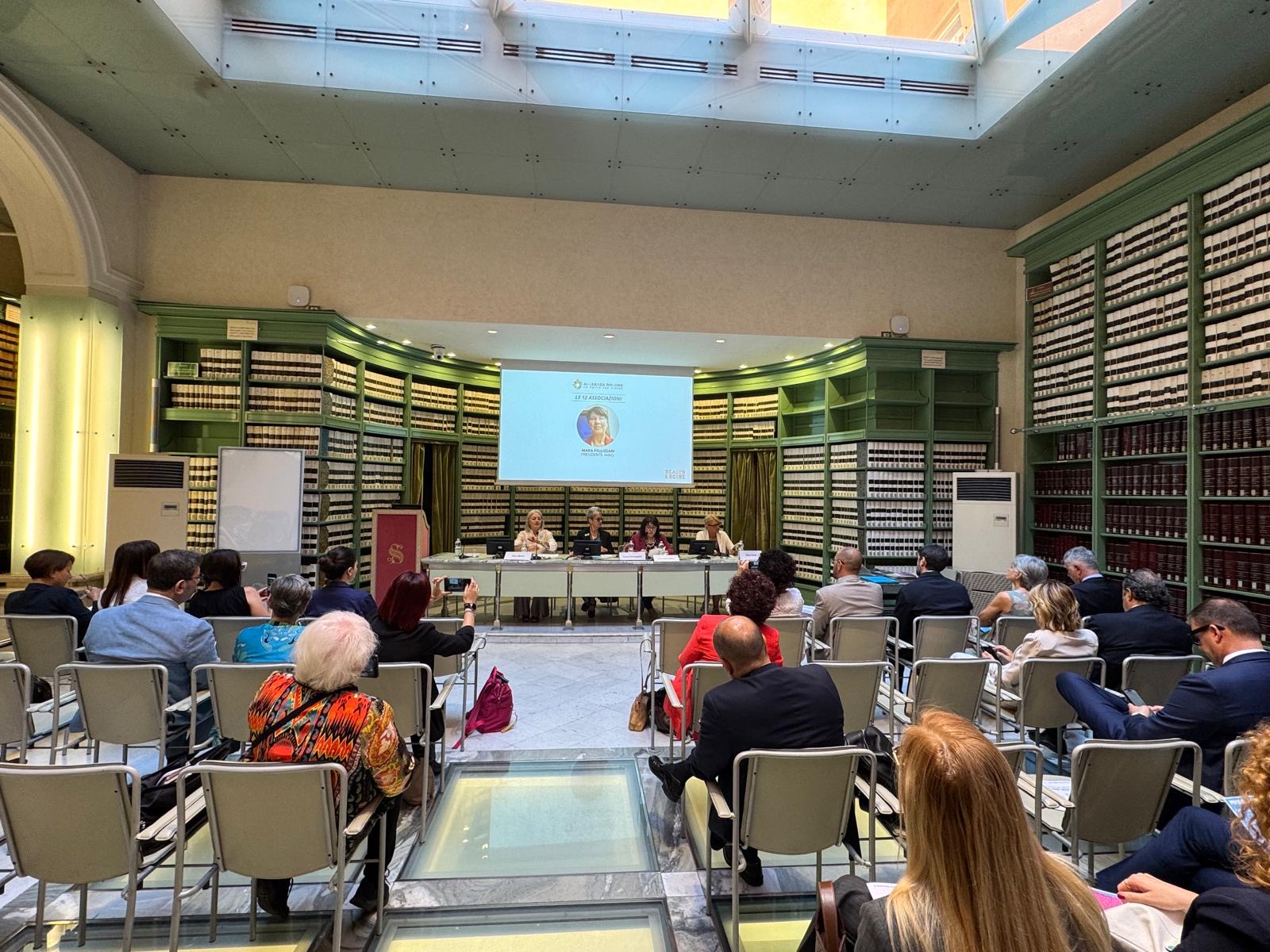
Can you love, design, study, or maintain a job while living with a pain that never leaves you? The answer that emerged in Rome on June 23, at the Spadolini Library of the Senate, is unanimous: no, or at least not under the current conditions of our health and social care system. The presentation of the first national survey “Living with Chronic Pain: The Impact of Pain on Daily Life” has lifted the veil on a suffering that affects 25% of the Italian population.
The survey, conducted by the Alliance on Pain on behalf of Health Engine ETS (the promoting body of health advocacy initiatives), used an innovative artificial intelligence platform to perform data driven advocacy. This tool allowed translating patients’ daily experiences into numerical evidence, outlining a picture that does not merely capture a clinical crisis but a real social and economic wound that directly prompts institutions to assess the true implementation of Law 38/2010.
The Methodological Innovation: Artificial Intelligence at the Service of Patients
A strong novelty of this survey lies in the investigative methodology used. The study was developed by leveraging the potential of artificial intelligence through the innovative platform Health Engine Survey. As explained by Luca Savarese (Health Engine Program Manager), this tool makes it easy to build professional reports, having been conceived specifically for the advocacy arena by experts in national AI platforms in healthcare.
The strategic objective of the operation is to create a system of “data driven advocacy”: an agent capable of generating scientific evidence and statistics based on real-world data (real world data). This technological solution dramatically shortens the distance between the problems citizens face daily and their official numerical representation before institutions, offering policymakers an immediate, objective, and indisputable snapshot of reality.
Profile of the Sample and the Diagnosis-without-Care Paradox
The research analyzed responses from 1,267 patients with heterogeneous conditions sharing the same plight (fibromyalgia, rheumatoid and psoriatic arthritis, endometriosis, migraine/chronic headache, neuropathies, diabetes, inflammatory bowel disease, and autoimmune disorders such as SLE and Sjögren’s).
The dominant respondent profile is female (83%), aged between 46 and 60, with a striking 75% of patients living with chronic pain for more than five years. Yet, as Savarese himself emphasizes, pain is by no means exclusive to women: there is a substantial hidden percentage of men who do not come forward to report their daily pain.
The most critical aspect highlighted by Lorenzo Latella, secretary-general of Opportunity APS, lies in a distinctly Italian paradox: 78% of respondents have received a definitive diagnosis, although 25% received it after more than five years of waiting, and they are already part of patient associations. However, 57% have never been enrolled in a structured pain-care pathway, primarily because it was never proposed by the treating physician.
The pain legislation, Latella argued, is unfortunately crushed by palliative care, which concerns a different category of patients. It becomes therefore essential to leverage existing regulations to guarantee real answers on the ground, starting with pilot projects.
Taboos Broken and the Bio-Psycho-Social Impact: The Private Sphere and Everyday Life
For the first time, an institutional survey shines a light on vital yet often ignored or overlooked aspects, such as the psychological impact and sexuality. A striking 74% of participants report that pain has negatively affected their sex life, causing loss of desire (53%) and reduced frequency of intercourse (43%). As highlighted during the proceedings, this is not a minor detail, as it affects people in their reproductive and productive years.
On daily life, Alessandra Sorrentino, president of the Alliance of Headache Sufferers, recalled how the simplest acts—getting out of bed, grabbing objects, standing up, or walking—become complicated or impossible. 80% of respondents assign a score from 7 to 10 to the impact of general fatigue, with 33% indicating the maximum level of severity (10).
The impact extends to education (affecting a sizable portion of young people) and to work, prompting reductions in hours (30%) or giving up a career (29%). When job loss occurs, it becomes a matter of survival: you lose identity, autonomy, and dignity, stopping to live and starting to merely survive.
The Economic Cost of Pain: a Black Hole Worth 72 Billion Euros
There is also a huge, often underestimated economic aspect. As strongly highlighted by Silvia Tonolo, president of the Italian Association of Rheumatic Patients – ANMAR ODV, institutions struggle to grasp the indirect costs tied to this condition: chronic pain generates an estimated 72 billion euro in lost productivity, along with data on lost potential earnings (28.9 billion). We’re talking about 24 million lost working days in a year, not only due to incorrect therapies but because the patient literally cannot get out of bed.
The expenditure on pain remains almost entirely outside the LEA, forcing families to outlays that often exceed €5,000 per year. 59% of patients must shoulder additional pharmaceutical and therapeutic costs themselves: 35% spend between €50 and €150 per month, 22% between €151 and €300, and 11% face monthly costs above €300. A urgent reflection is needed: the word pain must no longer be treated as a purely subjective matter but as a public concern.
The Call from the Scientific Community and Institutions
On the clinical front, Marco Mercieri, professor of Pain Therapy at La Sapienza University in Rome, reminded that timely access to appropriate care can reduce mortality and suicides by up to 50% (for instance in patients with diabetic pain through advanced techniques such as neurostimulation), and that consulting a Pain Therapy specialist early avoids fragmented pathways, yielding a savings of about €3,000 per patient.
In conclusion, the call launched by Teresa Petrangolini, founder and coordinator of the Alliance on Pain, supported by the attending lawmakers and the numerous partner associations, is unequivocal: it is essential to bridge the territorial regulatory gap through shared PDTA, structured training paths for physicians, and the activation of specialized centers. Chronic pain is a social wound; treating it is an act of justice, civilization, and respect.
Abbonati a Karla Miller