
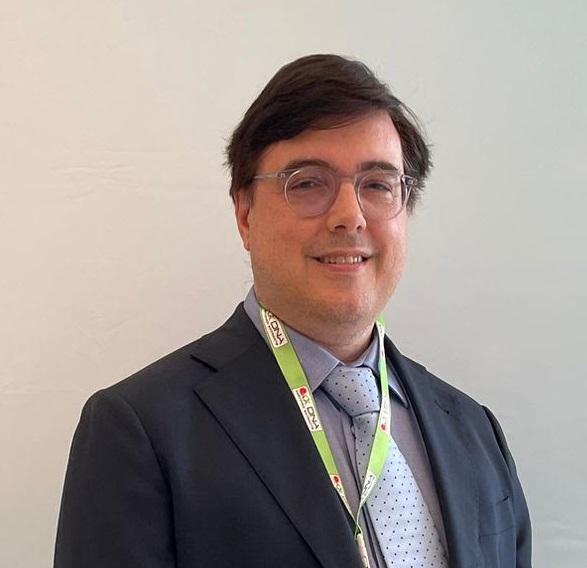
From June 18 to 20, Bologna hosted the XVI National Congress of the Italian Society of Nutraceuticals (SINut), an event that brought together researchers, clinicians, pharmacists, and health professionals to review the latest evidence in the field. The edition underscored the discipline’s growing scientific maturity and the need for an approach grounded in evidence, with interventions tailored to individuals and integrated into clinical practice. We spoke with Professor Arrigo Francesco Giuseppe Cicero, president of SINut, to delve into the conference’s main messages and reflect on the challenges that the field will face in the coming years.
Professor, as the XVI edition of the SINut Congress closes, what do you consider the principal scientific takeaway from these three days of discussion?
“The main message, in my view, is that nutraceuticals are entering a phase of full scientific maturity. It is no longer acceptable to frame nutraceuticals as a mere collection of products tied to general wellness; they must be seen as a tool with a real rationale within prevention and integrated risk management, provided they are used with methodological rigor, appropriateness, and a clear understanding of the individual’s biological and clinical profile.
From this congress emerges with strong clarity a cultural shift: the move from product to person. The question is no longer simply Which nutraceutical should we use?, but In which patient, at what life stage, with what metabolic, inflammatory, or functional profile and with what clinical objectives? I believe this is the most important signal of the discipline’s growth.”
The professor’s reflection introduces one of the concepts that ran throughout the entire congress: the need to move beyond a simplistic view of nutraceuticals and bring them back within the boundaries of evidence-based medicine.
In your closing statement you spoke of a nutraceutical field that is “less sloganeering and more evidence, less oversimplification and more integration between research, clinical practice, and prevention.” Is this the main evolution the discipline is undergoing today?
“Yes, I would say this is precisely the direction. In recent years nutraceuticals have attracted a lot of interest, but that growth has brought with it the risk of overly simplistic messages, excessive expectations, and sometimes a disconnect between communication and the quality of available evidence. The real evolution is to place the discipline back inside a rigorous, evidence-based framework focused on product quality, appropriate patient selection, and integration with lifestyle interventions and, when indicated, with medical therapy. Nutraceuticals should not be proposed as an alternative to medicine but as part of medicine that is more preventive, more personalized, and better able to manage subclinical conditions or early risk phases.” In this sense, “less sloganeering and more evidence” isn’t just a catchphrase; it represents a true paradigm shift.
The idea of nutraceuticals integrated into preventive medicine is reflected in the topics tackled at the congress. From cardiometabolic health to microcirculation, longevity to oncology, and extending to dermatology and sports, the program offered a health perspective oriented not only toward disease treatment but, above all, toward the maintenance of function.
Reviewing the program, it’s striking how many topics — microcirculation, longevity, obesity, liver health, sports, dermatology, and oncology — are united by a focus on maintaining function and preventing risk. Are we witnessing a change in how nutraceuticals are conceived in relation to health?
“Absolutely yes. Today health is interpreted less as mere absence of disease and more as the maintenance of function, the preservation of biological resilience, and the containment of risk trajectories. That is why seemingly disparate topics — microcirculation, liver health, obesity, athletic performance, skin health, or support for cancer patients — converge on a single idea: intervene early, in a targeted way, to protect systems and functions.” It is precisely within this context that nutraceuticals can find a credible space, not as a generic answer, but as support in areas where prevention, functional modulation, and integrated management can offer a real contribution. The centrality of healthy longevity, cardiometabolic risk, liver health, dermatology “from within,” and supportive oncology exactly reflects this shift in perspective.
Personalized medicine was one of the recurring themes of the Congress. However, personalizing a nutraceutical intervention means much more than simply selecting the most suitable product.
Personalization was a recurring theme across different sessions. What tools today allow you to turn the concept of personalized nutraceuticals from a theoretical principle into real clinical practice?
“Personalization today is no longer merely a theoretical aspiration. It is becoming clinical practice thanks to the ability to integrate multiple levels of information: thorough patient history, risk profile, metabolic phenotype, dietary habits, lifestyle, biochemical markers, inflammatory status, and, in some cases, more advanced data related to the microbiota or other biological characteristics. But there is another equally important aspect: product quality. You cannot talk about a truly personalized approach without knowing the composition, standardization, bioavailability, dosing, and safety of the preparations. In other words, personalization means engaging in a dialogue between clinical data, scientific evidence, expertise, and formulation quality.
The development prospects for nutraceuticals emerged as a recurring thread of the Congress. From the gut-skin axis to cardiometabolic health, to artificial intelligence and the One Health approach, the program outlined some of the areas expected to shape research in the coming years.
Among the topics addressed this year were microbiota and dermobiotics, liver and cardiometabolic health, artificial intelligence applied to interaction studies, One Health, and veterinary nutraceuticals. Which of these areas do you see as having the greatest development potential in the next few years?
“I believe there are at least three areas with particularly strong potential, albeit for different reasons. The first is the cardiometabolic and hepatic domain, because here we already have a very concrete clinical ground: prevention, measurable biomarkers, treatment adherence, and growing demand for integrated strategies. The second is the microbiota and dermobiotics, a field that connects the gut barrier, inflammation, metabolism, skin, and immune function. It is a highly promising sector but will need to advance further in standardizing the scientific evidence. Finally, artificial intelligence could offer a significant contribution to understanding interactions among compounds, biological targets, drugs, and patient profiles, improving both research and safety. In addition to these topics, I also see the One Health perspective as highly strategic, because it broadens nutraceuticals’ cultural horizon and places them in an ecosystem view of health that will become increasingly relevant in coming years.”
Among the sessions that drew the most interest was the one on nutraceutical support in oncology. This topic, particularly delicate, was addressed by the Congress with a rigorous scientific and multidisciplinary approach, acknowledging that in this field more than in others, every intervention requires careful evaluation of benefits, safety, and potential interactions.
In the Congress you tackled the theme of integrated nutraceutical support for cancer patients, underscoring the need to avoid simplifications and shortcut communications. What message do you think is important to convey today when talking about nutraceuticals in oncology?
“The fundamental message is that, in oncology, nutraceuticals must be approached with great seriousness and prudence. They can never be proposed as an alternative to validated cancer treatments, nor communicated through promises or oversimplifications. Their role, when it exists, is integrated support: contributing to quality of life, managing specific symptoms or conditions, and improving the tolerability of treatment regimens, always within a multidisciplinary dialogue and starting from listening to the patient’s needs. We must avoid two mirror errors: unconditional enthusiasm on one side, and prejudicial rejection on the other. The correct stance is one of appropriateness: understanding when an intervention can be truly useful, with what objectives, on the basis of what evidence, considering possible interactions, and always involving the team caring for the patient.”
The growth of nutraceuticals inevitably depends on the quality of the evidence. For healthcare professionals, it becomes essential to have clear criteria to critically evaluate products and guide clinical practice.
In several sessions there was an emphasis on distinguishing what is promising from what is genuinely supported by solid clinical evidence. What criteria should healthcare professionals use today to critically assess a nutraceutical intervention?
“I think professionals should ask a few simple but fundamental questions. The first concerns the level of evidence: are there well-conducted, preferably randomized and reproducible clinical studies, or is the basis exclusively preclinical or observational data? The second concerns clinical benefit: is the change biologically plausible but marginal, or does it yield a truly meaningful patient outcome? Then we must evaluate product quality: do we know the dose, standardization, manufacturing quality, bioavailability, and stability? Is the preparation appropriate for the patient’s profile? And, of course, is its use safe? Are there possible interactions with medications, contraindications, or tolerability issues? Finally, there is a principle I consider essential: no nutraceutical should be evaluated outside the clinical context. Diet, lifestyle, adherence, and follow-up are integral parts of the process and contribute decisively to the intervention’s outcome.”
The Congress also looked firmly toward the discipline’s future, tackling emerging topics such as artificial intelligence, personalized medicine, and the growing integration of nutraceuticals into preventive pathways. A perspective that, according to Professor Cicero, will require an even stronger emphasis on research quality.
Looking ahead to the coming years, which innovations and challenges do you think will be decisive for the evolution of nutraceuticals? What contributions can tools like artificial intelligence offer, and what should be the priority to solidify the discipline’s role in clinical practice?
“Artificial intelligence can provide a very important contribution, especially in three areas. First is research, because it enables analysis of large data sets and the generation of hypotheses about interactions among compounds, biological pathways, and clinical profiles. Second concerns safety, as it can help identify potential interactions between nutraceuticals and drugs, or among multiple nutraceuticals, particularly in complex, multi-medicated patients. Third is personalization, helping to recognize response patterns and subgroups of patients more or less susceptible to a given intervention. Of course we must avoid the opposite error: AI cannot replace clinical method or experimentation. It can be a remarkable accelerator of research, but it must always be guided by biological plausibility, data quality, and clinical validation. If I had to name a priority for the coming years, I would choose without hesitation the production of ever-stronger, more transferable evidence for clinical practice. After all, all other challenges depend on this. Without robust evidence it’s hard to truly personalize interventions, distinguish high-quality products, and integrate nutraceuticals into preventive pathways in a structured and credible way. Therefore the future of nutraceuticals will depend on our ability to harmonize scientific proof, formulation quality, clinical appropriateness, and integration into health pathways. If we manage to make this shift, nutraceuticals will assume an increasingly authoritative role in preventive medicine and in managing health complexity.”
Subscribe to Karla Miller