
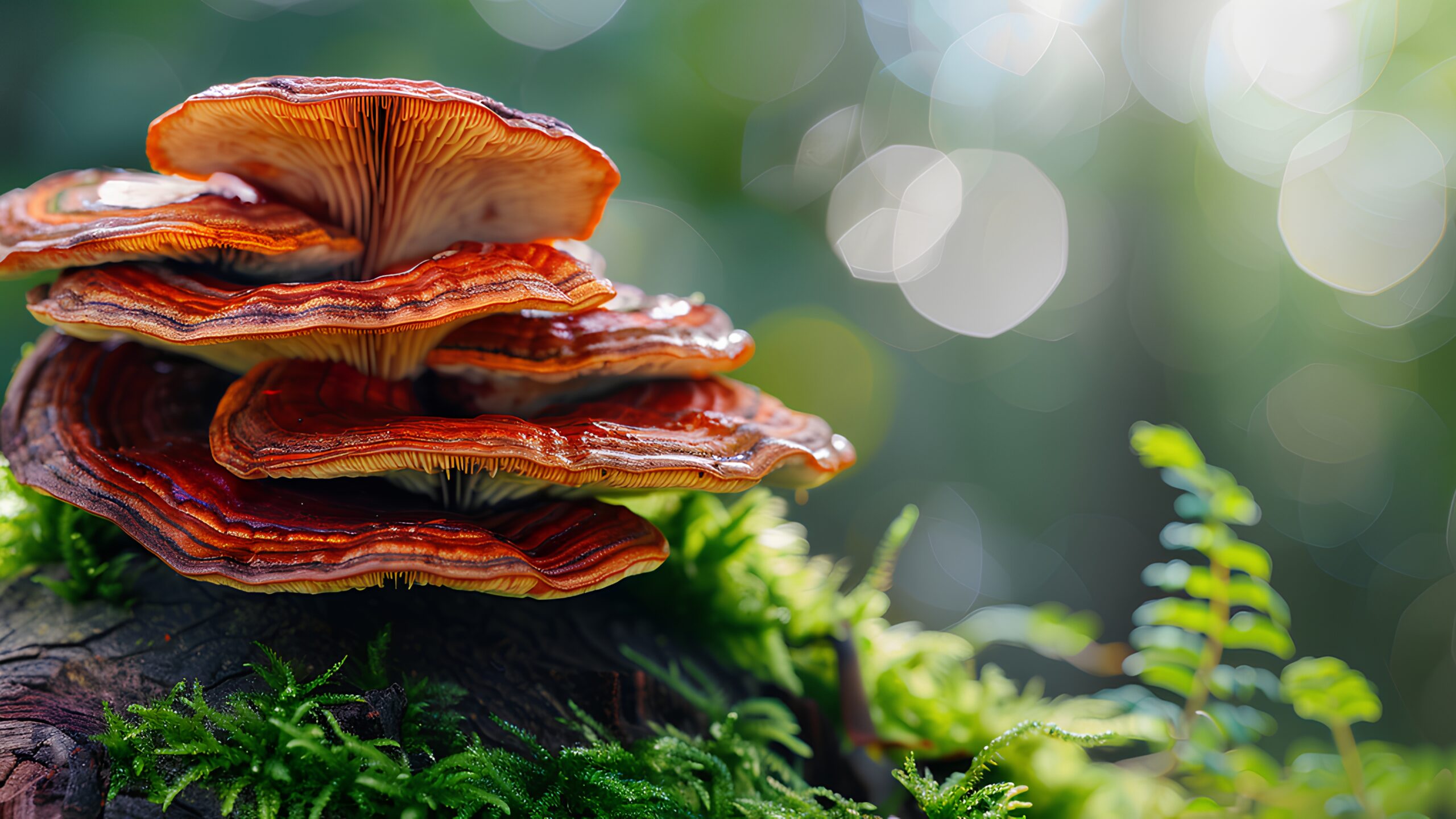
Over the past few years there has been a growing, new and promising interest in natural remedies. Not only is the number of sales of products of natural origin rising, but so is the volume of studies in this field. Mushrooms, long prized for their culinary value, are today increasingly appreciated for their numerous medicinal properties. Their use to promote and maintain good health as well as to treat a wide range of diseases is known since ancient times in Asian regions, while in the West this approach is considerably more recent.
Following a growing number of scientific studies on the topic, medical mycology is now proving to be a bright-future discipline, establishing itself as an integral part of natural medicine. Used in the East for millennia in the prevention and treatment of various diseases, it now enjoys broad consensus in the West, supporting traditional medicine or finding use even as a standalone therapeutic option in numerous disorders, such as those of a urinary nature.
Polyporus: Diuretic and More
The Polyporus umbellatus, one of the most widely used and precious medicinal mushrooms, is commonly employed in medicine for a wide range of disorders related to edema, scant urine output, vaginal discharge, and murky and painful urinary dysfunction. The broad array of bioactive substances present in this mycelium has drawn growing interest from the scientific community. Modern phytochemical and pharmacological research have shown that crude extracts and the isolated compounds of Polyporus umbellatus possess multiple biological functions, particularly for diuretic activity and the treatment of kidney diseases, as well as as support for oncological therapies.
The marked diuretic activity of this mycelium has been scientifically demonstrated, isolating the compound responsible for this peculiarity, ergone (ergosta-4,6,8(14),22-tetraen-3-one) with anti-aldosterone diuretic effects, capable of acting on the Na+/K+ ion balance. Ergone’s ability to increase urine volume in states of water retention or water reabsorption, iatrogenic from mineralocorticoids, makes this mycelium an ally in the treatment of numerous disorders.
Among the diuretic compounds isolated from Polyporus umbellatus are also ergosterol and D-mannitol, which contribute to potentiating its diuretic effect. The presence of the aquaporin proteins AQP1, AQP2 and AQP3 also supports the elimination of excess water and sodium [1]. The diuretic effects of Polyporus have been studied and compared to furosemide, a widely used synthetic diuretic, revealing a significant advantage in using Polyporus because it promotes the excretion of sodium and chloride while preserving intracellular potassium levels.
Different Sexes, Same Remedy
The Ganoderma lucidum, one of the best-known and most widely used mycelia in the East, proves to be a solid support for both male urinary disorders and those of a female nature. For the female sphere, the use of this mycelium proves highly effective in treating bothersome conditions such as cystitis and vaginal candidiasis, typically recurrent and often closely linked, which commonly prescribed drugs can struggle to eradicate. The use of Ganoderma lucidum could break the infection–remission–relapse cycle, offering a definitive solution to the problem.
Candida albicans, a fungus normally present in the intestinal tract, vaginal canal and oral cavity, under conditions such as heat and humidity or through the use of drugs that reduce immune function, can undergo changes and easily become an infection.
Ganoderma lucidum works on the immune defenses, promoting a ready and immediate response to both candidiasis and cystitis. The multiple properties of this mycelium have sparked the curiosity of the scientific community, leading to numerous studies aimed at understanding their mechanism of action and potential medical use. Among these is particularly notable a double-blind study conducted at the Kurume University School of Medicine in Japan, from November 2004 to April 2005 [7].
Involving 63 men over 50 years old, with urinary disorders, the study administered Ganoderma lucidum for 4 weeks, highlighting at the end of the observation a shift from moderate to mild urinary symptoms, with a significant reduction compared to the data recorded before the treatment began.
Urinary Incontinence
Among urinary disorders, urinary incontinence represents one of the most challenging conditions to manage, manifesting in many different forms. Whether stress, urge, or obstructive, even a prevention strategy proves difficult to implement. In recent years, the phenomenon appears to be increasing, and it is not uncommon for it to affect people as young as 50.
Interestingly, in Asian communities, particularly Japan, Korea, and China, the incidence of this condition appears significantly lower, perhaps also thanks to the habit of using Ganoderma lucidum as a longevity elixir, which among other properties has a relaxing effect on the bladder muscle.
Precisely because of this characteristic, Ganoderma proves effective on its own as a remedy, or in more complex cases it can be useful to combine it with Cordyceps sinensis, a mycelium capable of substantially improving muscle tone and thereby promoting proper bladder function. The use of these mycelia is also highly effective when used alongside traditional allopathic therapies, where protocols typically involve duloxetine, oxybutynin or propiverine, helping to improve symptoms as well as mitigate the side effects associated with pharmacological treatment.
Prostate Allies
Benign prostatic hyperplasia is a very common condition starting around age 50. According to ISTAT data, this condition shows a progressive rise with age, eventually affecting up to 90% of men over 80. The increasing prostate volume, pressing on the urethra, prevents complete bladder emptying and triggers frequent urgent urges. The most useful mushroom in this condition is Grifola frondosa, better known as Maitake.
Studies on this mycelium have shown that its efficacy can be 10 to 20 times higher than the better-known Serenoa repens. According to a study by Sensuke Konno from the Urology Department at New York Medical College, this mycelium may be able to reduce by 75% prostate and bladder tumors, paving the way for new procedures and treatments in combination with conventional therapies [2].
Another mushroom of notable importance in this field is Ganoderma lucidum, better known as Reishi, which, thanks to its inhibitory effect on 5α-reductase, significantly reduces the growth of the prostatic volume [3], making it a valuable therapeutic support in the treatment of benign prostatic hyperplasia. Referring to a 2011 study by Prof. Nahata [4], it was possible to confirm that this mycelium can reduce PSA levels, also showing that its administration helps improve the cellular structure of prostatic tissues, unlike the group treated with testosterone.
An Ally Beyond the Urinary Tract
At the end of the 1990s, some studies on Polyporus umbellatus highlighted the presence of steroid-like compounds, such as acetosyringone and polyporusterone type A and type B, capable of promoting regrowth and strengthening nails and hair [6]. The study, conducted on human scalps in vitro, demonstrates how mushroom doses between 1.28 and 6.4 μg/ml are able to significantly stimulate regrowth while doses between 4 and 20 mg/ml inhibit it.
Polyporus umbellatus improves venous stasis, promoting the elimination of toxins from the matrix and reducing demineralization associated with mesenchymal acidosis. Saving minerals, the structure of nails and hair strengthens but the skin also benefits, appearing more toned, thanks to the action that the compounds in this mycelium exert on the lymphatic system. Preserving minerals, the Polyporus supports and improves metabolism, increasing the energy perceived by the body. By reducing mesenchymal acidosis, calcium precipitation in the urinary tract is also reduced, thereby decreasing the risk of urinary stones and gravel and supporting the proper function of kidneys and bladder.
A Help in Oncologic Therapies
With the growing number of cancer patients, the search for molecules that can offer benefits has become a priority, developing an approach now called “integrated oncology,” with the aim of reducing the side effects of chemotherapy and radiotherapy, supporting the immune system and improving quality of life.
The use of mycelia such as Ganoderma lucidum and Grifola frondosa, rich in β-glucans and triterpenes, is indicated for their immunomodulatory abilities, stimulating macrophages, T lymphocytes and NK cells, essential for controlling tumor cells. Regarding the urinary picture, in a study conducted in 2024 the extraordinary capacity of the Polyporus umbellatus polysaccharide, known as HPP, to induce autophagy in bladder cancer cells, regulating macrophages in the co-culture system, leading to a decrease in tumor cell proliferation [8].
The mycotherapy is a well-tolerated natural strategy backed by important scientific evidence. In oncology it represents a complementary resource capable of counteracting the side effects of treatments as well as supporting the body through the challenging treatment journey.
References
- Zhang G, Zeng X, Han L, Wei JA, Huang H. Diuretic activity and renal medulla AQP1, AQP2, AQP3, V2R expression of the aqueous extract of Polyporus umbellatus sclerotia FRIES in normal rats. J Ethnopharmacol. 2010 Mar 24;128(2):433-7. DOI: 10.1016/j.jep.2010.01.032. Epub Jan 18, 2010. PMID: 20083182.
- Camilleri E, Blundell R, Baral B, Karpiński TM, Aruci E, Atrooz OM. Unveiling the full spectrum of maitake mushrooms: A comprehensive review of their medicinal, therapeutic, nutraceutical, and cosmetic potential. Heliyon. 2024 Apr 26;10(9):e30254. doi: 10.1016/j.heliyon.2024.e30254. PMID: 38707308; PMCID: PMC11068609.
- Fujita R, Liu J, Shimizu K, Konishi F, Noda K, Kumamoto S, Ueda C, Tajiri H, Kaneko S, Suimi Y and Kondo R. (2005). “Anti-androgenic activities of Ganoderma lucidum.” Journal of Ethnopharmacology, 102, 107–112.
- Nahata A, Dixit VK. Ganoderma lucidum is an inhibitor of testosterone-induced prostatic hyperplasia in rats. Andrologia. May 2012; 44 Suppl 1:160-74. DOI: 10.1111/j.1439-0272.2010.1155.x. Epub 2011 Jun 8. PMID: 21651601.
- Noguchi M, Kakuma T, Tomiyasu K, Kurita Y, Kukihara, H, Konishi F, Kumamoto S, Shimizu K, Kondo R and Matsuoka K (2008). ”Effect of an extract of Ganoderma lucidum in men with lower urinary tract symptoms: a double-blind, placebo-controlled randomized and dose-ranging study.” Asian J Androl 10, 651–658.
- Ishida H, Inaoka Y, Shibatani J, Fukushima M, Tsuji K. Studies on active principles in herbs used for the treatment of hair. II. Isolation of substances for hair regrowth, acetosiringone and polyporusterone A and B, from Polyporus umbellatus Fries. Biol Pharm Bull. November 1999; 22(11):1189-92. DOI: 10.1248/bpb.22.1189. PMID: 10598026.
- Rajamahanty S, Alonzo C, Aynehchi S, Choudhury M, Konno S. Growth inhibition of androgen-responsive prostate cancer cells with brefeldin A targeting cell cycle and androgen receptor. J Biomed Sci. 2010 Jan 26;17(1):5. doi: 10.1186/1423-0127-17-5. PMID: 20102617; PMCID: PMC2843609.
- Luo S, Huang X, Li S, Chen Y, Zhang X, Zeng X. Homogeneous Polyporus polysaccharide exerts anti-bladder cancer effects via autophagy induction. Pharm Biol. 2024 Dec;62(1):214-221. doi: 10.1080/13880209.2024.2316195. Epub 2024 Feb 14. PMID: 38353262; PMCID: PMC10868468.
Abbonati a Karla Miller