
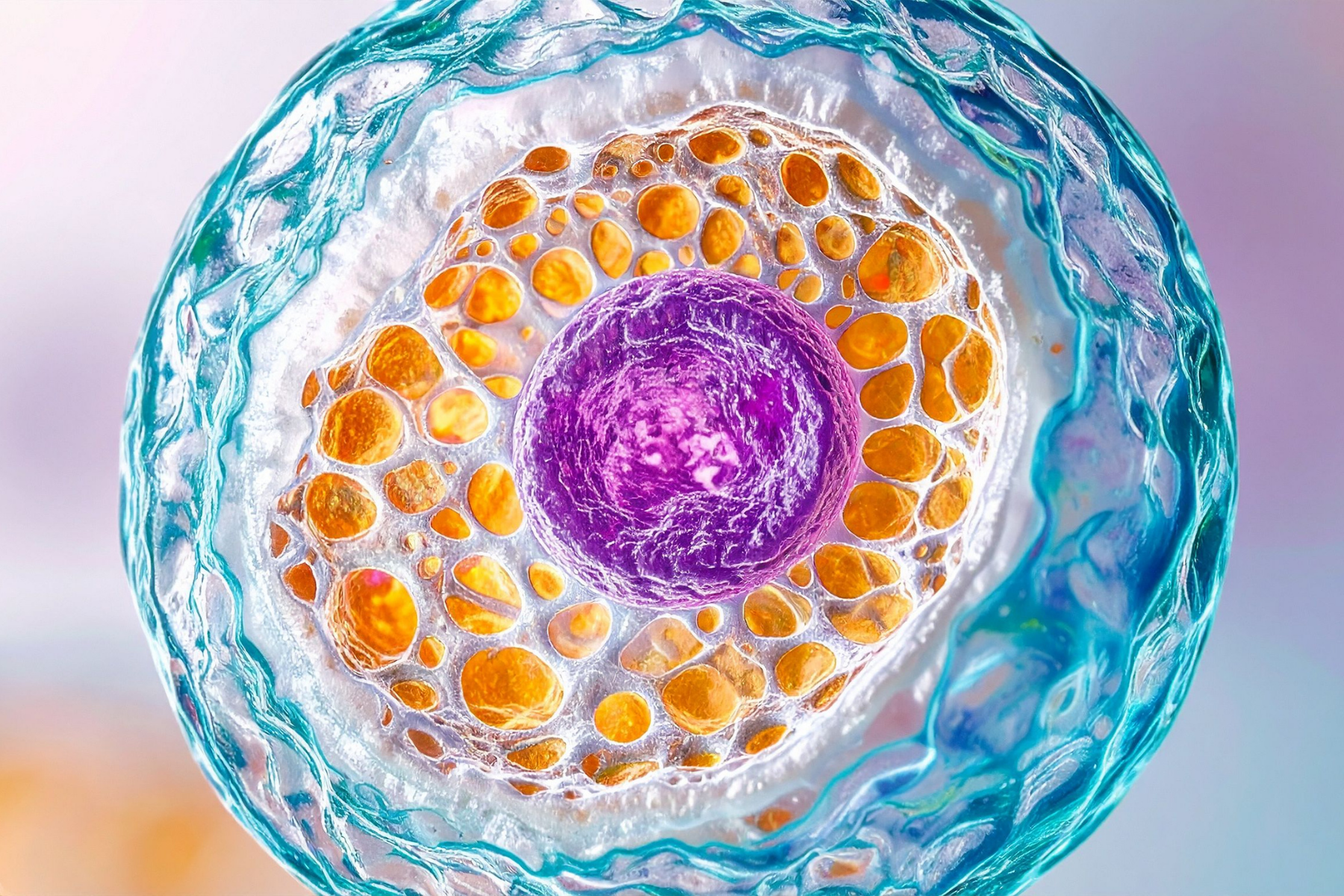
Fertility is influenced by more than just age. Oocytes and sperm also respond to mitochondrial efficiency and the balance between production and control of reactive oxygen species (ROS). A review published in Frontiers in Cell and Developmental Biology emphasizes that ROS, at physiological levels, participate in essential reproductive processes; they become harmful when they exceed the capacity of the antioxidant systems.
Under oxidative stress, mitochondria can generate energy less efficiently and produce additional ROS, fueling a vicious circle that can damage membranes, proteins, and mitochondrial DNA.
Oocyte and Mitochondrial Quality
The oocyte is a high-energy-demand cell: mitochondria support maturation, the organization of the meiotic spindle, proper chromosomal segregation, fertilization, and the initial embryonic divisions. With age, mitochondrial quality-control mechanisms can decline, contributing to energy deficits, oxidative stress, chromosomal errors, and reduced oocyte quality.
Maternal Mitochondrial Inheritance
After fertilization, the embryo’s mitochondria come almost exclusively from the oocyte. Therefore, the quality of maternal mitochondrial inheritance matters for oocyte and embryonic competence, even though the amount of mitochondrial DNA is not a definitive clinical test and should not be interpreted in isolation.
Male Fertility and Reactive Oxygen Species
Male fertility is also affected by age, with possible reductions in ejaculate volume, motility, and other semen parameters, and an increase in DNA fragmentation. In male gametes, ROS are necessary for capacitation and the acrosome reaction, but when produced in excess they can damage lipid membranes, proteins, DNA, and the sperm epigenome.
Antioxidants and Clinical Prospects
Coenzyme Q10, vitamins, melatonin, N-acetylcysteine, carnitine, and resveratrol have been studied for their potential antioxidant roles. However, the evidence regarding pregnancies and births is not uniform. Supplements should not replace diagnosis or be proposed as a universal treatment; moreover, an excess of antioxidants can disrupt redox balance.
Mitochondrial Transfer
Mitochondrial transfer into the oocyte remains an experimental strategy. The available data do not yet clarify whether it improves embryonic quality or the likelihood of birth; questions of safety, biological compatibility, long-term effects, and ethics remain open.
Clinical Message
Research on mitochondria can contribute to understanding certain forms of infertility and to identifying more precise biomarkers, but it is premature to turn every molecular mechanism into a therapy. Clinical assessment, addressing modifiable factors, and timely referral to a specialist in at-risk cases remain central.
Study
Song J, Xiao L, Zhang Z, et al. Effects of reactive oxygen species and mitochondrial dysfunction on reproductive aging. Frontiers in Cell and Developmental Biology. 2024;12:1347286. Published February 23, 2024. doi:10.3389/fcell.2024.1347286
Abbonati a Karla Miller