
The concept of aging is undergoing a profound scientific metamorphosis: no longer understood as an inexorable and passive decline, but as a modifiable and dynamic biological process. In an era where demographic transition poses unprecedented challenges to the health system, understanding the mechanisms that govern our healthy lifespan (Healthspan) becomes a clinical, economic, and social priority. It is in this context that reflections on the new frontiers of genomics emerge, where the boundary between what we inherit and what we build grows ever thinner and more fascinating.
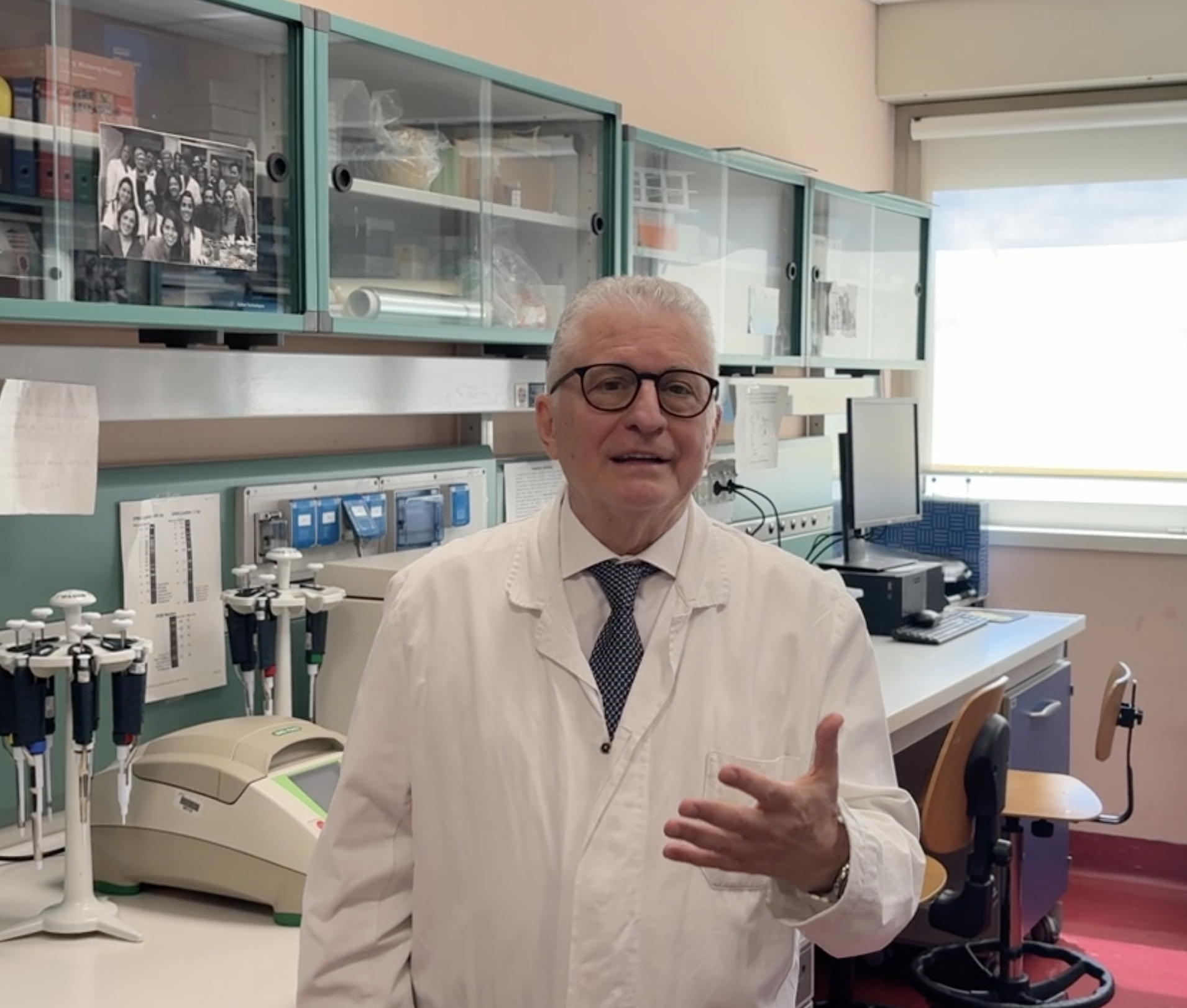
To explore these molecular foundations and understand how our daily choices can influence our biological destiny, we spoke with Giuseppe Novelli, a professor of Medical Genetics at the University of Rome “Tor Vergata.” A former rector of the Roman university, Novelli now coordinates research in predictive medicine, studying how variations in DNA and epigenetic changes determine susceptibility to complex diseases.
Beyond DNA: Epigenetics as a Plastic and Reversible Process
Until a few decades ago, the scientific community believed that everything was “written in the genes.” DNA was seen as an immutable barcode that predetermined our lifespan and the diseases we would develop. Novelli makes immediately clear how evidence has revolutionized this view. “It should be reiterated that there is an individual genetic basis that defines our biological ‘size’: if you buy a size 42 suit, you can’t have someone wearing a size 66 wear it,” he explains, illustrating that genetics is the basic, individual framework. “There are species whose fate is rigidly written in their genes: an insect born and dying in 24 hours will follow that path even if nourished optimally, just as the Greenland shark is programmed to approach 400 years, adapting to extreme temperatures. But in the human species, the weight of genes on longevity is currently estimated at about 40%–50%. The other half, the remaining 50%, is governed by epigenetics.”
To simplify, one could define “epigenetics as the dress we put on our genes,” explains Novelli. While the DNA is written in ink, epigenetics is written in pencil. This distinction is revolutionary: it means that the expression of our genes is not a destiny but a plastic, and above all, reversible process. “If it’s written in pencil, I can erase it,” Novelli emphasizes. This “erasing” occurs through lifestyle: diet, physical activity, and even stress management act as molecular tailors that reshape the chemical makeup of our cells. The result is that living a long, healthy life is not a static target but a daily achievement. The global research objective is not the mythical “fountain of youth,” which does not exist, but the extension of our Healthspan, i.e., our years lived in good health. This is an urgent priority in our country, where the latest ISTAT data for 2024–2025 show that while life expectancy at birth has reached 83.4 years, healthy life expectancy stands at only 58.1 years, with significant health, social, and economic repercussions. “There’s no point in extending chronological life if it’s spent in illness; the challenge is to modulate epigenetic factors to age while remaining biologically efficient, separating aging from disease,” cautions Novelli.
Inflammaging and the Biochemistry of Movement: The Exerkines Revolution
A crucial part of the interview concerns the biochemical processes that “inflame” the body. Central to everything is inflammaging—the chronic, low-grade inflammatory state that Novelli defines as the common denominator of all complex diseases. “Acute inflammation is easy to treat, but chronic inflammation is insidious because it gives no immediate signs while it devastates tissues from the inside,” he warns. It is a silent blaze fueled by environmental triggers and unhealthy lifestyles that keep the genes of inflammation constantly on, leading to profound cellular damage and even neoplastic mutations.
To counter this trajectory, Novelli points to a remarkably potent intervention frontier: physical activity. If for a long time we were told that exercise is good for you, today we can finally explain the biochemical rationale behind the well-being produced by movement. “Exercise activates the production of specific molecules called exerkines. These substances are produced mainly by the muscles (myokines), but also by the liver (hepatokines) and adipose tissue. Some exerkines produced by the liver during exertion can cross the blood–brain barrier and reach brain vessels, exerting a direct protective role against neurodegenerative diseases such as Alzheimer’s and Parkinson’s, or vascular events such as stroke.”
“Exercise is an incredibly potent medicine, but like any medicine, it must be prescribed with precision: chronobiology teaches us that a diabetic who trains in the morning risks harmful glycemic spikes due to the hormonal response to metabolic stress, whereas the same effort in the evening can be therapeutic and stabilizing. Even small goals, such as 7,000 steps per day, which reduce the risk of heart attack and cancer by 30–37%, must be tailored to the biology of the individual, with an appropriate “dosage”: an obese person or someone with heart disease, for example, requires different protocols to properly activate the epigenetics of healing.”
The Microbiota: A Molecular Ecosystem in Constant Evolution
A necessary deep dive concerns the microbiota, an area in which Novelli advises extreme scientific caution despite the industry’s enthusiasm. “The gut hosts a universe of DNA different from ours (bacteria, viruses, fungi), which constantly interacts with our cells.” While it is now widely recognized that dysbiosis is a hallmark of aging and a predisposition to disease, Novelli emphasizes that we are still far from having universal standards to define a “perfect” microbiota.
“The microbiota is dynamic, changing continuously in response to environmental interaction,” Novelli explains. “Its composition is influenced by every daily action: living with a dog or changing partners alters our gut microbes through physical contact and the exchange of microorganisms. Even a kiss or a few weeks’ journey to another continent, such as India, can profoundly alter this ecosystem. The more variable you are, the more you move forward; the less variable you are, the more the species tends toward extinction,” he notes, underscoring that health lies in the diversity and adaptability of our microbial heritage. “Everything we ingest—from vegetables to meat, from dairy to pollen—brings in foreign DNA from different species that ends up in our gut. Treating the microbiota as a static snapshot is a clinical mistake: it is a dynamic, evolving process that requires a personalized approach, far from standardized solutions or miracle supplements sold as universal cures.”
Predictive Medicine vs Marketing: Unmasking the “Genoscopes”
Novelli is particularly harsh on the chaotic commercialization of DIY genetics. He calls “genoscopes” the genetic tests sold online, comparing them to a form of gene-based horoscopes. Selling a DNA analysis via a mail-in saliva kit, without a clinical interview considering history, age, or current health status, is described as a scandalous operation. “Knowing how much Neanderthal DNA we have in our body—ranging roughly from 1.8% to 2.1% in nearly all of us—is a biological curiosity with no utility for preventing modern diseases.”
True predictive medicine, as practiced in Tor Vergata’s predictive medicine laboratory, relies on family history and qualified genetic counseling. “Rather than performing extremely costly broad tests, I’ll take a sheet and a pencil and draw the patient’s family tree,” Novelli explains. This approach has enabled the expert to diagnose a genetically based kidney syndrome (Alport) in a forty-something asymptomatic man simply by reconstructing his relatives’ clinical histories and ordering a targeted urinalysis. Another paradox of DIY tests is the discouragement of medications that have already been safely used for decades: “If you’ve been taking aspirin for twenty years without problems, what is the point of a report saying you have a genetic sensitivity to that drug? The DNA is a ‘bible’ written in every cell, capable of thousands of interpretations; it must be read together with the patient’s clinical and environmental history. Serious prevention requires pre-test counseling to determine the test’s usefulness and post-test interpretation to turn data into concrete actions, rejecting the logic of a prepackaged kit.”
The 12 Hallmarks of Aging
The international scientific literature codifies 12 “hallmarks of aging,” biological signals that define cellular and systemic aging. These include: genomic instability (DNA damage), telomere attrition, epigenetic alterations (changes to chemical tags), loss of proteostasis (protein folding errors), nutrient sensing, mitochondrial dysfunction (energy decline), cellular senescence (the “zombie” cells), stem cell exhaustion, altered intercellular communication, impaired macromautophagy (cellular cleanup), microbiota dysbiosis, and chronic inflammation.
However, Professor Novelli invites a highly critical approach to this list when used as a universal diagnostic tool. “Each of us is different, and we are not produced by a cookie-cutter,” he warns. While chronic low-grade inflammation and familial predisposition are common denominators that require constant attention in every longevity strategy, many other signals vary drastically from person to person. DNA instability, for example, is a fundamental hallmark but manifests pathologically mainly in rare syndromes. The same microbiota is a pillar of health, but its extreme dynamism makes it impossible today to define a fixed standard of “normal” that applies to everyone. In brief, the 12 signals are essential compasses for researchers in guiding the discovery of new drugs (like senolytics), but in daily clinical practice they must always be contextualized. “Prevention isn’t about applying a fixed formula to all patients, but about understanding which of these signals are truly decisive for the specific biological history of the individual in front of us.”