
As age increases, cardiovascular prevention becomes increasingly central: intervening on risk factors and early detection of potential pathologies means not only reducing the burden of disease, but also preserving longer health and independence.
We cannot therefore always wait for citizens to come to the clinic. Especially in more remote or disadvantaged settings, where financial, organizational, or knowledge barriers can pose obstacles, prevention must reach people where they live, intercepting in particular situations where advanced age, chronic illness, and social vulnerability overlap.
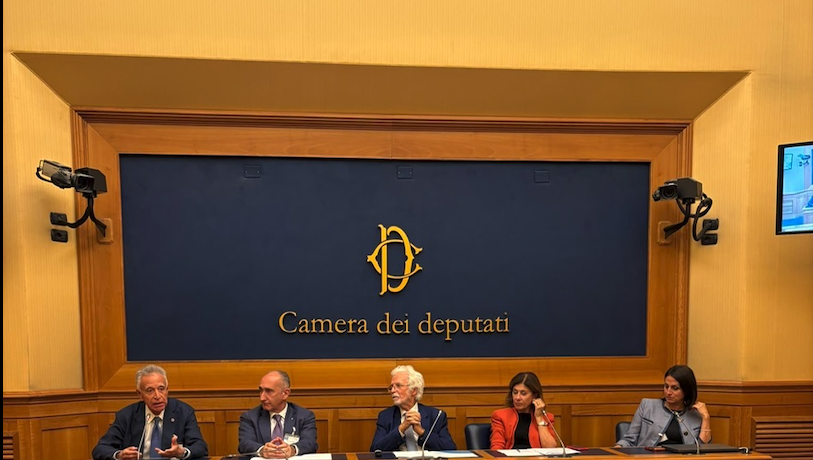
This is the key message that emerges from the results of PreVasc (Cardiovascular Prevention), presented in recent days at the Press Room of the Chamber of Deputies as part of the conference “Communities that Take Care. The PreVasc project and territorial alliances for heart health.”
The project, promoted by the Italian Society of Geriatric Cardiology (SICGe) in collaboration with the Cardiothoracic Department of Careggi-Firenze, the Longevitas Foundation ETS and the Health and Society Association, with the involvement of the University of Rome “Tor Vergata” and UniCamillus, brought screening out of healthcare facilities, into senior centers, churches, and gathering places in the Rome’s 6th Municipality. More than 2,600 people over 65 were involved, with an average age of 74.7 years.
A substantial burden of risk factors
The numbers paint a meaningful picture: 43% of those screened have hypertension, 47% with dyslipidemia, 7% with diabetes, 14% are smokers, and 21% are former smokers.
On the cardiac-function front, 241 people, equal to 9.2% of the sample, present an ejection fraction below 50%; in three cases the value drops below 30%. Aortic stenosis was identified in 1.07% of participants, mitral insufficiency in 4.69% and tricuspid regurgitation in 5%.
Alongside the clinical data, another variable emerges: social factors. Cardiovascular diseases are present in 38.6% of people with elementary education, compared with 16% of graduates. In the sample – where only 5% held a degree, versus a national average of 20% – the average number of chronic conditions reaches 3.4 per person. Education level therefore appears more closely linked to the distribution of pathologies than household income, even though in the lower income brackets obesity is more prevalent.
Social vulnerability enters prevention
For Alessandro Boccanelli, coordinator of the project for the Italian Society of Geriatric Cardiology and president of the Health and Society Association, the most meaningful result concerns not only the quantity of conditions detected, but their distribution. Fewer years of schooling, he observed, can accompany a lower awareness of the importance of prevention and of “silent” risk factors, in addition to delays in diagnosis.
In his remarks Boccanelli recalled that PreVasc was born several years ago precisely as a community prevention project, starting from small Italian towns: the initial experiences involved ten small towns, with the aim of testing whether disease could be intercepted even in settings far from the big centers. The Rome experience, in his view, confirms the need to consider economic and social fragility as elements to be addressed when building a prevention strategy.
The cost of not preventing
Turning to the role of institutions, Gian Antonio Girelli, a deputy and president of the Parliamentary Intergroup on Prevention and Risk Reduction as well as promoter of the meeting, emphasized that the issue is not merely to invest financially in prevention but to build organizational and cultural conditions so that it can work: staff training, resources, and proximity networks.
The question to ask, he noted, is not only how much prevention costs, but how much not preventing costs. And this is not only in terms of years of life lost, but also in healthcare and social costs. Because elderly care cannot be solely a medical matter: if the clinical dimension is not complemented by social support, the differences between regions, interior areas, suburbs, and more fragile contexts risk perpetuating health inequalities.
Targeting not only lifespan, but healthspan
Another pivotal point raised during the conference concerns the very meaning of increasing life expectancy. Salvatore Maria Corsello, professor of Endocrinology and Pro-Rector for Scientific Communication at UniCamillus, highlighted the role played by prevention and modern medicine in extending life: from vaccines to medications, up to cardiovascular treatments that helped reduce mortality.
However, the goal today cannot be merely to increase the lifespan, the years of life. We must work on the healthspan, the duration of life lived in good health. It is in this perspective that initiatives like PreVasc gain value: early detection of risk factors and diseases can mean not only living longer, but reaching old age with a better quality of life.
From the university to the territory
For Nathan Levialdi Ghiron, rector of the University of Rome “Tor Vergata”, PreVasc concretely shows that prevention cannot be confined to clinics, but must be brought to the places where people live, especially for the elderly. The project also enabled research to be paired with training activities: nursing staff in training at the university participated in the screenings, transforming the territory into a place of learning and health production.
The concept expressed by Levialdi Ghiron is that of a transition “from a University in the territory to a University with the territory”, where education and research are not separated from the community’s needs.
Bringing the model to the most fragile contexts
The territorial dimension was also emphasized by Eleonora Selvi, president of the Longevitas Foundation ETS. The PreVasc experience, she stressed, raises the challenge of how to transform a territorial trial into a more structured model, consolidating alliances among institutions, universities, professionals, and the Third Sector.
The challenge concerns especially the most fragile contexts with limited resources, where difficulties can be economic, organizational, but also related to knowledge and the culture of prevention. It is precisely in these areas that a proximity screening can become a tool to intercept early conditions that would otherwise reach clinical observation later.
Abbonati a Karla Miller