
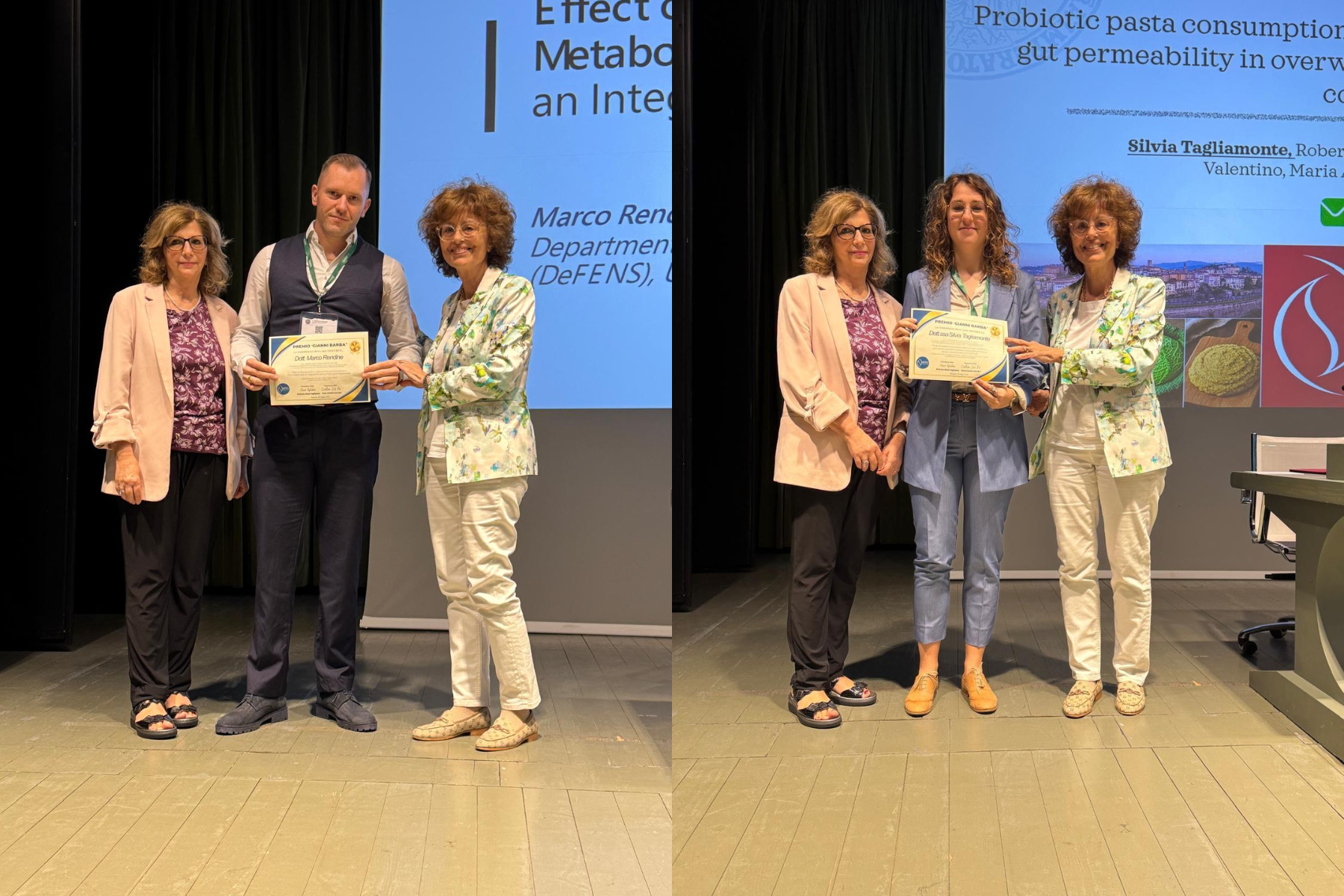
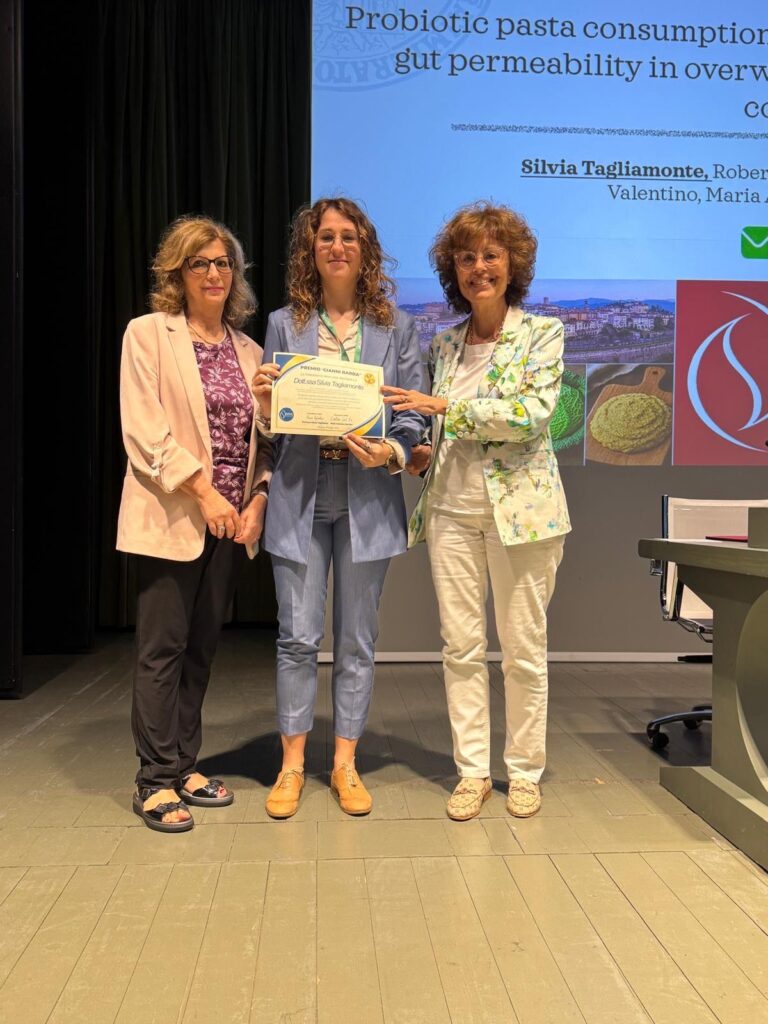
There are two winners of the 2026 Gianni Barba Award. Marco Rendine, from the University of Milan, Human Nutrition Division, DeFENS – Department of Food, Nutrition and the Environment, presented the study titled “Effect of polyphenols on lipid and glucose metabolism in 3T3-L1 adipocytes: an integrated analysis of mechanistic approaches”. Silvia Tagliamonte from the University of Naples Federico II, Department of Agriculture, presented the randomized controlled study “The consumption of probiotic pasta improves lipid metabolism and reduces intestinal permeability in overweight and obese adults.”
The recognition, awarded during the 46th National Congress of the Italian Society of Human Nutrition (SINU), honors the best scientific research in the field of human nutrition conducted by a SINU member under 35.
The work of Marco Rendine
(Poly)phenols have long been studied for their potential role in modulating metabolic disturbances associated with obesity. “We wanted to investigate whether polyphenols can act on mature adipocytes, that is, fully differentiated cells, directly involved in fat storage and mobilization and potentially closer to metabolic conditions such as overweight and obesity,” Rendine explained.
For the systematic review conducted by Rendine, 56 studies published from 2000 to 2024 were analyzed, conducted on mature 3T3-L1 adipocytes, a widely used cellular model in metabolic research, with the aim of evaluating the effects of polyphenols on lipid and carbohydrate metabolism, thermogenesis, and mitochondrial biogenesis. The results indicate that several subclasses of polyphenols, including flavonols, flavones, flavanones, flavan-3-ols and stilbenes, can contribute to reducing intracellular lipid accumulation, promote lipolysis, and modulate key molecular regulators of energy metabolism, including AMPK, SIRT1, and PGC1α.
Among the most studied compounds, especially resveratrol, quercetin, and naringenin emerge. An important point revealed by the review is that many studies use extracts rich in polyphenols or high concentrations of single components, conditions that are unlikely to reflect the physiological exposure attainable through diet.
These data suggest that polyphenols can influence not only adipose tissue formation but also the metabolic functioning of mature adipocytes. The results provide a promising mechanistic basis that will need to be confirmed through experimental models closer to human physiology and, above all, through human studies. Looking ahead, a better understanding of these mechanisms could help clarify how certain bioactive dietary components interact with adipose metabolism and what their real significance might be for human metabolic health.
The research of Silvia Tagliamonte
The research involving Silvia Tagliamonte brought together a multidisciplinary group of nutritionists, food technologists, and microbiologists from the Department of Agriculture at the University of Naples Federico II. The team developed in collaboration with a local pasta maker a probiotic-functional pasta enriched with spores of Shouchella clausii UBBC-07. This microorganism proved resistant to processing and to the gastric environment, able to reach the intestine alive and viable.
“The scientific evidence increasingly shows that the composition and function of the gut microbiota—the community of microorganisms that populate the human intestine—play a crucial role in metabolic health and in reducing the risk of chronic diseases. In this context, probiotics, live microorganisms that resist digestion and reach the colon, represent a promising tool to promote these beneficial effects. However, most probiotic products currently marketed fall into the category of supplements or dairy products, and that is where we started,” Tagliamonte stated.
The clinical validation study of the daily consumption of probiotic pasta, published in the international journal Current Research in Food Science, involved 40 overweight or obese participants who were regular pasta eaters. As part of the randomized controlled clinical trial, participants were divided into two groups and consumed, for four weeks, conventional pasta or probiotic pasta.
At the end of the probiotic pasta consumption period, the results showed an 11% increase in HDL cholesterol (“good” cholesterol) and improved intestinal barrier function compared with baseline.
Furthermore, the analysis of the gut microbiota in these participants revealed that about half showed an increased presence of probiotics in their feces, associated with specific microbiota characteristics already present before the nutritional intervention, defined as “responders.” The “responders” exhibited additional metabolic benefits, including a 6% reduction in diastolic blood pressure and a 17% decrease in the LDL/HDL ratio, an important cardiovascular risk indicator, especially among those with significant overweight or obesity. These improvements were also accompanied by favorable modulation of the gut microbiota, with an increase in microorganisms linked in the literature to better metabolic health and a reduction of species associated with inflammation and obesity.
Toward personalized nutrition
The results of these two studies open new avenues in the development of personalized nutrition strategies.
In the future, improved metabolic processing and characterizing the gut microbiota could help predict which individuals will respond best to specific nutritional interventions based on functional foods and probiotics, making dietary approaches increasingly targeted and effective.
Abbonati a Karla Miller