
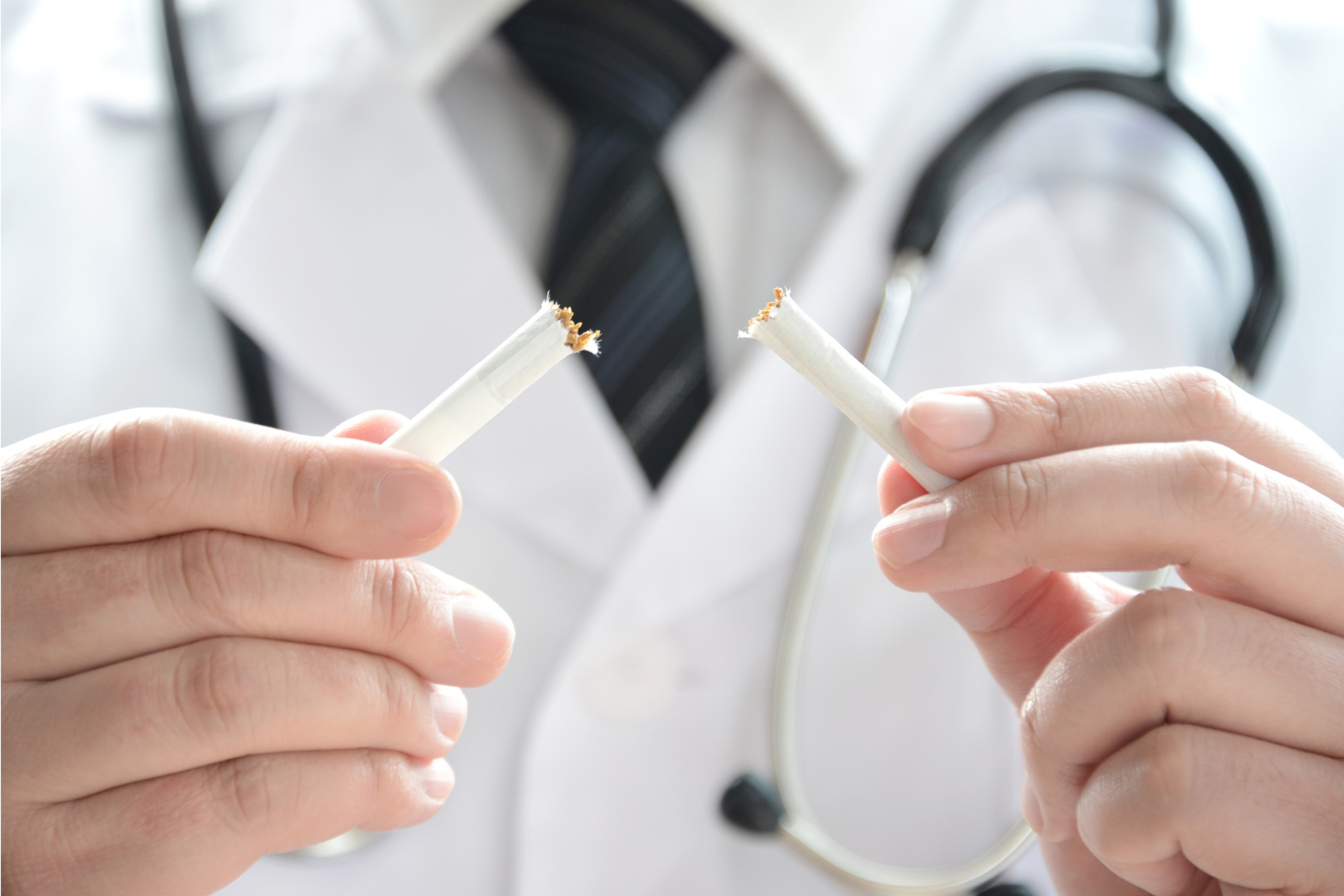
On World No Tobacco Day, WALCE Aps’s national campaign on the risks of smoking returns. On May 30 and 31, in Piazza Minghetti, Bologna, a 14-meter-long cigarette-shaped tunnel will host a free multimedia journey detailing the harms of smoking and smoking-related diseases. Oncologists and pulmonologists will welcome attendees, who can undergo free spirometry and receive information about cessation pathways and lung cancer screening programs.
The Campaign
With the first stop of the 2026 edition, Step out of the tunnel. Don’t burn your future the traveling campaign promoted by WALCE (Women Against Lung Cancer in Europe) Aps, made possible thanks to unconditional support from AstraZeneca and the ALIBERF Association. The four information booths were created thanks to the unconditional support from Chiesi Italia and Laboratorio Farmaceutico CT. The May 30–31, 2026 initiative is dedicated to informing the public about smoking risks and raising awareness of smoking-related diseases, and is intended for the entire community.
Visitors, greeted by oncologists and pulmonologists, will be able to learn from the installation’s panels, pose questions to specialists about the harms of tobacco and cessation pathways, as well as the risk factors for lung cancer and other respiratory diseases. They will also be able to undergo a free spirometry test (thanks to the contribution of the Bologna School of Specialization in Respiratory Diseases) and receive educational materials produced by WALCE Aps, by the Pneumology Council, and by other partners taking part in the event.
The Smoking Numbers
In Italy, according to data from the Ministry of Health, tobacco smoking is responsible for more than 93,000 deaths each year: 20.6% of all deaths among men and 7.9% among women. Globally, the World Health Organization estimates roughly 8 million deaths per year linked to tobacco, of which over 1.6 million are due to exposure to secondhand smoke. Tobacco is recognized as a known or probable cause of at least 27 different diseases, including cancers, COPD, heart attack, stroke, and type 2 diabetes.
Recent ISTAT data show that among Italians aged 11 and older, nearly one in five is a smoker (18.6%). When a cigarette burns, combustion releases more than 4,000 chemical substances, about 80 of which are classified by the International Agency for Research on Cancer (IARC) as definite human carcinogens: benzo[a]pyrene, carbon monoxide, tar, formaldehyde, arsenic, nickel, ammonia, hydrogen cyanide, and even radionuclides like polonium-210.
The Importance of Early Detection
Prevention plays a critical role, which, together with early detection of lung cancer, is one of the goals of the pilot program coordinated by RISP – Italian Lung Cancer Screening Network, active since 2022 and aimed at people aged 55 to 75 who are current heavy smokers or former heavy smokers, who can access free low-dose spiral CT scans offered at 18 centers in Italy.
«We talk a lot about personalized medicine, but prevention should follow the same approach of reaching everyone, because that is the only way we can be effective— says Silvia Novello, President of WALCE Aps—In this regard, through this campaign since 2015 we have spread messages and primary prevention tips to many cities, sometimes even returning to places we had already visited. The large number of people who visited the tunnel, a third of whom were young, the attention from the media and on social channels, and the experiences and responses we’ve managed to provide are an important milestone in the challenging journey of health education and prevention».
« Bologna’s initiative is an excellent opportunity to strongly highlight the socio-health issues tied to the need to strengthen education and early diagnosis of respiratory diseases and the fight against tobacco use—two crucial elements in preventing conditions such as COPD, asthma, and lung cancer, which unfortunately continue to sit at the top of Italy’s morbidity and mortality charts, and beyond— comments Raffaele Scala, President of the Italian Association of Hospital Pulmonologists (AIPO-ITS/ETS) — Further events like this serve as a strong spur to advance one of AIPO-ITS/ETS’s main strategic lines, aimed at building a true national pneumology network that links hospitals, regional facilities, and specialists to guarantee continuous patient care for respiratory diseases—from prevention to treatment (including home care) at end of life. The support for Bologna’s event from SIP/IRS, the Pneumology Consultation as the voice of our pneumology patients, and private stakeholders also strengthens the strategy of mobilizing all actors to make a truly decisive and successful impact on the fight against tobacco and on prevention at every level of respiratory diseases».
«Respiratory diseases are among the leading causes of death and disability worldwide, although many are preventable. Smoking, pollution, and occupational exposures remain the main risk factors, and quitting smoking remains the most effective intervention – says Paola Rogliani, President of SIP/IRS – However, prevention alone is not enough: studies on patients with undiagnosed COPD and asthma show that early management reduces exacerbations by about 50% and improves lung function and quality of life. Early identification of at-risk individuals through questionnaires and spirometry means turning scientific evidence into practical public health action.
«On World No Tobacco Day, ALIBERF ODV (Association Free from Smoking) strongly supports the event scheduled for May 30-31, 2026 in Piazza Minghetti in Bologna. Tobacco prevention is now a public health priority, because protecting breath means protecting life, reducing the risk of cancers, COPD, cardiovascular diseases, and many other smoking-related conditions — says Gian Piero Bandelli, President of ALIBERF and Head of the Educational Study Group of AIPO – ITS / ETS – I also believe it is essential to provide citizens with accurate, accessible, and scientifically sound information. Alongside traditional smoking, we must clarify new devices for tobacco and nicotine use, often wrongly seen as harmless: electronic cigarettes, heated tobacco products, and other nicotine-containing systems require awareness, education, and independent information. The collaboration among ALIBERF, scientific societies, patient associations, and the Pneumology Council demonstrates the value of networked work. Only by uniting clinical, educational, and advocacy expertise can we effectively counter tobacco use. The shared goal is to promote free, informed, and responsible choices, especially among youth and the most vulnerable. The fight against smoking is a cultural and health battle we can win only together».
Abbonati a Karla Miller